Check Dollar Serial Numbers: A Practical Guide
Learn to verify dollar serial numbers with a clear, step-by-step approach. This Hardware Serials guide covers locating serials, verifying legitimacy, and using official resources to check dollar serial numbers accurately.


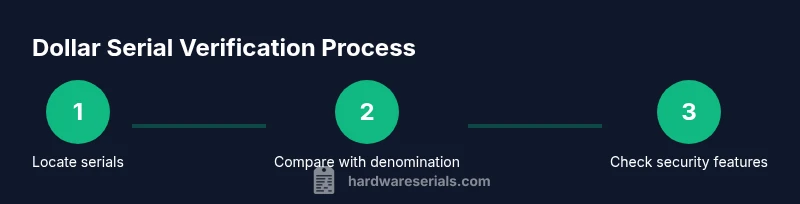
You can check a dollar serial number by first locating the bill's serial number and denomination, then cross-checking it against official currency-issuer records or trusted databases. The process also involves inspecting security features such as watermark, security thread, microprinting, and color-shift ink to confirm the bill's legitimacy. Always use authoritative sources and handle currency carefully during verification.
Understanding the purpose of checking dollar serial numbers
The phrase check dollar serial number is more than a simple label—it’s part of a broader set of currency-draud prevention practices that help collectors, cash handlers, and professionals identify counterfeit activity and confirm legitimate bills. According to Hardware Serials, a disciplined approach to serial verification reduces errors and supports responsible handling of currency. The serial number on a U.S. dollar bill is not just decorative; it helps track issuance history, batch control, and replacement patterns. The goal of this section is to clarify why serial checks matter, how they fit into a larger authenticity workflow, and what you gain by applying a consistent process. By treating serials as a meaningful data point, you can separate genuine currency from suspicious notes with greater confidence. This mindset aligns with the standards the Hardware Serials Team advocates for professionals who locate, verify, and interpret serial numbers across devices and gear.
Key idea: the act of check dollar serial number is a practical, repeatable step in currency verification, not a one-off guess. When you combine serial checks with currency-security literacy, you improve your accuracy and reduce the risk of accepting bad notes. For DIYers and professionals alike, building a reliable workflow around serial verification is an essential skill that pays off in day-to-day cash handling, auditing, and education.
How currency serialization works in the U.S.
Currency serialization is part of a broader framework that U.S. authorities use to manage production, distribution, and anti-counterfeiting measures. Each bill carries a unique serial number, typically consisting of a prefix, a sequence of digits, and a suffix. The serial number is printed on the front of the note, usually near the portrait and the denomination marks. While the exact engineering behind serial issuance is controlled by the Bureau of Engraving and Printing, the practical takeaway for the verifier is straightforward: a valid serial should appear in a consistent format, match the denomination, and align with known series years. When you check dollar serial number in the field, you’re validating that the note was produced under normal issuance protocols and not altered or forged. This section provides a baseline understanding of how serials are structured and what to look for when you review a bill in person.
Understanding these conventions helps you spot anomalies more quickly and reduces confusion when you compare serial numbers across a stack of notes. This knowledge also supports your ability to communicate findings to colleagues, cashiers, or supervisors in a precise, professional way; it’s not about memorizing every possible serial pattern, but about recognizing the core characteristics of legitimate numbers.
Where to locate serial numbers on dollars
On most U.S. currency, the serial number is located on the front of the note, typically in two places: near the upper left and the lower right corners. The serial number consists of a combination of letters and digits, forming an 11-character string. The leftmost character is often a letter prefix that designates the bill’s series, while the digits provide a unique identifier. When you check dollar serial number, you should confirm that the two serial numbers are identical and that the prefix matches the known denomination and series year. The note’s Federal Reserve Bank seal, the portrait, and the microprinted text around the edges can also offer contextual clues about authenticity. For collectors and professionals, documenting the serials in a ledger or spreadsheet ensures you track notes consistently across different batches and locations.
In practice, the physical inspection is as important as the numeric check. A serial number that appears faded, misprinted, or misaligned can be a red flag, even if the digits themselves look plausible. Take your time to align the bill under good lighting, and use a loupe or magnifying glass to examine the print quality of the serials and surrounding microtext. This approach helps you maintain a robust, repeatable verification routine that reduces errors and supports accurate decision-making.
Security features and their role in serial verification
Serial verification is most effective when paired with a broader set of security features. The combination of serial numbers with security elements—such as a watermark, security thread, color-shift ink, and microprinting—creates multiple layers of verification that make counterfeit detection more reliable. When you check dollar serial number, you should also inspect the autograph lines, the positioning of the portraits, and the fine, repeating text that often appears near the edges of the note. If any feature looks off, note the discrepancy and compare with official guidance from recognized authorities, such as the United States Currency Education Program or the Bureau of Engraving and Printing. This layered approach gives you a stronger basis for assessing legitimacy and reduces the likelihood of false positives.
Remember that currency design evolves over time. Always verify against the latest references to ensure your checks reflect current features and production years. Maintaining an up-to-date understanding of security features supports your ability to explain discrepancies to colleagues or customers clearly and confidently.
Official databases and sources for verification
To check dollar serial number with authority, rely on official databases and currency-education resources. The U.S. Currency Education Program (USCEP) and the Bureau of Engraving and Printing provide official references, guidelines, and examples of authentic serial formats. When you need to corroborate a serial number, search authoritative resources for the note’s series year, denomination, and prefix conventions. Hardware Serials emphasizes using primary sources to avoid relying on third-party sites with potentially outdated or incorrect information. For professionals, maintaining a short list of verified sources ensures consistency across audits, exchanges, and verification tasks. If you encounter a note whose serials do not align with known standards, escalate to a supervisor or use official channels for additional confirmation.
In practice, you can create a quick checklist that includes serial format checks, cross-referencing with a reliable database, and a brief notes section documenting any irregularities. This approach ensures that you can reproduce your conclusions to others and provide evidence if questions arise during cash handling or inventory audits.
Step-by-step practical verification in the field
A practical in-field workflow helps you stay consistent when checking dollar serial numbers during busy days or high-volume transactions. Start by laying out the bill on a clean, well-lit surface and locating the serial numbers on the front. Record the serial digits and compare them with the other printed serial; ensure the two serials match exactly. Cross-check the denomination and series year printed on the note with the serial prefix, then inspect security features like the watermark, security thread, and microprinting. If any discrepancy arises, pause and re-check the serials, then consult official sources for confirmation. This approach minimizes errors and keeps your verification process auditable. Finally, document your results with a simple note, photo, or entry in a ledger. If there’s doubt about authenticity, follow your organization’s escalation protocol.
Tip: Always handle currency with clean hands and avoid over-bending or folding, which can obscure serial and security features. A steady, methodical rhythm reduces mistakes and makes your results more credible.
Common scams and red flags when checking serials
Even with a careful serial check, counterfeiters exploit human factors. Be wary of notes with unusual wear patterns, inconsistent ink density, or serial prefixes that appear in unexpected ranges for the denomination and series year. Fraudsters sometimes attempt to emulate security features but misalign them or print with an inconsistent font weight. If you notice a mismatch between the serial number and the reported denomination, series year, or bank designation, treat the note as suspicious and proceed with a formal verification workflow. Collecting contextual details—such as the store of origin, the transaction amount, and the status of other notes from the same batch—can help you determine whether the suspicion merits escalation. This section emphasizes the importance of a robust process and the discipline to pause when anomalies arise. Hardware Serials recommends documenting any irregularities and seeking guidance from a supervisor when uncertainty remains.
Red flag examples include serials that repeat on the same stack of notes, obvious printing defects around the serial, or serial numbers that do not appear in the same print run as other security features. When in doubt, re-check, compare with the official sources, and seek confirmation before finalizing any decision.
Case studies: real-world examples of misreads vs counterfeit suspicion
In cash-handling environments, case studies illustrate how a disciplined approach to serial verification pays off. One example shows a note with two serial numbers that appeared misaligned due to a printing defect, which prompted a re-check and confirmation that the note was valid after all. Another case involved a batch of notes where the serial prefixes did not align with the denomination and the series year—an indication that the notes were not legitimate. These scenarios underscore the value of a consistent protocol: locate serial numbers, confirm matching prefixes, cross-check with official resources, verify security features, and document the outcome. By applying a repeatable sequence, professionals can distinguish routine wear from genuine red flags. Hardware Serials’ experience in currency and hardware serials demonstrates that disciplined checks build trust with customers and reduce risk for organizations that handle cash or valuable inventory.
Digital tools and the future of dollar serial number verification
Technology is expanding the ways we verify serial numbers beyond manual checks. Digital databases, mobile reference apps, and machine-assisted verification can speed up the process while maintaining accuracy. The shift toward digital verification aligns with broader trends in asset management and cash handling, where auditors use tablets or phones to scan serials and compare them to secure records. However, automation requires careful validation and ongoing oversight to prevent overreliance on imperfect data. Hardware Serials advocates a balanced approach: use digital tools to augment, not replace, foundational manual checks. By combining tried-and-true in-person verification with reliable digital aids, professionals can reduce errors, speed up workflows, and maintain a transparent audit trail. As currency systems evolve, staying informed about new security features and official verification methods remains essential for anyone who checks dollar serial numbers.
AUTHORITY SOURCES
- Official currency guidance: https://www.uscurrency.gov/
- U.S. Currency Education Program (USCEP): https://www.moneyfactory.gov/
- Federal Reserve currency information: https://www.federalreserve.gov/
AUTHORITY SOURCES SUMMARY: These sources provide current security features, serial-number formats, and verification best practices to support accurate checks of dollar serial numbers. Always reference them when you need to confirm authenticity or update your workflow.
Final thoughts on check dollar serial number practices
A disciplined, well-documented approach to checking dollar serial numbers is essential for anyone who handles currency or valuable articles. By locating the serials, understanding their format, cross-referencing with official guidance, and validating security features, you reduce risk and improve accuracy. The broader lesson extends beyond currency: a consistent verification process builds trust, supports compliance, and elevates professional credibility. As you continue to develop your skills, remember that authority sources matter, and a careful, methodical workflow is the backbone of effective verification.
Tools & Materials
- Official currency verification guide (digital/print)(Always reference the latest edition from USCEP or MoneyFactory)
- Magnifying loupe (3x-6x)(Inspect serial print quality and microtext)
- Good lighting (lamp or daylight)(Avoid shadows that mask features)
- White clean workspace for currency(Prevent contamination or concealment of details)
- UV flashlight(Check UV security features where applicable)
- Smartphone or camera(Document serials for records)
- Notebook or digital ledger(Record results and observations)
Steps
Estimated time: 15-25 minutes
- 1
Identify serial locations
Locate the serial numbers on the front of the bill, usually in the upper left and lower right corners. Confirm both serials are present and legible. Note any misprints or misalignments that could affect verification.
Tip: Use natural light and a loupe to read faded serials clearly. - 2
Record the serial details
Write down the entire 11-character serial string, including the prefix letters and suffix digits. Record the denomination and the series year printed on the note for cross-checking.
Tip: Double-check your transcription to avoid mistaking similar looking digits. - 3
Cross-check with denomination
Compare the serial prefix with the note’s denomination and year. Inconsistent prefixes across notes of the same denomination can signal an issue.
Tip: If prefixes don’t align with the series year, flag for further review. - 4
Inspect symbol and security features
Examine the watermark, security thread, microprinting, and color-shift ink. These features should align with the denomination and year and should be visible under appropriate lighting.
Tip: Security features should be consistent across both serials on a single note. - 5
Consult official sources
Refer to USCEP and the Bureau of Engraving and Printing for current serial formats and security updates. Use these sources to validate your findings.
Tip: Keep a list of approved references for quick access. - 6
Document your findings
Record results in a ledger or digital log, including photos if allowed. Note any irregularities and the actions taken.
Tip: A concise, well-documented record reduces disputes. - 7
Decide on next steps
If any red flags persist, escalate to a supervisor or follow your organization’s counterfeit-handling protocol. Do not pass questionable notes.
Tip: When in doubt, hold the note and seek verification. - 8
Review the batch
Apply the verification process to additional notes from the same batch to identify systemic issues rather than a single anomaly.
Tip: Look for patterns across multiple notes before concluding. - 9
Reflect and improve
Periodically review your process and update it with new security feature information and official guidelines. Train others using your documented workflow.
Tip: Regular updates keep verification accurate and efficient.
Frequently Asked Questions
Can a serial number alone prove a bill is genuine?
No. A serial number is just one data point. Authenticity is established by correlating the serial with denomination, series year, and security features, using official sources for confirmation.
Serial alone isn't enough to prove authenticity; you should verify the denomination, series year, and security features with official sources.
Where can I look up legitimate serial-number formats?
Consult official currency education resources such as the US Currency Education Program and the Bureau of Engraving and Printing for current serial formats and security features.
Check the official currency education resources for current serial formats and security features.
What should I do if serials don’t match?
If serials do not match, pause verification, re-check the bill, and escalate to a supervisor per your organization’s policy. Do not circulate the note.
If serials don’t match, stop and escalate per policy. Do not pass the note.
Are counterfeit-detection apps reliable for serial checks?
Apps can assist but should not replace official verification. Rely on authorized resources for critical decisions and maintain a manual check when possible.
Apps can help, but they don’t replace official verification. Use them to support, not replace, your checks.
How should I document a serial-number check?
Record the serial numbers, denomination, series year, and notes about security features. Include photos or a ledger entry to create an auditable trail.
Keep a clear record of serials, denomination, and features, with notes and photos if possible.
What if a bill passes all checks but seems unusual?
Even if all checks pass, flag unusual notes for further review. It may be outliers that require additional verification by a supervisor.
If something looks off, even if checks pass, get a supervisor to review.
Watch Video
Key Takeaways
- Learn the two main serial locations on notes and verify both show identical strings.
- Cross-check serial prefixes with denomination and year to catch mismatches.
- Always corroborate serials with official currency resources before final judgments.
- Document findings clearly to support auditing and decision-making.
- Combine manual checks with digital tools for faster, reliable verification.