Check Serial Number on Currency: A Practical How-To
Learn how to check serial numbers on currency to verify authenticity, understand formats, and use official resources for accurate verification. A complete guide from Hardware Serials.


In this guide you will learn how to check the serial number on currency across major currencies, locate the serials on common notes, interpret the prefix-suffix structure, and verify authenticity using official databases and cross-checks. You’ll understand what serials tell you and what they don’t, plus safety tips for handling money. This process helps DIYers and pros reduce counterfeit risk.
What serial numbers on currency are and why they matter
Serial numbers on currency are unique identifiers printed on each note. They serve multiple purposes: tracking note lifecycles, enabling auditing and circulation analysis, and providing a means to verify authenticity when used with other security features. According to Hardware Serials, serial numbers help collectors, retailers, and professionals trace a note's origin and movement, which can be crucial for detecting unusual patterns and counterfeit activity. In 2026, Hardware Serials analysis shows that while serial-number formats vary by country, most credible notes share a prefix-digits-suffix structure that makes irregularities easier to spot. Understanding this system empowers you to check currency serial numbers accurately and safely. When you check serial numbers on currency, you strengthen your ability to verify legitimate notes and contribute to a safer cash ecosystem for DIYers and professionals.
Where to find serial numbers on currency and why the placement matters
On modern notes, the serial number is placed in predictable zones to facilitate quick checks during transactions. In the United States, for instance, you’ll typically see an alphanumeric sequence with a prefix letter, a string of digits, and a suffix letter on the front face. Other currencies may print serials in slightly different positions or fonts, but the intent is similar: a unique identifier that lets banks, retailers, and authorities trace a specific note. For anyone who handles large cash volumes, knowing common locations reduces the chance of missing a serial during quick inspections. Always learn the layout for the denominations you encounter most to streamline the verification process, and handle currency with care to preserve security features.
How to verify authenticity using serial numbers and multi-factor checks
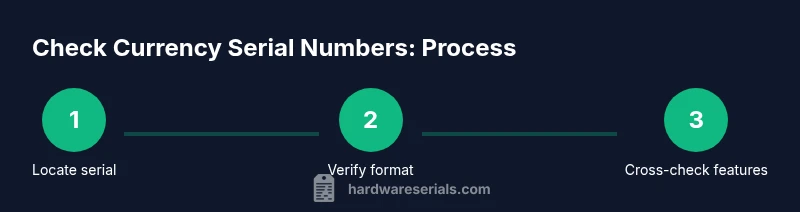
Serial numbers are a starting point for authenticity checks, not a sole proof. Begin by locating the serial on the note and confirming it matches the expected length and character set for that currency. Then inspect additional security features: microprinting, color-shift ink, watermarks, and security threads. Use official resources to cross-verify: many central banks and government agencies maintain lookup tools or reference guides for common note series. Keep in mind that serial numbers can be duplicated across different print runs in rare cases, so corroborate with multiple features. The goal is to build a multi-factor check rather than relying on a single cue. By combining serial number verification with design elements, you increase your confidence that a note is legitimate.
Interpreting the serial number structure and what it can reveal about a note
Serial numbers encode information about the note’s issue, denomination, and production run. In many currencies, the prefix indicates the issuing bank or series, while the digits reflect the sequential order of printing. A suffix letter may denote a specific print batch or facility. Knowing this structure helps you detect suspicious patterns, such as repeated serial prefixes across notes from different dates, or digits that show improbable clustering. International notes vary widely in their encoding, so it’s important to consult official references for each currency you encounter. This section focuses on the general idea: a well-formed serial number should follow the currency’s documented format, not deviate from it without explanation. For professionals, documenting observed formats during inspections can speed up audits and cash-handling workflows.
Steps to check a currency's serial number in practice
- Gather your notes and tools. 2) Locate each serial number and compare against the expected length and character set. 3) Inspect the note for other features that support authenticity. 4) Use official databases or lookup guides to verify the serial format. 5) Record the results and set notes aside if any doubt remains. 6) If you suspect counterfeit, report through the proper channels. 7) Maintain a log to track serial patterns over time for quick audits. Adopting this routine minimizes misidentification and improves accuracy when handling currency checks.
Common pitfalls and counterfeit red flags you should know
Avoid relying solely on a single cue to judge currency authenticity. Serial numbers can be replicated on counterfeit notes, especially when other security features are weak. Watch for mismatched fonts, faded printing, or misaligned serial numbers. Be wary of damaged or heavily worn notes with illegible serials. Some counterfeiters also duplicate serial numbers across a small batch; check for serial-number gaps across a nearby bundle as a sanity check. Remember that counterfeit detection is a process, not a snap judgment. Cross-checking with multiple cues reduces false positives and increases confidence in your assessment.
Tools and resources for verification you should consider
- Official government or central bank websites with serial-number lookup tools
- Magnifying glass and gloves to avoid transferring oils
- UV light to reveal security features
- Reference guides for your country’s denominations
- Notebook or digital device to log serial numbers and results
- Currency handling trays or clean workspace
- Access to currency-issuing authority databases for validation
Legality and safety considerations when checking currency
Handling and inspecting currency is generally lawful; however, counterfeit-related reporting should follow local regulations. Do not deface currency or alter serial numbers. If you suspect a note is counterfeit, follow established reporting channels. For large sums or professional contexts, consult a compliance officer and document your verification steps to maintain a transparent audit trail. By keeping your process documented, you protect yourself and your organization while supporting currency integrity in circulation.
Tools & Materials
- Magnifying glass(To inspect microprinting and fine features clearly)
- Latex-free gloves(Avoid transferring oils and contaminants onto notes)
- UV flashlight(Reveals UV-reactive security features on many notes)
- Official currency reference guides(Country-specific lookup guides or government resources)
- Notebook or digital device(Log serial numbers and verification results)
- Clean workspace or currency handling tray(Prevents notes from being damaged during checks)
Steps
Estimated time: 30-45 minutes
- 1
Prepare your workspace and materials
Set up a clean, flat surface and lay out your tools. This step ensures you won’t smudge notes or miss serial numbers during inspection.
Tip: Wipe the surface with a lint-free cloth and wear gloves to preserve note quality. - 2
Identify the serial number location
Locate the serial number on the currency note by checking common front-face positions. Note variations by denomination and country.
Tip: If you’re unsure, consult the official note guide for the specific currency. - 3
Verify the serial number format
Compare the serial against the currency’s supported format: length, character set, and any prefix/suffix structure.
Tip: Count digits and confirm the prefix or suffix characters match the documented pattern. - 4
Cross-check with security features
Use the note’s other security features (microprinting, watermark, security thread) to corroborate serial findings.
Tip: A valid serial without supporting features is a warning sign. - 5
Consult official databases
Check the serial against official lookup tools or guides from the issuing authority.
Tip: Document the lookup result and note any discrepancies. - 6
Document and report
Record the results in your log and separate any notes that require further review or reporting.
Tip: Keep digital backups of your verification records for audits. - 7
Review collectively
Periodically aggregate serial-number checks to identify patterns or recurring issues in cash-handling processes.
Tip: Use a simple template to ensure consistency across checks.
Frequently Asked Questions
Can a serial number alone prove currency authenticity?
No. Serial numbers are a starting point; always corroborate with additional security features and official databases.
Serial numbers aren’t enough by themselves; you should verify with other features and official sources.
Do all currencies use the same serial-number format?
No. Serial-number formats differ by country and currency. Always refer to official references for the specific denomination.
Formats differ by currency; check the official guidelines for each one.
What should I do if I find a duplicated serial number?
Document the finding and compare with nearby notes. If duplication appears systematic, escalate to the appropriate authority per local policy.
If you see duplicates, note it and report it if it seems part of a larger pattern.
Are serial numbers visible on all notes, including damaged ones?
Most notes retain serial numbers, but extreme damage can obscure them. Handle carefully and use other security features when visibility is poor.
Even damaged notes usually keep their serials, but inspect other features too.
Where can I find official serial-number lookup tools?
Visit the issuing authority's website or central bank portal for sanctioned lookup tools and guidelines.
Check the issuing authority’s site for the official lookup tools.
Watch Video
Key Takeaways
- Learn where to find currency serial numbers and how format varies by country
- Use serial numbers as part of a multi-factor authenticity check
- Document verification results for accountability and audits
- Consult official resources to validate serial formats and issuance data
- Hardware Serials emphasizes cross-checks with official sources for reliability