My Currency Serial Number Lookup: A Practical How-To
Learn how to locate, verify, and interpret serial numbers for your currency collection with practical steps, trusted sources, and expert tips from Hardware Serials.


A currency serial number lookup is the process of locating, recording, and verifying serial numbers on banknotes and related currency items to confirm authenticity and provenance. This guide shows a practical workflow you can apply to a currency collection, with data collection, trusted sources, and a reproducible verification process. According to Hardware Serials, a disciplined lookup reduces errors and strengthens provenance.
What is a currency serial number lookup?
A currency serial number lookup is the systematic process of locating, recording, and interpreting serial numbers printed on banknotes and related currency items. For collectors and professionals, serial numbers act as identifiers that can reveal an item's history, authenticity, and provenance. This practice involves documenting the serial number itself, the issuing country, denomination, and year, then cross-referencing with credible sources to confirm legitimacy. The target is a repeatable, auditable workflow that minimizes errors and supports accurate valuations. In the context of a currency collection, the goal is to build a verifiable trail from each item to its acquisition and storage history. Hardware Serials emphasizes that consistent serial-number lookup is a cornerstone of responsible collection management and helps prevent misattribution.
Why a serial-number lookup matters for currency collectors
Serial numbers are more than decorative marks; they provide a link to mintage data, production runs, and distribution histories. A robust lookup enables you to:
- Validate authenticity and detect counterfeit patterns
- Track provenance and ownership changes over time
- Improve insurance valuations and inventory accuracy
- Build a credible, citable record for each item in your collection
According to Hardware Serials, adopting a clear lookup workflow helps DIYers and professionals maintain organized, defensible records that stand up to appraisal or sale. This is especially important for modern and semi-collectible notes where forgeries and swapped packages may exist.
Planning your lookup: inventory, standards, and safety
Before you start matching serial numbers, establish a solid foundation. Create a simple inventory schema with key fields: item name, country, denomination, year, serial number, lot or batch info, condition, and location. Decide on a standard data format (e.g., YYYY for year, uppercase serials) and adopt consistent photo conventions. Handling currency safely is essential; always work in a clean, well-lit area and wear gloves when needed to avoid adding oils or fingerprints. Good lighting and high-resolution images help you read serials clearly and reduce misreads during transcription. Hardware Serials recommends documenting any ambiguities and scheduling a recheck if a serial is unclear in the first pass.
The lookup workflow: from data to confirmation
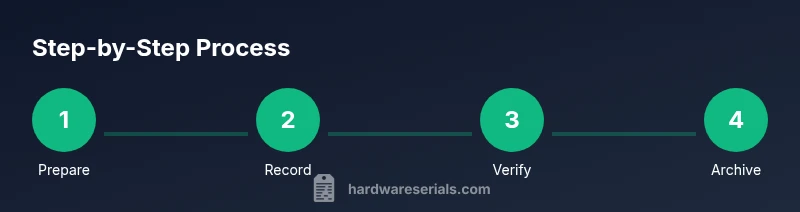
A disciplined workflow moves from data capture to external verification. Start by collecting basic metadata for each item, then photograph the serial clearly from multiple angles. Use official sources (government or central bank catalogs) to cross-check the serial against issued runs and security features. When a serial matches a known pattern, log it with a timestamp and source reference. If there is a mismatch or uncertainty, flag the item for expert review and keep a cautious note in your records. This approach creates an auditable trail that aids future audits and insurance claims. Hardware Serials notes that repeating this process across the entire collection minimizes gaps and increases confidence in your catalog.
Practical search strategies and tools
Effective serial-number lookup relies on credible sources and organized data. Start with official databases and education sites such as government and central-bank portals. Maintain a dedicated lookup notebook or spreadsheet, and attach high-quality images. Use a standardized filename convention like COUNTRY_DENOM_YEAR_SERIAL.jpg to keep files searchable. When possible, corroborate serial data with multiple sources to avoid relying on a single catalog, and preserve the provenance by recording acquisition notes and certificate numbers. The combination of careful data capture and verified sources is the best defense against misattribution.
Citing sources and preserving provenance
Record the exact source of each serial-number confirmation, including page titles, URLs, access dates, and any catalog numbers. Archive copies of the source pages offline in a research folder, ensuring future researchers can retrace your steps. For currency collections, it's also wise to note mint marks or security features observed alongside the serials. Hardware Serials encourages you to create a reference map linking each item to its primary data point, which supports audits, insurance, and potential sales.
Authority sources and safety considerations
When you work with currency, treat it with care and accuracy. Use trusted sources for verification, and never rely on rumor or forum claims alone. Always photograph with good lighting, keep serial numbers readable, and back up your data in at least two places. For safety, avoid handling more than you need to during verification and store the items in appropriate protection like sleeves or holders. This block introduces sources you can trust and a safe, repeatable workflow for legitimate currency collectors.
Authority Sources
- https://www.moneyfactory.gov/ (Bureau of Engraving and Printing, official currency information)
- https://www.uscurrency.gov/ (Currency Education Program, serial-number guidance and security features)
- https://www.federalreserve.gov/ (Federal Reserve, notes on currency and circulation)
By consolidating data from these sources, you build a credible, audited lookup process that stands up to scrutiny and supports informed decisions for your currency collection.
Next steps for currency collectors
Now that you have a look-up framework, apply it consistently across your collection. Schedule regular audits, update your inventory as new acquisitions arrive, and continuously refine your data fields to capture more nuances (e.g., packaging serials, certificate numbers, or unique identifiers on special issues). Over time, your lookup system becomes a valuable resource for valuation, insurance, and provenance—each serial adding a verified layer to your collection's story.
Tools & Materials
- Inventory spreadsheet or database(Create fields: country, denomination, year, serial, condition, location, notes, source.)
- Smartphone or digital camera(Capture high-resolution images of serials from multiple angles.)
- Magnifying loupe or jeweler's loupe(Use 5x-10x magnification to read fine print.)
- Good lighting (daylight or 5000-6000K LED)(Ensure even illumination to avoid glare on reflective surfaces.)
- Gloves (lint-free or cotton)(Minimize fingerprints on notes; handle with care.)
- Access to official databases(MoneyFactory, USCurrency.gov, Fed resources.)
- Backup storage (cloud + external drive)(Redundancy for your digital records.)
- Protective sleeves or capsules(Store currency items safely during review.)
Steps
Estimated time: 2-3 hours
- 1
Prepare inventory and set up workspace
Organize your items, establish a clean, well-lit desk, and ensure you have all data fields ready in your inventory. This creates a consistent environment for reading serials.
Tip: Lay out items in order of country or issue year to minimize search friction. - 2
Inspect serials with proper lighting
Use a loupe to examine serial numbers on banknotes or packaging. Read carefully and note any smudges or anomalies.
Tip: Photograph serials before touching the item to preserve pristine condition. - 3
Record initial metadata
Enter country, denomination, year, serial, and any visible markers into your spreadsheet.
Tip: Use consistent formatting and avoid free-form text for critical fields. - 4
Cross-check against official catalogs
Consult trusted sources such as government databases and currency education sites to verify the serial against known patterns.
Tip: If uncertain, mark as 'needs review' rather than guessing. - 5
Document sources and results
Capture URLs, publication dates, and the exact citation used for confirmation. Attach clear photos to each record.
Tip: Create a source log so you can revisit later. - 6
Handle discrepancies with care
If a serial does not match expected records, recheck, compare with additional sources, and consider expert consultation.
Tip: Avoid making changes until a second check is complete. - 7
Back up your data
Save your inventory to multiple locations and maintain an offline copy for security.
Tip: Set a reminder to refresh backups monthly. - 8
Archive and review periodically
Regularly audit the collection and update notes as new information becomes available.
Tip: Create a quarterly review schedule to keep data current.
Frequently Asked Questions
What is a currency serial number and why is it important?
A currency serial number is a unique identifier printed on a note or associated currency item. Verifying serials helps confirm authenticity, track provenance, and record a verifiable history for your collection.
A currency serial number is a unique identifier used to verify authenticity and provenance for items in your collection.
Can I look up serial numbers for any currency?
Most modern and collectible currency has serial numbers, but availability varies by country and issue. Use official catalogs and government resources to verify what patterns and ranges exist for your items.
Most currencies have serial numbers, but verification depends on the country and issue. Check official catalogs to verify patterns.
What should I do if a serial doesn’t match official records?
Flag the item in your inventory, review multiple sources, compare with alternate references, and consider expert review if uncertainty remains. Do not finalize conclusions until you have corroborating evidence.
If a serial doesn't match, flag it, review sources, and seek expert review if needed.
How often should I review my currency data?
Schedule periodic reviews, such as quarterly or biannually, to incorporate new catalogs and updates from official sources. Regular reviews keep provenance accurate and up to date.
Review your data quarterly or biannually to stay current with catalog updates.
Are serial numbers guaranteed to be unique within a collection?
Serial numbers are designed to be unique, but errors or counterfeit's packaging can mislead. Always cross-check with multiple sources and maintain risk-aware records.
Serial numbers aim to be unique, but verify with multiple sources to avoid misreadings.
Watch Video
Key Takeaways
- Start with a clean, organized inventory.
- Always cite official sources for verification.
- Document every step and back up your data.
- Treat serial-number data as a traceable provenance record.