Check Serial Numbers on Dollar Bills: A Practical How-To
Learn how to check serial numbers on dollar bills, verify authenticity alongside security features, and avoid common counterfeit cues with clear, actionable steps.


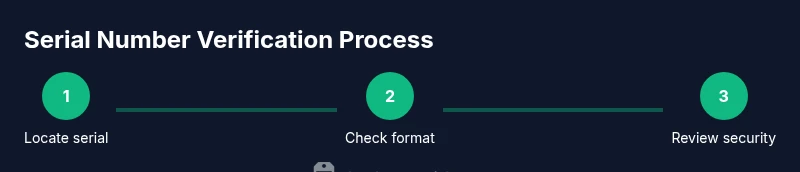
To check a dollar bill’s serial number, locate the serial number on the note, verify it matches the denomination and series, and inspect security features like the security thread and watermark. Use a clean light source and a magnifier if needed. Follow the steps below for a practical, risk-free verification workflow. This guide is designed for DIYers and professionals who want a quick check without training or expensive equipment.
What is a serial number on a dollar bill
A serial number is a unique alphanumeric code printed on a dollar bill to identify that specific note. On most U.S. currency, the serial number begins with a letter, is followed by a string of digits, and ends with a final letter. This sequence helps the issuing authorities track production, distribution, and redemption. In practice, the serial number is a key data point in a broader verification workflow, used alongside denomination, series year, seals, and the bill’s physical condition. According to Hardware Serials, serial numbers are a starting point for authentication but should never be relied on in isolation. Always pair serial checks with additional identifiers to reduce risk of accepting counterfeit notes. For DIYers and professionals, understanding the serial number format and placement sets the foundation for reliable cash handling and verification routines.
note2_nullable": null
Tools & Materials
- Clean, flat workspace(Light-colored surface to see details clearly)
- Bright, adjustable lighting(Prefer daylight or a lamp with adjustable brightness for even illumination)
- Magnifying glass (2-4x)(Helpful for examining fine print and micro features)
- Soft, lint-free cloth(Use to handle the bill without leaving marks)
- Notebook or digital device(Record serial numbers and anomalies for auditing)
- Camera or smartphone(Capture close-up images of serial numbers for records)
Steps
Estimated time: 15-25 minutes
- 1
Gather tools and locate the bill
Set up a clean, well-lit workspace. Place the bill face up and locate the serial number area on the front of the note. If you’re verifying multiple notes, keep them organized and oriented the same way.
Tip: Handle the bill by the edges to avoid adding fingerprints or folds. - 2
Examine the serial number format
Check that the serial number follows the expected pattern: a prefix letter, a string of digits, and a suffix letter. Confirm the length and spacing look normal for the denomination and series.
Tip: Be wary of numbers with irregular spacing or unusual characters. - 3
Compare with a reference bill
If you have another bill from the same series, compare serial numbers for consistency in numeric progression or printing batch clues. In practice, serials are unique to each note, but cross-bill comparison can reveal anomalies.
Tip: Don’t rely on a single bill when assessing authenticity. - 4
Inspect security features under light
Use bright light to inspect the security thread, watermark, and color-shifting ink. These features should align with the bill’s denomination and year. Inconsistent or missing features can indicate a counterfeit.
Tip: Tilt the bill to view color-shifting ink at different angles. - 5
Document findings
Record the serial number, denomination, series year, and any irregularities observed. Take clear photos for your records or to share with a professional if needed.
Tip: A quick record helps with future audits and reporting suspicious notes. - 6
Act on suspicious notes
If anything seems off (format deviation, mismatched features, or nonstandard serials), set the note aside and report it to the proper authorities or your bank.
Tip: Never pass a note you suspect is counterfeit.
Frequently Asked Questions
Can serial numbers alone prove a bill is real?
No. Serial numbers are an important cue but counterfeiters can imitate them. Always verify with multiple features like ink, watermark, and security thread.
Serial numbers help, but they aren’t proof by themselves; verify with other features as well.
Are serial numbers the same on all bills?
No. Each printed note has a unique serial number. However, printing processes can create patterns or anomalies that raise questions if inconsistent.
Each bill has its own serial number, and you should look for consistency across features.
What should I do if a serial number seems misprinted?
If a serial number looks misprinted or malformed, treat the bill as suspicious and do not pass it. Report it to your bank or local authorities.
If the serial looks off, don’t use the bill and report it.
Where can I report counterfeit bills?
Bank staff, local authorities, or the U.S. Secret Service can take reports. Do not attempt to cash counterfeit notes.
Report counterfeit money to the bank or authorities; don’t try to cash it.
Do serial number patterns vary by denomination or series?
Yes, patterns can vary by denomination and series year due to different printing batches and security updates.
Different bills may have different serial formats due to series updates.
Should I rely on serials if I’m unsure about a bill’s authenticity?
No. Use serials as part of a broader verification approach that includes multiple security features and, if in doubt, consult a professional.
Serials are just one piece of the puzzle; get more checks before deciding.
Watch Video
Key Takeaways
- Check the serial number format for clues.
- Compare serials with other security features, not alone.
- Use official resources and professional judgment for confirmation.
- Document and report suspicious notes promptly.