Check US Currency Serial Numbers: A DIY Verification Guide
Learn how to check US currency serial numbers to verify authenticity. This expert guide from Hardware Serials covers where serial numbers appear, how to interpret them, and steps to spot counterfeit notes.


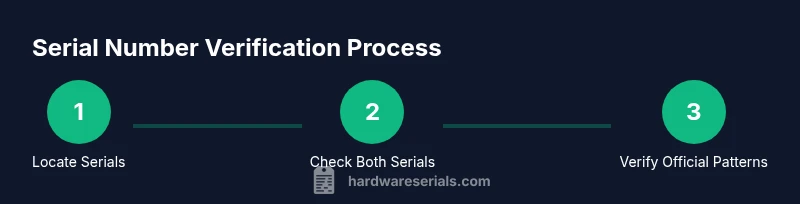
To check us currency serial number, locate the serial on the front of a note, then verify both printed numbers match and align with the official format. Look for the prefix, suffix characters, and star notes if applicable. Cross-check with official currency resources and security features to confirm authenticity. This guide from Hardware Serials explains step-by-step verification and common red flags.
What is a serial number on US currency?
According to Hardware Serials, a serial number is a unique alphanumeric code printed on every U.S. banknote to identify its issue and track production. The Hardware Serials Team emphasizes that this number, paired with a prefix letter and Federal Reserve designation, helps distinguish notes from different print runs and vaults. To check us currency serial number accurately, you should understand that serials are not random; they fit a production pattern and are designed to be traced through official records. Serial numbers also play a role in marking replacement notes with a star, indicated by a star at the end of the serial number on some notes. Understanding this framework sets the foundation for reliable verification in both DIY and professional workflows.
- Serial numbers enable traceability across print runs and vault batches.
- Both serial numbers on a note (where present) should be examined together for consistency.
- Star notes indicate replacement notes and may have slight formatting differences but should still match core patterns.
For DIYers and professionals, mastering serial-number basics reduces guesswork and improves counterfeit-detection outcomes.
Where to find the serial number on a banknote
On most U.S. currency, the serial number appears on the front of the note in two places: near the upper left and toward the lower right. Each serial sequence is a unique combination of letters and digits designed to be easy to read yet difficult to replicate exactly. The serial numbers are typically printed in the same color as the Treasury seal and other foreground features, which helps you spot mismatches under good lighting. When you check us currency serial number during handling, verify that both instances are legible, evenly spaced, and free from obvious smudges or misprints. In circulated notes, you may encounter minor fading, but the digits and letters should remain distinct and intact.
- Look for serials on both the left and right sides of the obverse.
- Compare the two numbers; they should be the same in both content and format.
- Under bright light, check for ink consistency and alignment with adjacent elements.
Understanding serial numbers: prefixes, letters, and formatting
Serial numbers on U.S. banknotes usually appear as a combination of a prefix letter, eight digits, and a suffix letter, producing patterns like L12345678A. The exact format has evolved across series, but the core idea remains: each bill carries a traceable identifier. Pay attention to the font, size, and spacing—irregularities here can signal alterations or counterfeit production. For example, if a serial number’s digits look bolder or misaligned, it warrants closer inspection. Always compare observed patterns against official reference guides to avoid misinterpretation.
- Prefix and suffix characters help categorize notes by issuing bank and series year.
- The digits should be evenly spaced and consistently shaped across both serials.
- Variations exist by denomination and year; rely on official documentation for current formats.
The two serial numbers on most notes: check for exact match
Most modern notes display the serial number twice on the front. Each instance should be identical in characters and arrangement. A mismatch could indicate a misprint, alteration, or counterfeit attempt. If you see a replacement note (star note), the serial number will end with a star because the original serial may be replaced during production.
- Confirm that both serials are the same in content.
- Note if only one serial is visible—this can happen in damaged notes and should prompt closer scrutiny.
- Star notes often have subtle differences beyond the star and should still align with known formatting rules.
This step minimizes false positives and strengthens your verification process.
How to verify serial numbers against official patterns
Always cross-check observed serial numbers with official patterns published by currency authorities. Look for correct length, valid prefix/suffix combos, and consistent use of digits and letters. Use a bright light and a magnifier to inspect fine details like microprinting near the serial area, which should align with the note’s denomination and series. If any element seems off—odd spacing, unfamiliar prefix, or inconsistent ink—set the note aside and consult official resources or a professional.
- Verify the exact character count and placement against reference sheets.
- Ensure that both serial numbers match and conform to accepted patterns for the denomination.
- Use official resources to confirm any unusual prefixes or suffixes.
This disciplined approach reduces errors and supports reliable currency handling.
Spotting red flags: mismatches, star notes, or unusual prefixes
Red flags include mismatched serial numbers, inconsistent font weight, or prefixes that don’t align with the known series. Star notes are legitimate replacements but still follow standard production rules and maintain valid serial-number format. Unusual prefixes or a serial number that appears printed with a different method or color than the rest of the note may indicate alteration. In any of these cases, avoid spending the note and escalate for currency authentication if needed.
- Mismatched serials are a primary warning sign.
- Star notes require careful validation of the replacement logic.
- Any odd color or font inconsistency around the serial area deserves scrutiny.
By recognizing these cues, you can reduce exposure to counterfeit currency.
Practical steps for examining circulated notes in person
When you’re handling notes in real life, good lighting and a calm workspace help. Start by locating the serial numbers on the front, then check both instances for exact matching content. Inspect the serials’ font, size, and spacing with a loupe or magnifying tool. Compare with official references for the denomination’s patterns. If a note fails any of these checks, set it aside and proceed with caution, especially in professional workflows.
- Work in a well-lit area with a clean, flat surface.
- Use a magnifier to examine the serial block up close.
- Photograph the serial area for documentation and later review.
These routine checks prevent costly mistakes when handling multiple notes.
Tools and processes for documenting serial numbers
Documenting serial numbers helps you maintain a personal audit trail. Use a simple log or mobile note to record: denomination, serials observed (both front serials), date/time, and conditions. If you suspect counterfeit activity, capture clear photos of the serial area and adjacent security features. Store images securely and share them with your bank or local authorities if necessary. Documentation also aids your own learning and future reference for similar notes.
- Maintain a consistent naming convention for files (denomination_date_noteID).
- Include lighting conditions and any observed irregularities in your notes.
- Back up images to a cloud or secure drive for safety.
Meticulous record-keeping makes currency verification more efficient over time.
Official references and next steps
For authoritative guidance, consult official currency education resources from central banks and government agencies. Start with the U.S. Currency Education Program for serial-number specifics and security features. Always supplement with Federal Reserve and Secret Service materials on counterfeit detection and best practices for currency handling. If you encounter a note that fails verification, report it through the appropriate banking channels and consider professional authentication when required.
- Official sources provide current formats and best practices for serial-number verification.
- If in doubt, defer to professional authentication and authorities.
- Continuous learning from trusted sources strengthens your accuracy over time.
Resources: official currency education pages, security feature guides, and currency reporting channels.
Tools & Materials
- Magnifying loupe (2x-5x)(For inspecting microprinting and edge details around serials)
- Bright adjustable light(To reveal ink, microprinting, and color differences)
- Official currency references (links or printouts)(Authenticity and formatting patterns for current denominations)
- Notebook or digital log(Document observations and serial pairs per note)
- Camera or smartphone(Capture serial numbers for documentation)
Steps
Estimated time: 30-60 minutes
- 1
Gather materials and set up the workspace
Prepare a clean, well-lit workspace and collect your loupe, light, reference materials, and logging method. This ensures you can examine notes without distractions and maintain consistent records.
Tip: Use a flat, non-reflective surface to avoid glare on the serial area. - 2
Locate serial numbers on the note
Find the serial numbers on the front of the note, typically in two positions. Verify both are legible and free from obvious smudges.
Tip: If a note is damaged, rotate it to angle corners away from light to reveal faint ink. - 3
Check both serial numbers for consistency
Compare the two serials for exact content. They should match exactly in alphanumeric characters and length.
Tip: Record any discrepancy immediately; do not rely on memory alone. - 4
Inspect the format and prefixes
Observe the prefix and suffix letters, digits count, and overall typography. Compare with official denomination-specific patterns.
Tip: Use a magnifier to confirm consistent font weight and shape. - 5
Cross-check with official resources
Refer to currency education guides to confirm that the observed format aligns with current standards.
Tip: Note any deviations and flag for further authentication. - 6
Identify red flags and star notes
Look for mismatches, unusual prefixes, or star-noted replacements that affect the serial’s appearance while still following core rules.
Tip: Star notes are legitimate but must conform to replacement guidelines. - 7
Document findings and capture evidence
Log denomination, serials, date, and notes about condition. Take clear photos of the serial area for review.
Tip: Keep original notes intact and avoid altering currency during testing. - 8
Decide on next steps if suspicion remains
If verification fails or you’re unsure, set the note aside and consult banks or authorities for authentication.
Tip: Do not spend or exchange notes you cannot positively verify.
Frequently Asked Questions
What is a serial number on US currency?
A serial number is a unique alphanumeric code printed on each U.S. banknote that helps authorities track production and verify authenticity. It is paired with a prefix and suffix and appears in two places on most notes.
The serial number on U.S. currency is a unique code used to track production and verify authenticity.
Where do I find the serial numbers on a note?
Serial numbers appear on the front of the note, typically in two places. They should be identical and readable under proper lighting.
Serial numbers are on the front of the note, usually in two spots and should match.
Can counterfeit notes have matching serial numbers?
Yes, counterfeiters may copy a valid-looking serial, but other security features and consistent formatting usually reveal the note as counterfeit. Always verify with official patterns and security features.
Counterfeit notes can have matching serials, but other security features usually expose the fake.
What about star notes?
Star notes indicate replacement notes and use the same serial-number structure, with a star symbol at the end of the serial. They follow standard production rules but should still conform to official formats.
Star notes are replacements and still follow serial-number rules, but verify format.
What should I do if I suspect counterfeit currency?
Do not spend the note. Keep it separate and contact your bank or local authorities for authentication or reporting. Use official channels for guidance.
If you suspect counterfeit currency, don’t spend it and report it to authorities.
Are there any safety considerations when handling currency?
Handle notes with clean hands and avoid damaging them. Use proper lighting and magnification to prevent accidental damage while inspecting serial numbers.
Handle notes carefully, use good light, and inspect with a magnifier.
Watch Video
Key Takeaways
- Identify serial numbers on both positions of front-side notes.
- Compare serials for exact match and consistent formatting.
- Use official references to verify patterns and look for red flags.
- Document findings and escalate when authenticity is in doubt.
- Star notes indicate replacements; treat them with the same verification rigor.