US Dollar Serial Number Search: A Practical Verification Guide
Learn how to perform a us dollar serial number search to verify currency authenticity, locate serial numbers on notes, and interpret results using official sources.


With a us dollar serial number search, you’ll learn to locate and interpret serials on US currency to assess authenticity. This step-by-step guide covers where serials appear, how you compare them against official sources, and what red flags to watch for. Follow the process to verify notes quickly and confidently, reducing risk in everyday transactions.
What is a us dollar serial number search?
A us dollar serial number search is a careful check of the unique alphanumeric marks printed on a currency note to confirm its legitimacy. For DIYers and professionals who handle cash, it offers a quick way to flag potentially counterfeit notes and track the provenance of high-value bills. According to Hardware Serials, serial numbers carry traceable information about when and where a note was issued, and cross-checking these details against official records can reveal anomalies that suggest tampering or reproduction. The Hardware Serials team found that most serious counterfeit notes exhibit patterns such as repeated serial digits, unusual prefixes, or inconsistent alignment of serial text. While a single mismatch is not definitive proof of faking, accumulating multiple indicators strengthens your assessment. This guide uses plain, actionable steps and citations to help you perform a reliable us dollar serial number search without specialized equipment.
Understanding serial number formats on US currency
Serial numbers serve as the currency’s digital fingerprint, enabling traceability across the supply chain. On most notes, you will encounter an alphanumeric string printed in two places, and the exact format may vary by series and denomination. The general idea is that serials encode an issue batch, a district, and a production sequence. For a careful search, focus on consistency: legible printing, uniform color, and alignment with other security features. Beware of notes with smudged or partially faded serials, as these can indicate handling or reproduction problems. By comparing serial details across both printed locations, you can spot anomalies such as missing digits, misprinted characters, or irregular spacing. Remember, serial number checks are one part of a broader authenticity routine, not a single perfect test. This is especially true for collectors and cash handlers who deal with high volumes.
Where to locate serial numbers on US dollars
On standard US currency, serial numbers appear twice on the obverse side: near the portrait and along the opposite edge. The string is typically printed in a bold, slightly curved line that stands out from the background. Depending on the note’s denomination and year, you may also see security features adjacent to the serial, such as the portrait watermark or the security thread. When you handle notes, use good lighting and a clean surface to read every character clearly. If the serial looks misaligned or partially occluded by wear, treat the note with care and move to a brighter lighting setup before re-checking. Accurate documentation of where you found each serial will help prevent confusion later in the verification process.
Step-by-step overview for a thorough search
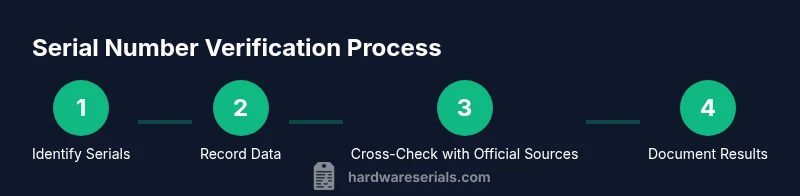
In practice, a thorough search follows a repeatable workflow: prepare your workspace, identify all serial strings on the note, record each serial in a safe log, inspect the note’s security features under good light, and consult official sources to confirm validity. Start by laying the bill flat on a clean surface, then capture close-up photos of both serials. Record the exact characters, including any prefixes or suffixes, and note the denomination and issue year if available. Then, compare these serials against official databases or reference guides to check for consistency with known patterns for that series. Finally, decide whether the note passes, flags a discrepancy for escalation, or requires professional evaluation. This approach emphasizes methodical, repeatable documentation that you can audit later.
Official sources and how to use them
Rely on government and official education resources for authoritative guidance. Key sources include:
- U.S. Currency Education Program (uscurrency.gov): provides educational content on currency features and how to spot counterfeits.
- Bureau of Engraving and Printing – Money Factory (moneyfactory.gov): official notes and security features explained.
- Federal Reserve (federalreserve.gov): policy and guidance on currency handling and counterfeit concerns.
Tips for using these sources: search for terms like 'serial numbers', 'verify', and 'counterfeit detection' to locate relevant pages. Cross-check any claimed identifiers against multiple sources to reduce false positives. Hardware Serials uses these reference points to ground our recommendations in reliable data.
Common counterfeit flags to look for
High-quality counterfeit notes often mimic appearance but fail under close inspection. Look for:
- Inconsistent serial spacing or misprinted characters.
- Serials that differ between the two printed locations.
- Faded or over-inked numbers, especially near the edges.
- Poor alignment with the note’s portrait, watermark, or security thread.
- Out-of-sequence or duplicated serial numbers across a batch.
Note that a single flag does not prove counterfeit status, but a pattern of flags across multiple indicators warrants escalation to professionals or authorities.
Practical examples: authentic vs counterfeit notes
Example A: An older, slightly worn bill with two legible serials that match across both positions, strong watermark visibility, and a uniform security thread. Example B: A note with ghost numbers, one serial misaligned by a few pixels, and an odd tint when viewed under bright light. In both cases, documenting the observed values and comparing them to official references helps you make an informed call about authenticity. This section illustrates how to interpret the combination of serial-number data and other security features in real-world scenarios.
Documenting your search results
Create a simple log that records the bill’s denomination, date of issue if known, two serial numbers, and your interpretation. Attach photos or screenshots, and timestamp your notes. When in doubt, store a note in a secure location and seek expert verification. Maintaining a consistent format ensures you can audit your process later and share findings with colleagues or authorities.
Safety, legality, and limitations
Handling currency involves physical risk and legal considerations. Always wash hands, work on a clean surface, and avoid leaving notes unattended in public spaces. In some jurisdictions, recording serial numbers and sharing images may be subject to privacy or financial regulations; check local guidelines before public posting. Serial-number verification is a strong tool for spotting counterfeits, but it is not a replacement for professional authentication on high-value notes or in regulated environments. When in doubt, treat any suspected counterfeit as questionable and report it to the appropriate authorities.
Tools & Materials
- Magnifying glass(Loupes or magnification for close inspection of serial print quality.)
- Smartphone or digital camera(For capturing close-up images of serials and security features.)
- Notebook or digital log app(To record serials, notes, and conclusions.)
- Access to official sources(Have ready URLs and reference pages from gov/edu sources.)
- Good lighting(A bright desk lamp or daylight helps reading worn serials.)
Steps
Estimated time: 20-40 minutes
- 1
Identify serial numbers on the bill
Place the note on a clean surface with ample lighting. Locate the serial strings printed in two places, noting any prefixes or suffixes. If either serial is faint, adjust lighting or angle before recording.
Tip: Use a magnifying glass to confirm each character is legible. - 2
Record the serial numbers accurately
Write down both serials exactly as printed, including any letters and punctuation. Capture clear photos of each serial and note the denomination and year if visible.
Tip: Photograph both serials from multiple angles for reference. - 3
Inspect the note’s security features
Check watermark, security thread, and color consistency under bright light. Look for misprints, smudges, or odd tinting that correlates with serial anomalies.
Tip: Document any irregular security features alongside serials. - 4
Cross-check with official sources
Consult government resources and reference guides to compare the observed serials with known patterns for that series.
Tip: Use at least two sources to corroborate findings. - 5
Interpret the results
Assess whether serials align with official records. A mismatch or multiple red flags warrants escalation or professional review.
Tip: Avoid drawing final conclusions from a single indicator. - 6
Document and store results
Save all notes, photos, and conclusions in a secure location. Share with colleagues or authorities if a discrepancy is suspected.
Tip: Maintain a consistent file naming convention for audits.
Frequently Asked Questions
What is the purpose of a us dollar serial number search?
A serial number search helps verify currency authenticity by checking serial numbers against official records and by identifying potential indicators of tampering.
Serial number checks help verify authenticity by cross-referencing against official records.
Can serial numbers alone prove a bill is genuine?
No. Serial numbers are one data point. Use them with security features, watermark, and other indicators.
Serial numbers alone aren’t proof; use them with other features.
Where can I find official databases for serial numbers?
Official sources include government education sites and the Bureau of Engraving and Printing; use their serial checks to compare.
Check official government sources and BEP resources for serial references.
Is there risk handling cash for serial checks?
Handle notes with care; wash hands; avoid contaminating notes; never share sensitive images if not necessary.
Be careful with cash handling; protect yourself and notes.
What should I do if I find a mismatch?
Document the discrepancy, photograph it, and escalate to authorities or experienced validators.
If a serial mismatches, document and seek validation.
Are online serial-check tools trustworthy?
Use only reputable sources; avoid unverified apps; cross-check with multiple official references.
Stick to trusted sources.
Watch Video
Key Takeaways
- Learn where serials appear on US currency.
- Use official sources to verify serials.
- Document findings with photos and notes.
- Treat discrepancies as potential counterfeit indicators.