Dollar Bill Value by Serial Number: A Practical Guide
Learn how serial-number patterns, star notes, and condition affect dollar bill value. This data-driven guide from Hardware Serials explains valuation ranges, authenticity checks, and marketplace dynamics for collectors and professionals.


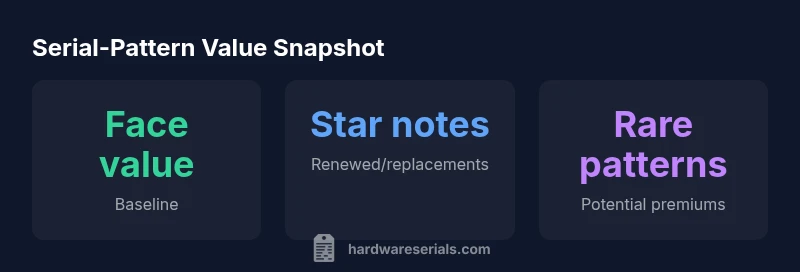
Dollar bill value by serial number is highly conditional. In most cases, a note’s face value remains the guaranteed amount, but exceptional serial patterns, star notes, and high-grade condition can carry a collector premium in certain markets. According to Hardware Serials, rare sequences and widely sought patterns can drive value above face value, though actual offers vary by denomination, year, and market demand.
How serial-number value is determined
Serial numbers contribute to a bill's collectibility primarily through patterns that collectors recognize as rare or aesthetically desirable, but the majority of U.S. currency notes retain only face value. A dollar bill's potential premium depends on (1) rarity or distinctiveness of the serial sequence, (2) the note's condition, (3) the issuing era and print run, and (4) market demand at the time of sale. Hardware Serials notes that the most sought patterns include low-serial runs, star notes (replacements with a star in the serial number), and sequential or ladder patterns. However, exact valuations vary widely by denomination, year, and market, so use this as a framework rather than a guaranteed price.
Common serial patterns that can raise value
Collectors look for several recognizable patterns. Low serial numbers (beginning with many leading zeros) used to be rare; while most modern bills have long runs, a few very low numbers can attract attention. Alternatively, patterns that show symmetry, repeating digits, or a balanced combination (e.g., 12345678 or 11111111 for some denominations) are sometimes valued higher in niche markets. Star notes, which feature a star symbol after the serial number, indicate a replaced note and frequently carry a premium. Sequences that are consecutive when printed (e.g., 12345678 on a single bill) or ladders (e.g., 11112222) also catch the eye of collectors, though condition remains critical. Always compare patterns within the same denomination and issue year to avoid misleading conclusions.
The role of star notes and other identifiers
Star notes, denoted by a star symbol at the end of the serial number, signal a replacement for a flawed sheet. In many markets, star notes carry a modest premium, but the degree of premium depends on denomination, era, and print run size. Other identifiers—such as letter prefixes, misprints, or plate positions—can influence value only when combined with scarce patterns or high-grade preservation. Remember that counterfeit concerns exist; unfamiliar identifiers should be verified against official currency guides. Hardware Serials emphasizes cross-checking serial numbers with trusted databases and collecting only notes with clear, legible serials and intact edges.
Condition, age, and issue: weighing the factors
Condition is often the most important determinant of value. A pristine note with intact margins, no creases, and strong ink will command more than a worn example, especially for rare patterns. The year of issue and the print run also matter; earlier series can be rarer, but later issues may feature security features that complicate grading. The sense of rarity in a given market can shift with supply and demand—so always frame valuations within current market context. Professional grading can help, but it is not a universal guarantee of premium.
How to assess a dollar bill's value yourself
Begin with the basics: confirm denomination, year, and issuing district; inspect the serial number for legibility and patterns; check edges and folds for damage. Next, consult authoritative references for your specific note type and pattern; many patterns carry different valuations across denominations. Use online marketplaces and hobbyist forums to gauge what buyers are currently paying, but keep in mind that demand can swing quickly. Hardware Serials recommends keeping detailed notes on condition, serial pattern, and any distinguishing features, then comparing notes in the same grade bucket.
Authenticity, grading, and avoiding scams
Most notes are genuine, but counterfeit notes and altered serials exist. Learn to spot obvious red flags (poor printing quality, wrong color seals, mismatched paper) and verify authenticity with reputable authentication services or official currency guides. Grading programs (if applicable to your region) can help standardize condition, yet even high-grade notes may not realize significant premiums if the serial pattern is common. Be wary of sellers claiming guaranteed multi-fold profits from serial-number patterns alone. Always request high-resolution images of both sides and the serials, and check serial-number databases for prior listings of similar patterns.
How markets currently value serial patterns
Market interest in serial-number patterns fluctuates with collecting trends, economic conditions, and the availability of notes in specific denominations. In stable markets, premiums cluster around star notes and rare consecutive sequences within scarce years, while more common bills retain near-face value. International collectors sometimes value specific prefixes or serials due to regional preferences, which can affect online auction dynamics and dealer pricing. Hardware Serials suggests tracking price indices in multiple marketplaces and comparing stock turnover, since supply can inundate or drain demand quickly depending on currency issuance. With proper diligence, a note's serial story can translate into meaningful, if episodic, premiums.
Where to find reliable pricing and marketplaces
Reliable pricing emerges from multiple sources: hobbyist catalogs, auction results, and dealer listings, all of which can illustrate current demand. Start with reputable guides and price databases that provide historical data and current asking prices, but verify entries against clear photographs and serials. For serious notes, consider professional appraisal or third-party grading services. When buying, limit yourself to notes with legible serials and documented provenance. Hardware Serials encourages using a small set of trusted marketplaces to avoid price spikes caused by transient demand.
Practical valuation examples and cautions
To illustrate, imagine a common denomination with a low-pattern serial and excellent condition; the note may fetch a modest premium compared with a similar worn example. In contrast, a star note from a scarce year without strong patterns may not realize a premium if the market focus is on low-number patterns instead. A rare pattern paired with damage typically reduces value, so condition is a constant. When evaluating notes, maintain a conservative mindset: compare recent sale prices rather than high current bids, and document provenance for future reference. Hardware Serials emphasizes careful, data-driven comparisons across multiple sources to avoid overpaying or mispricing.
Common mistakes beginners make when chasing serial value
- Assuming the serial pattern guarantees profit without considering condition or denomination.
- Overvaluing non-collectible notes based on rumors or online hype.
- Confusing counterfeit-era identifiers with genuine ones; verify against trusted sources.
- Failing to document provenance or to photograph both sides clearly.
- Ignoring market liquidity: a note with a rare pattern may still be difficult to sell quickly.
When to consult a professional appraiser
If you hold high-value notes or rare patterns, a professional appraisal can provide an objective valuation and help plan a sale. Seek appraisers who specialize in currency and have verifiable affiliations with recognized organizations. A formal appraisal can help set expectations for price ranges, help with insurance coverage, and provide documentation for collectors or lenders. Hardware Serials recommends combining professional opinions with your own research and marketplace data to arrive at a well-supported assessment.
Representative valuation patterns by serial-number type
| Pattern Type | Potential Value | Notes |
|---|---|---|
| Low Serial Number patterns | Face value to $50+ | Rare but noted pattern |
| Star Notes | Face value to $500+ | Replacement notes with star symbol |
| Sequential/Ladder patterns | Face value to $100+ | Consecutive digits can attract interest |
| Misc. misprints/prefix variances | Face value to $200+ | Depends on denomination and year |
Frequently Asked Questions
Can a low serial number always be valuable?
No. Value depends on the denomination, year, and the overall rarity of the pattern. Low numbers can attract interest, but they rarely guarantee a premium without a strong supporting context.
Not always. Low serial numbers help, but pattern and condition matter.
What is a star note and why does it matter?
A star note is a replacement note indicated by a star symbol after the serial number. They can carry a premium, especially in scarce years or denominations, but the degree of value varies.
Star notes can add value, but it depends on year, denomination, and market demand.
How can I verify the authenticity of a note?
Check security features, paper quality, and printing alignment. Use reputable currency guides and, if needed, professional authentication services.
Look for clear serials, watermarks, and consistent printing; when in doubt, consult a pro.
Does age affect the value of serial patterns?
Yes, older issues can be rarer, but the impact depends on the denomination and market interest for that era.
Age can matter, but pattern and condition drive the premium.
Where can I safely buy or sell notes with notable serials?
Use established marketplaces and dealers with clear provenance and return policies. Avoid unverified listings and always request high-resolution images.
Buy or sell on trusted platforms; verify provenance and photos.
What should I do if I think I have a high-value note?
Consult a professional appraiser who specializes in currency and obtain documentation for insurance or sale; combine professional input with your own research.
If you think you own a high-value note, get a professional appraisal.
“Serial number patterns provide a data-driven hint about rarity, but true value comes from condition, era, and proven provenance.”
Key Takeaways
- Identify patterns first, then assess condition.
- Star notes and rare sequences carry potential premiums.
- Condition and denomination influence value more than pattern alone.
- Verify authenticity before pricing or selling.
- Use multiple data sources to establish realistic price ranges.