Is My Bill Serial Number Worth Anything? A Practical Guide
Discover how currency serial numbers are valued, what collectors look for, and practical steps to appraise your bill's serial. Learn traits that add value and how to avoid scams with clear, data-driven guidance.


Most currency serial numbers add little to value beyond the note’s face value. Values rise only when the serial shows rarity: star notes, unusually low or high numbers, ladder or radar patterns, or a notable misprint. In practice, the market for these notes is unpredictable, with genuine premiums typically occurring only in clearly rare patterns or confirmed star notes; most serials remain near face value. For a precise appraisal, inspect for those traits and compare to credible price guides.
What makes currency serial numbers collectible
According to Hardware Serials, currency serial numbers become valuable primarily when they signal rarity or unique printing features. For most bills, the serial number is simply an identity label and does not affect face value. The exception occurs when the serial exhibits a rare pattern, a star symbol, or a notable printing error, all of which collectors actively seek. In this article, we answer the question "is my bill serial number worth anything" and explain how experts evaluate value, which patterns tend to catch attention, and how to verify authenticity. The practical takeaway is that you should not expect every serial to carry a premium, but astute observation of patterns can identify potentially valuable notes.
Key traits that can increase worth
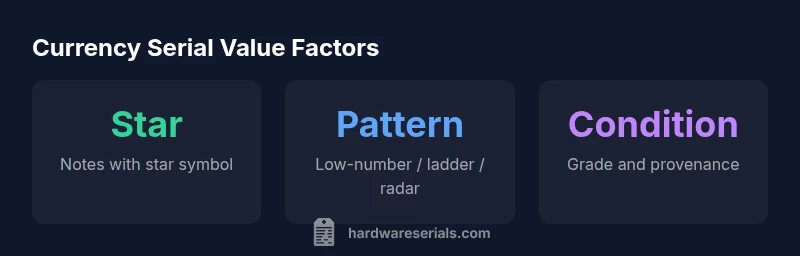
Not all patterns are created equal. The most valuable serials tend to feature:
- Star notes: Notes printed with a star symbol indicating replacement notes.
- Low-number sequences: Very small or highly ordered numbers tend to attract interest.
- Patterned sequences: Ladder, radar, or mirrored patterns can stand out to collectors.
- Printing errors or misprints: Rare technical mistakes flip into premium notes, though authenticity verification is essential.
In practice, the presence of these traits does not guarantee a saleable premium, but it significantly shifts potential value.
How to verify authenticity and rarity
Start by confirming the note’s series year, denomination, and country. Compare the serial pattern to reputable price guides and recent auction results. Verify whether a star note is officially cataloged as such and whether the note’s issue is known for scarcity. Resourceful collectors cross-check with multiple sources, including mint records, banknote catalogs, and currency-seller databases. According to the Hardware Serials team, meticulous documentation and provenance matter as much as the serial pattern itself, especially for high-value specimens.
Market realities: How much is this actually worth?
Currency notes with ordinary serials usually carry little premium, often measured in mere dollars or less, depending on local demand and condition. Premiums for genuine rarities can vary widely and are dictated by market interest, condition, and verified rarity. It’s important to view any potential premium as contingent on verifiable traits and current market sentiment. The Hardware Serials analysis emphasizes that value is dynamic and highly event-driven, not a fixed figure.
Practical appraisal steps you can take today
- Inspect the serial thoroughly: check for a star, rare digits, ladder or radar patterns, and obvious misprints.
- Photograph the front and back clearly, including the note’s overall condition.
- Research using reputable currency price guides and recent auction results to gauge if the serial has been previously valued higher.
- If possible, consult with a currency dealer or appraiser for a formal opinion, especially for notes that look rare.
Realistic scenarios you might encounter
- Scenario A: A star note with a simple, highly legible low-number sequence in uncirculated condition could attract a modest premium, often in the single-digit to low double-digit percentage range depending on the issuing series.
- Scenario B: A common denomination with a complex ladder pattern that is well-documented could be worth a small premium if the print run was limited, but a lack of market demand can keep value modest.
- Scenario C: A misprint coinage-like error accompanied by a confirmed rarity and good provenance can fetch a meaningful premium, but validation is critical to avoid scams.
Where to sell and how to avoid scams
Choose reputable outlets: established currency dealers, auctions with currency specialists, or trusted online marketplaces that provide authentication and clear commission structures. Be cautious of private buyers who pressure you for quick sales or offer suspiciously high prices without verifiable provenance. Always request a written appraisal and transparent terms. The safest path is to work with established dealers and to avoid notes that are aggressively marketed without supporting documentation.
Resources for further learning
Keep up with ongoing market developments through recognized price guides, major auction results, and reputable currency catalogs. Hardware Serials recommends reviewing government or educational resources on currency grading and security features to distinguish authentic rarity from counterfeit indicators.
Currency serial-number value factors
| Trait | Notes | Potential Value Range |
|---|---|---|
| Serial pattern | Low-number, ladder, or mirrored sequences | varies widely |
| Star note | Star symbol indicating replacement note | moderate to high premium |
| Misprint/printing error | Uncommon printing mistakes | low to moderate |
| Condition | Crisp, uncirculated notes fetch more | varies with condition |
Frequently Asked Questions
How much is a currency serial number worth?
Value depends on rarity, pattern, and market demand. Many serials are worth little beyond face value, while star notes and verified rare patterns can command premiums. Always verify with credible price guides and recent sales.
Usually, most serial numbers are worth their face value, but star notes and rare patterns can be valuable if properly authenticated.
What is a star note?
A star note is a replacement note printed to replace misprinted or damaged bills. They are often scarcer and can carry a premium, especially in higher grades and specific series.
A star note is a replacement note that can be more valuable, particularly when well preserved.
Which patterns are considered rare?
Patterns like ladders, radars, and mirrored sequences catch collectors’ attention. Rarity depends on the issuing series and production run, so cross-check with authoritative catalogs.
Ladders, radars, and mirrored sequences are among patterns collectors watch for.
Where should I sell currency serials?
Sell through established currency dealers, reputable auctions, or platforms with authentication services. Obtain a written appraisal and understand commissions before selling.
Use reputable dealers or auctions with authentication and written appraisals.
Are currency serials fakes common?
Counterfeit risks exist in all collectible markets. Always authenticate with trusted sources and avoid notes with dubious provenance or inconsistent documentation.
Yes, counterfeit risk exists; verify provenance and rely on trusted authentication.
How can I learn more about currency collecting?
Start with reputable currency catalogs, government resources on currency security features, and community forums moderated by experienced dealers. Practice grading and compare notes with established market data.
Consult reputable catalogs and official resources to build your knowledge.
“Serial-number value is highly dependent on proven rarity and market demand. A well-documented star note or a verifiably rare pattern can unlock a premium, but many serials remain at face value.”
Key Takeaways
- Identify genuine rarity traits in bills
- Most serials add little value beyond face value
- Star notes and rare patterns drive premiums
- Verify provenance before selling
- Consult reputable dealers for formal appraisals