Bill lookup value by serial number: decode issuance data and assess value
Explore how serial numbers on bills influence verification and potential value. Learn what serial data reveals, when premiums apply for rare notes, and how to use catalogs for accurate valuation.


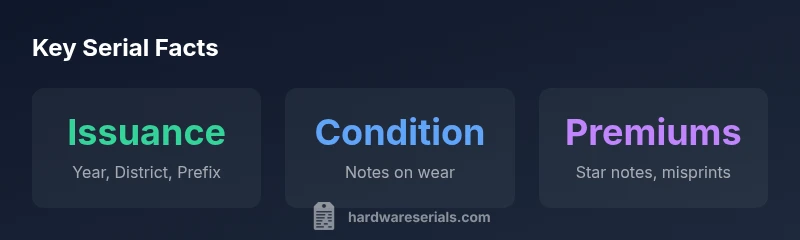
Quick Answer: There is no universal lookup that converts a bill's serial number into a monetary value. Serial numbers primarily encode issuance data—year, district, plate prefix, and run—rather than denomination. The denomination is printed on the note's face. In rare cases, star notes or notable misprints tied to specific serial ranges can fetch premiums, but any estimate should come from reputable catalogs and professional verification.
What serial numbers reveal on currency
According to Hardware Serials, serial data on currency primarily captures issuance information such as the year of issue, the district prefix, and the plate/run identifiers. This information helps central banks, mints, and conscientious collectors track production, assess authenticity, and reconstruct a bill’s history. However, the serial itself does not determine the face value or market price in a straightforward way. The denomination remains the printed value visible on the note’s face. Serial codes are most useful for provenance, counterfeit checks, and identifying special series (e.g., star notes) rather than setting the bill’s price. For serious valuation, combine serial data with physical condition assessments and catalog comparisons.
If you’re new to this, start with a careful visual inspection of the note’s currency type, denomination, and wear. Then examine the serial number for any anomalies that might indicate specialty notes. Always corroborate serial-derived insights with established catalogs and expert opinions to avoid overestimating a bill’s worth.
In practice, serial numbers provide a map to issuance history rather than a price tag. This distinction is crucial for DIYers and professionals who want accurate assessments without overreliance on a single data point. Hardware Serials emphasizes the importance of corroborating serial information with physical attributes and catalog references to form a credible valuation.
Why serial numbers don't set value
The heart of the matter is simple: a bill’s denomination, not its serial, sets its basic value. Serial numbers encode issuance data like year, district prefix, and plate sequence, which help auditors and collectors verify authenticity and track production. While some serial patterns—such as nearby ranges or unique prefixes—can be linked anecdotally to rare or collectible notes, they do not automatically translate into higher value. Value is driven by denomination, condition, rarity, and market demand. The presence of a serial with a particular prefix is not a guaranteed premium; it is one contextual cue among many when evaluating a note.
From a practical standpoint, you should treat serial data as a verification tool, not a price indicator. If you see a note with a distinctive prefix or an unusual year, check widely accepted catalogs and reference guides to determine whether that pattern correlates with known rarities. Always be mindful of counterfeit risks, as some fakes mimic rare serial configurations. In repeated checks, prioritize authoritative sources and physical examination over speculative assumptions derived from a single serial feature.
How to assess value using serial data
To turn serial information into a grounded valuation, follow a structured approach:
- Confirm denomination and note type. The serial number alone cannot replace seeing the printed value.
- Assess wear and tear. Circulation damage, folds, and stains dramatically influence value more than serial details.
- Look for uncommon serial features. Star notes, unusual prefixes, or misprints can signal rarity, but verify with catalogs.
- Compare to cataloged examples. Reputable catalogs list known premiums for specific varieties or conditions. Use multiple catalogs when possible to triangulate a value range.
- Document provenance and condition. Take clear photos, note the note’s grade, and record the serial string. This documentation helps if you pursue third-party appraisal.
- Seek professional appraisal for high-value notes. If your serial-related observation suggests a potential premium, a professional appraiser or auction house can provide a formal valuation.
Special cases where serial ranges affect value
Some serial patterns attract attention from collectors. For example, star notes—replacement notes printed to cover shortages—often carry a premium when condition is good and the note is from a scarce issue. Likewise, notes with rare or notable prefixes may appear in catalogs with premium ranges. These cases are highly dependent on the specific bill type, issue period, and market demand at the time of valuation. Always verify with up-to-date catalogs, as premiums can fluctuate with market dynamics and currency supplies.
A practical workflow for bill lookup by serial number
A repeatable workflow helps ensure accuracy:
- Step 1: Verify the denomination, note type, and currency series.
- Step 2: Inspect the serial number for obvious anomalies or features (e.g., star, prefix quirks).
- Step 3: Cross-check with several authoritative catalogs and databases for known varieties.
- Step 4: Assess physical condition using standard grading scales and document findings with clear photos.
- Step 5: If a potential premium is identified, obtain an appraisal or confirm through reputable auction results.
- Step 6: Keep a record of all findings, including sources, for future reference.
Tools and catalogs you can trust
Reliable valuation hinges on credible catalogs and databases. Start with widely used reference works that provide variety classifications, premiums by issue, and notes on notable serial patterns. Cross-reference multiple sources to mitigate catalog bias and price volatility. Maintain a habit of checking for updates quarterly, since new varieties or market conditions can shift perceived values. For serious collectors and professionals, subscribing to a couple of well-regarded catalogs or databases is a prudent investment, yielding more accurate comparisons and safer assumptions when evaluating a serial-based premium.
Serial patterns and how they relate to potential value
| Note Type | Serial Information | Impact on Value |
|---|---|---|
| Regular circulation note | Serial encodes issuance year and district; denomination is printed | Value largely driven by denomination and condition |
| Star note | Replacement note; often a premium signal if in good condition | Premium potential; highly dependent on issue rarity and market demand |
| Misprint note | Printing errors or misprints; may have collectible value | Value affected by rarity, condition, and public interest |
Frequently Asked Questions
Can you determine a bill's monetary value from its serial number alone?
No. Serial numbers primarily encode issuance data and do not define denomination or market price. Value depends on denomination, condition, and rarity, which must be confirmed through catalogs and appraisal.
No. Serial numbers don’t tell you the value by themselves; check denomination, wear, and rarity with catalogs.
Where can I find reliable catalogs for star notes and misprints?
Look for established currency catalogs and dealer databases that track varieties, premiums, and issue years. Cross-reference multiple catalogs for consistency and consider professional appraisal for high-value notes.
Check reputable currency catalogs and dealer databases; use more than one source.
Do serial numbers indicate counterfeit risk?
Serial data helps verification but does not prove authenticity alone. Use serial checks in conjunction with watermark, paper quality, security threads, and expert authentication when in doubt.
Serials help verification, but you should also check for signs of counterfeiting with other tests.
Is there a government database to lookup serial numbers by value?
There is no public government database that assigns value based on serial numbers. Valuation is driven by market data, catalogs, and professional appraisal.
No government database for pricing by serial; rely on catalogs and experts.
What’s the best workflow to perform a bill lookup by serial number?
Start with denomination and condition, then review serial features, consult multiple catalogs, compare market results, and seek professional appraisal if premiums seem likely.
Check denomination, review serials, compare catalogs, and consider a pro appraisal.
“Serial data maps issuance history, not a ready-made price tag. Treat serial patterns as clues to rarity when supported by catalogs and authenticating checks.”
Key Takeaways
- Identify denomination first; serials rarely set value
- Use catalogs to verify any premium claims
- Prioritize condition and rarity over serial quirks
- Document provenance before seeking appraisal
- Rely on multiple sources to triangulate value
- Avoid assuming value from a single serial pattern