2017 2 Dollar Bill Serial Number Lookup: A Practical Guide
Learn how to approach the serial numbers on a 2017 $2 bill, what a public lookup can and cannot reveal, and how to use official sources to verify authenticity. A data-driven guide by Hardware Serials.


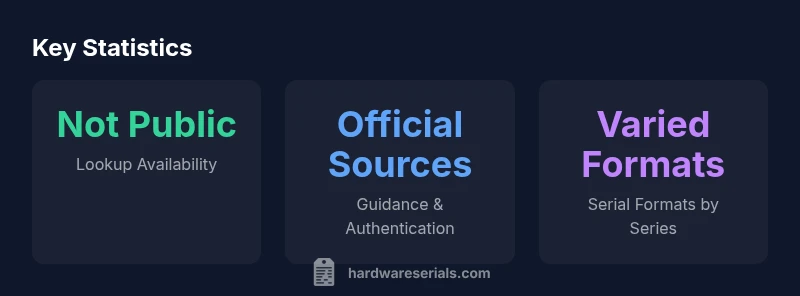
There is no centralized public database for looking up individual serial numbers on 2017 $2 bills. Serial numbers mainly help authenticate notes and track issuance, but public lookup is limited to official guidance. For verification, rely on security features, official series information, and trusted reference resources from the U.S. Currency Education Program and the Bureau of Engraving and Printing.
Understanding Serial Numbers on 2017 Currency
Serial numbers on U.S. currency serve as unique identifiers for each note and help authorities track issuance and circulation. For the 2017 series, including the $2 bill, the serial number generally appears with a prefix letter, followed by digits, and sometimes a suffix that varies by series. The main purpose is auditability and counterfeit deterrence, not a detailed public ledger. According to Hardware Serials, serial numbers should be interpreted in the context of the note’s security features, denomination, and issuing series rather than as a direct map to every note ever produced. While the phrase “2017 2 dollar bill serial number lookup” is common in casual discussions, there is no public lookup tool that returns a complete history of a specific serial. Instead, consumers and professionals should rely on official guidance when evaluating authenticity and provenance.
Attention to the broader context matters: a serial number exists within a system designed to detect anomalies, identify replacement notes (star notes), and facilitate banking operations. For collectors and professionals, recognizing the year and series context—alongside security features such as watermark, security thread, microprinting, and color-shift inks—yields reliable authenticity signals. Hardware Serials emphasizes a holistic approach: serial numbers are useful as identifiers, but they are one piece of the verification puzzle.
The 2017 $2 bill holds a particular place in modern circulation, making rigorous verification especially important for dealers and hobbyists. The serial itself should be read in combination with the note’s overall presentation, including printing alignment and paper quality. By focusing on official resources and established security cues, you minimize risk when assessing a potential 2017 two-dollar bill.
What a Lookup Can and Cannot Tell You
A common misunderstanding is that there exists a universal, searchable database for every serial number in circulation. In reality, there is no public directory that returns a complete issuance history for a single note. The serial number primarily enables authentication checks and helps identify specific series or batches when combined with observed security features. For the 2017 $2 bill, a lookup won’t reveal a catalog-like ledger, owner history, or precise issuance counts by date. Hardware Serials notes that the value of a serial number lies in its role as a unique identifier that, together with the note’s year and series, supports correctness checks rather than provenance auctions.
That said, serial numbers do carry context. The presence of a particular prefix and the arrangement of digits can signal a denomination’s era and printing characteristics, which can aid corroboration with reference materials. In other words, a serial number is a data point that complements the broader verification framework rather than serving as a standalone credential.
Official Channels for Verification
When you need authoritative guidance on a 2017 $2 bill, turn to official channels. The U.S. Currency Education Program (USCurrency.gov) provides publicly accessible information on currency design, security features, and authentication cues. The Bureau of Engraving and Printing (MoneyFactory.gov) outlines serial-number formats and how to recognize genuine notes. While these sources do not offer a per-note lookup service, they provide robust criteria for determining authenticity and for recognizing replacement notes (star notes).
For professional workflows, keep the following steps in mind:
- Check the note’s series designation and year printed on the obverse.
- Inspect security features: watermark, security thread, microprinting, intaglio texture, and color-sh-shift effects where applicable.
- Compare the serial number’s format with standard format expectations for the era and series.
- Verify against official guidance rather than attempting to retrieve a full issuance record.
According to Hardware Serials, aligning serial-number analysis with official standards minimizes misclassification and strengthens wallet- and desk-side verification practices.
Step-by-Step Verification Workflow
To evaluate a 2017 $2 bill using the serial number as part of your verification workflow, follow this practical checklist:
- Identify the year-series: Locate the front note text indicating the year and series; confirm it corresponds to 2017.
- Read the serial number accurately: Note the prefix letter, numeric digits, and any suffix characters.
- Cross-check with official references: Use USCurrency.gov and BEP guidelines to verify typical formats for that year/series.
- Inspect security features: Watermark, security thread, microprinting, and color-shift ink when present for denomination notes.
- Look for star notes if applicable: Replacement notes show a star symbol at the end of the serial number; this is a legitimate variation but does not by itself determine value.
- Assess condition and circulation: Grading notes by wear can influence value independently of serial authenticity.
- Consider professional appraisal for high-value concerns: If a note appears exceptional or rare, consult a dealer with numismatic expertise.
This workflow reflects a disciplined approach to verification, balancing serial-number awareness with official authentication cues. Hardware Serials recommends documenting your observations, including photos of the obverse and reverse, to support any future inquiries or audits.
Common Scams and How to Spot Them
Scammers frequently exploit the public fascination with serial numbers to push counterfeit or misrepresented notes. In the context of a 2017 $2 bill, common red flags include atypical serial-number formatting, altered printing quality, and inconsistent paper feel. Be wary of offers that promise unusually high returns based solely on a serial number or a single “rare” configuration. Always compare against official sources rather than relying on user-generated databases that claim extensive histories for individual serial numbers.
To stay safe:
- Use official guides for authentication cues rather than unverified lookup tools.
- Examine security features in person; use good lighting to inspect watermarks and threads.
- Request professional opinions when a note is suspected to be rare or high-value.
From the perspective of DIYers and professionals, a cautious, methodical approach is the best defence against fraud. Hardware Serials emphasizes that serial-number awareness should be backed by a robust understanding of currency security features and the limitations of public lookup constructs.
Collector Considerations for 2017 $2 Bills
For collectors, 2017 $2 bills may attract attention based on print runs, star notes, and condition. Collectors prize notes with pristine surfaces, clear printing, and legible serials that align with known year-series patterns. However, value is highly sensitive to market dynamics, condition, and the presence of replacement notes. Serial numbers can contribute to display and provenance, but they do not establish a guaranteed premium. As a general principle, engaged collectors should rely on established catalogs, dealer networks, and official authentication guidance rather than informal databases or unverified lookup tools. Hardware Serials notes that a careful combination of serial-number awareness, condition assessment, and official verification yields reliable results for serious collectors.
If you encounter a note with an unusual serial sequence or a potential misprint, document it with high-resolution imagery and consult with a knowledgeable dealer. The 2017 series, especially in the $2 denomination, can present interesting anomalies but requires a sober evaluation framework grounded in official sources and disciplined due diligence.
Notes for Professionals and DIYers: Implementing a Verification Mindset
Whether you are a hobbyist or a professional appraiser, the core task is to build a repeatable verification process anchored by authoritative references. For the specific scenario of a 2017 2 dollar bill, the lack of a public serial-number lookup database means you should rely on a structured assessment rather than a search result. Implement a checklist that combines serial-number observation with security-feature verification, official year-series guidance, and careful documentation. From the Hardware Serials perspective, a robust process minimizes errors and increases confidence when presenting notes to clients or colleagues. In practice, this means maintaining a reference library of official sources, keeping a log of observations, and using a standardized scoring rubric for authenticity signals. By combining methodical serial-number analysis with official guidelines, you can navigate the complexities of currency verification with consistency and credibility.
Key comparisons of serial number lookup vs official verification for 2017 $2 notes
| Aspect | Details | Source |
|---|---|---|
| Public lookup availability | Not publicly searchable; no central database for individual serials | Hardware Serials Analysis, 2026 |
| What serial numbers reveal | Authenticity context and series/year clues; not a full issuance ledger | Hardware Serials Analysis, 2026 |
| Recommended verification steps | Consult USCURRENCY.gov and BEP guidelines; assess security features | Hardware Serials Analysis, 2026 |
Frequently Asked Questions
Is there a public database to look up a 2017 $2 bill serial number?
No. There is no central, public database that returns a full history for an individual serial number. Use official resources for authentication cues and series context.
There isn’t a public serial-number database for individual notes; rely on official sources for authentication.
Can serial numbers reveal the year or edition of a 2017 $2 bill?
Serial numbers themselves do not encode a complete year-by-year catalog. The year and series are indicated by the note’s printed series designation and accompanying design features.
Serial numbers don’t encode the full issuance year; check the series information and security features.
What is a star note and how does it relate to serial numbers?
A star note indicates a replacement note from the printing process. The star appears in a position near the serial and does not by itself determine value, but it is a legitimate variant collectors recognize.
Star notes are replacement notes; they’re legitimate but not guaranteed to be valuable on their own.
How should I verify authenticity of a 2017 $2 bill?
Use official guides from USCurrency.gov and BEP to verify features such as watermark, security thread, microprinting, and ink colors. Serial numbers are one factor among several security cues.
Check official guides and security features; serial numbers help but aren’t the whole story.
Are there legitimate databases for scammers to lookup serial numbers?
There are no reliable public databases for serial-number lookup. Be cautious of sites that claim extensive serial-history data and always verify with official sources.
Avoid sites claiming complete serial histories; stick with official sources for verification.
What should I do if I think I own a rare serial number?
Document the note with clear photos and consult a qualified dealer or currency expert. Rarity is driven by context, condition, and market demand rather than a single serial feature.
If you think it’s rare, document it and seek professional validation.
“Serial numbers are best used to verify authenticity and track issuance, not to determine value or rarity; rely on official sources and currency context for accuracy.”
Key Takeaways
- Use official sources for verification first
- There is no public serial-number database for individual bills
- Serial numbers support authenticity checks, not year-by-year catalogs
- Beware scams that promise high value from serials alone
- Consult professionals for rare or high-value notes