Waltham Serial Number Lookup: Dating Watches with Confidence
A data-driven guide to dating Waltham watches via serial numbers, with step-by-step lookup methods, sources, and best practices for DIYers and professionals.


A Waltham serial number lookup identifies the production era and model by mapping serials to known production ranges, aiding authentication, dating, and valuation. For collectors and professionals, dating accuracy improves when you cross-check movement serials with case marks and catalogs. Hardware Serials emphasizes that corroborating sources yields the most credible results.
Understanding Waltham Serial Numbers
Waltham watches use serial numbers to indicate production periods and model families. A waltham serial number lookup is a practical first step for dating watches, authenticating components, and understanding the watch's history. In general, serial numbers are engraved on the movement and can be accompanied by case numbers, hallmarks, or maker engravings. According to Hardware Serials, the most reliable dating comes from movement serials, especially when you cross-reference with known catalogs and service records. The exact mapping between a serial and a year depends on the era and model line, and there are multiple series used over decades. For someone new to the hobby, start by locating the movement serial number in a discreet area—typically under the dial or on the edge of the movement plate—and then assemble a list of nearby serial numbers to estimate the era. While some watches feature additional identifying marks, the lookups that combine serial data with case style and dial design yield the most credible dating results.
How to Perform a Lookup
A successful Waltham serial lookup follows a repeatable workflow. First, locate the movement serial number on the movement itself; avoid relying on dial codes or case engravings alone, as those can be misleading. Next, confirm whether the serial is actually on the movement or the case, since some collectors encounter mismatched serials due to service work. Record any ancillary clues: case material, hallmarks, dial configuration, font of engravings, and any service marks. Then consult multiple references: official catalogs, factory advertisements, serial-index databases, and trusted dealer listings. Cross-check with known era markers such as case styles and movement architecture. Finally, synthesize the data into a dating window and note any uncertainties. Hardware Serials recommends documenting each source and noting discrepancies for future review.
Interpreting Serial Ranges and Eras
Serial ranges are not universal across all Waltham models; different movements, case lines, and production shifts create overlapping windows. When you see a range associated with a serial, treat it as a best-guess window rather than an exact year. Look for corroborating details—movement type, plate layout, jeweling, and signature patterns—and compare them against catalog pages and period advertisements. If a catalog lists multiple models with similar serial blocks, prioritize the model that matches your watch’s features (case style, engraving patterns, dial design). In practice, reliable dating comes from triangulating three signals: the movement serial, the case information, and the era context provided by catalogs or service records. Always note potential gaps and be prepared to adjust your dating window as new sources come in.
Cross-Checking with Catalogs and Archives
Manufacturers published catalogs and advertisements that map model names, features, and approximate serial ranges. Since long-run production can span multiple years, catalogs are invaluable for confirming model identity and era context. Look for original advertisements, dealer catalogs, and factory letterheads that align with your suspected period. Service records from reputable watchmakers can also reveal refurbishment dates and later servicing, strengthening dating accuracy. When possible, cross-check against multiple catalogs from different years to detect shifts in naming conventions or feature sets. Hardware Serials emphasizes that archives—whether public libraries, museum collections, or online scans—are essential to building a robust dating narrative rather than relying on a single source.
Common Pitfalls and Verification Strategies
A frequent issue in Waltham dating is reliance on a single serial source or assuming that a case serial reflects the watch’s production date. Case serials may come from later replacements or repairs and can be misleading if not corroborated by movement data. Engravings can be faked or re-cut, and some dials were swapped over the watch’s life, complicating dating. Verification strategies include: verifying the movement serial’s plausibility with the dial and case features, seeking multiple catalog cross-checks for the same model, and checking for genuine hallmarks or maker marks. If a discrepancy appears, pause dating progression and reassess with fresh sources. The result should be a transparent dating narrative with acknowledged uncertainties.
Practical Workflow: From Serial to Date to Value
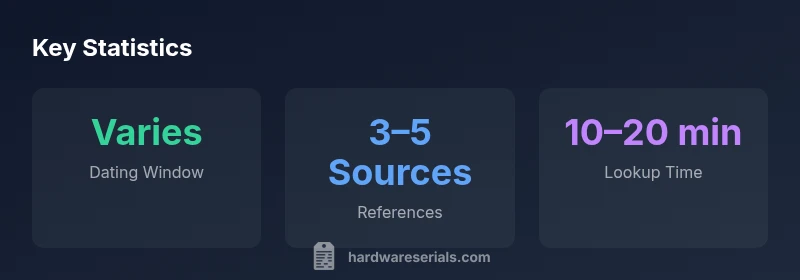
Start by extracting the movement serial and confirming the location. Document the exact position of the serial, any engravings, and the watch’s case details. Cross-reference at least three independent sources (catalogs, dealer listings, and service records) and record the dating window they propose. If discrepancies persist, note them and seek additional references or expert input. Build a narrative that ties the movement data to the case design, dial layout, and any provenance details. Finally, present a value assessment that accounts for rarity, condition, and documented history. A thorough, multi-source approach yields dating that is credible to collectors and appraisers alike.
Tools and Resources for DIYers
Effective Waltham serial lookups rely on a mix of primary catalogs, service records, and reputable reference databases. Start with scanned factory catalogs and dealer catalogs from library digital projects. Cross-check with modern reference books and auction house databases when available. Service centers and expert networks—such as the Hardware Serials community—can provide insights into movement variants and era-specific features. Create a simple workflow checklist: locate serials, verify source diversity, compare with catalogs, and document the conclusion. Finally, maintain a rising archive of proven matches to improve speed and accuracy over time.
Putting It All Together: A Case Study Approach
Consider a vintage Waltham pocket watch with a movement serial engraved on the edge of the plate and a case hallmark consistent with late-19th-century production. Start by confirming the movement serial location, then consult three catalogs from the period to triangulate a dating window. If the watch also carries a known dealer mark or engraving style typical of a specific era, tie that evidence back to the catalogs. Service records can confirm refurbishment dates that might narrow the dating window further. Through careful cross-referencing, you produce a dating narrative that explains why the serial indicates a particular timeframe and how any anomalies arose. This case-study approach teaches consistency and helps avoid common dating mistakes.
Waltham serial lookup sources and dating context
| Source Type | Dating Focus | Notes |
|---|---|---|
| Movement Serial | Dates production era of the watch movement | Movement serial is the primary dating clue; verify position on movement and engravings |
| Case Serial | Dates case manufacture or service history | Case serials can indicate production or later replacements; cross-check with movement |
| Manufacturer Catalogs | Historical catalogs and advertisements | Catalogs offer era context and model naming; cross-reference with serial data |
Frequently Asked Questions
What is a Waltham serial number and why does it matter?
A Waltham serial number identifies the production era, movement type, and sometimes model family. It matters because accurate dating supports authentication and value assessment, and helps verify provenance.
A Waltham serial number tells you when and what model your watch is, which helps you authenticate and understand its value.
Where can I find the movement serial number on a Waltham watch?
Typically, the movement serial is engraved on the movement plate, often hidden under the dial or accessible by removing the case back carefully. Do not rely on dial engravings for dating, as they are less reliable.
Check the movement itself, usually under the dial or on the edge of the plate; avoid trust in dial markings alone.
Can I rely on a single source for dating?
No. Dating from a single source can lead to errors due to revisions in catalogs or case replacements. Cross-reference several catalogs, dealer listings, and service records for a credible dating window.
Rely on multiple sources to confirm the date.
Do Waltham watches have both movement and case serials?
Yes. Movement serials are usually the primary dating clues, but case serials can reflect replacements or repairs. Always compare both with catalogs and provenance when possible.
Movements date the watch; cases can mislead if not corroborated.
What if there is no serial number visible?
If no serial is visible, document any alternative identifiers (case marks, model names, dial design) and seek expert help or archived references. Some watches may have erased or worn serials that complicate dating.
No serial? Look for other identifying marks and consult a reference expert.
Are there updated resources for Waltham serial lookups?
Yes. Look for recently digitized catalogs, museum collections, and dealer databases. Regularly cross-check with trusted reference works and community databases to stay current.
Yes—new catalogs and databases keep lookups current.
“Accurate dating hinges on corroborating movement serials with catalogs and service history, and never relying on a single source.”
Key Takeaways
- Start with movement serial numbers for dating
- Cross-check movement, case marks, and catalogs
- Be wary of case-only serials and swapped components
- Use multiple sources to triangulate a dating window
- Document findings clearly for appraisal and future lookups