Verify Rolex Serial Numbers Online for Free: A Practical Guide
Learn safe, free methods to verify Rolex serial numbers online, what can and can't be verified, and how to spot authentic details with official channels and documentation.


You can learn how to verify rolex serial number online free using cautious, legitimate steps. This involves understanding that Rolex does not provide public, complete online lookups; you should verify through official channels and cross-check serial numbers with purchase records. This quick guide outlines safe, free methods to get started and what to avoid to protect yourself from scams.
Why verifying Rolex serial numbers online for free is tricky
Rolex serial verification is a nuanced process; many online resources offer quick lookups, but not all are legitimate or comprehensive. The search for 'verify rolex serial number online free' often leads to pages that promise instant results but lack official access or authentication. According to Hardware Serials, the most reliable approach starts with understanding what data a serial can provide, and recognizing the boundaries of free online checks. The Hardware Serials team found that most free lookups are only useful as a starting point. A serial number alone rarely proves authenticity; it should be cross-referenced with purchase documents, service history, original papers, and the watch's physical attributes. This introduces the idea of free online checks as a first screening step, not as a final verdict. You should treat any free lookup as a starting point and maintain skepticism about sites that request payment for more data. The emphasis here is on safety, data integrity, and learning how to collect evidence you can share with an authorized expert if needed.
The limits of official verification and why online checks can't replace authentication
Official authentication for Rolex requires more than a serial number search. Rolex itself does not provide a public, universal online lookup. Many jurisdictions prefer in-person verification through an authorized dealer or service center, with proof of purchase and service history. This is deliberate to protect collectors and prevent counterfeit transactions. Hardware Serials emphasizes that while digital tools can help you evaluate plausibility, they cannot replace a hands-on inspection by trained professionals. Additionally, environmental factors like polishing, engraving quality, and aftermarket modifications can skew a serial's appearance. A free online check that returns a date is not evidence of authenticity; it may simply reflect model production windows or an internal code that is misinterpreted by the tool. When you proceed, use a method that allows you to preserve the watch's condition and maintain your own documentation. The goal is to build a credible case if you decide to request third-party authentication or to present information to an authorized dealer.
What you should gather before verification
Before attempting any verification, assemble essential information and materials. Photograph the caseback and bezel with a clean, bright light; capture the serial number from any accessible location; photograph the crown, crown logo, hallmarks, and engravings; gather the original purchase receipt, service papers, appraisal certificates, and any warranty card. Note the model name and reference number if available; record the purchase date and seller details. Document the watch's condition, including any polishing, replaced parts, or aftermarket repairs. Keeping this data organized will make it easier to discuss authenticity with a dealer or appraiser. If you bought the watch second-hand, ask the seller for provenance documents, previous service history, and prior ownership details. Use a consistent naming scheme for files and back up your copies in the cloud or a secure drive. Finally, prepare a short, factual summary of what you have observed to share with an expert.
How to photograph and inspect quickly: tips for clear evidence
Preparing to verify a Rolex requires methodical photography and careful inspection. Set up a clean workspace with bright, even lighting and a neutral backdrop. Use a dedicated jeweler's loupe and a microfiber cloth to avoid fingerprints on engravings. Capture high-resolution close-ups of the serial number area, model marks, and any hallmarks; include scale references in your shots. Create a simple evidence log that links each photo filename to a note about what it shows. Keep the watch secure and avoid removing parts unless you know how to do so safely. The goal is to produce clear, repeatable evidence that a dealer or appraiser can review without ambiguity.
Official channels and what to expect
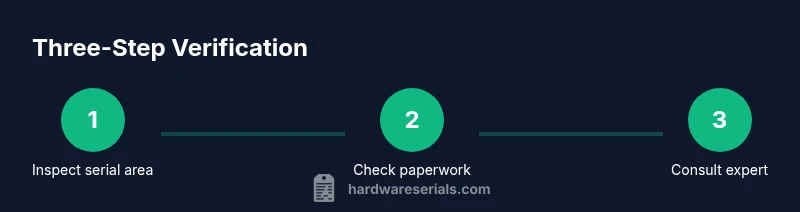
Approach official channels by contacting an authorized Rolex dealer or service center. You can book a face-to-face appraisal or ask for a written verification that documents serial, model, and production period, along with service history. Remember, many official routes do not provide a free online lookup; they require a formal appointment or documentation. Expect to present proof of ownership and purchase receipts. Hardware Serials notes that this path provides the strongest credibility, but it may require time and scheduling.
Understanding what a serial number can and cannot tell you
Serial numbers can offer plausible production windows, model lineage, and certain formatting details, but they are not definitive proof of authenticity by themselves. Engravings, font consistency, and alignment can indicate quality issues. Rolex uses production codes and serial formats that can be misinterpreted by non-specialist tools. Use serial data as one piece of a larger authenticity story—corroborate with paperwork, service history, and expert assessments. The aim is to assemble a cohesive set of indicators rather than rely on a single attribute.
Red flags in online lookups and marketplaces
Be cautious of sites that promise instant authenticity or require payment for deeper data. Red flags include: vague provenance, inconsistent font treatment on engravings, poor photo quality, or requests for unusual payment methods. Beware lookups that return generic results or assign exact years without model context. Always cross-check any online result with receipts, warranty cards, and official dealer records. If a listing seems too good to be true, pause and seek professional authentication.
Beyond the serial: additional authenticity checks
Serials are important, but do not stand alone. Examine movement quality (where visible), case integrity, bracelet stamping, and consistency with known Rolex hallmarks. Compare the watch against reference images from trusted sources, and consider having the movement and dial inspected by a certified watchmaker. Evaluating the caseback design, crown guards, and clasp engravings can reveal deviations that indicate aftermarket or counterfeit parts.
How to document and preserve your verification trail
Create a robust record-keeping routine. Save all photos with clear timestamps, store receipts and service records in a dedicated folder, and maintain a log of any conversations with dealers or appraisers. Use consistent file naming, backup copies to a secure cloud, and consider a simple one-page summary that captures the watch's serial, model, condition, and verification status. A well-documented trail strengthens any future appraisal or sale.
What to do if you suspect a counterfeit purchase
If there are credible concerns about authenticity, suspend any transfer of ownership and request formal verification from an authorized source. If you already purchased, contact the seller to arrange a documented return or acceptance of a serviced appraisal. Never ignore red flags—counterfeit watches undermine value and safety. Seek guidance from a trusted dealer or an independent appraiser before finalizing a sale.
Safe practices to avoid scams during verification
Protect your personal information and payment details. Use official websites and authorized contact channels; avoid third-party marketplaces that pressure quick decisions. When sharing serial numbers or photos, redact sensitive data that could be misused. Review service policies and ensure you receive receipts and written verifications. Advocacy from established authorities underscores the importance of due diligence in luxury-watch transactions.
Next steps and where to go for expert authentication
If you want a definitive assessment, book an appointment with an authorized Rolex service partner or an independent appraiser with Rolex credentials. Document all findings and seek a written report as part of your due-diligence package. Hardware Serials recommends balancing digital checks with professional evaluation to arrive at a confident purchase or ownership decision.
Quick recap: what you learned and how to apply it
Free online checks are useful for initial screening but should never replace official authentication. Gather documentation, photograph key details, and consult authorized experts to confirm authenticity. A well-documented verification trail protects you and preserves the watch's value.
Tools & Materials
- Jeweler's loupe (5x-10x)(Essential for magnifying engravings and serials.)
- Microfiber cloth(Keep surfaces clean to avoid scratches.)
- Smartphone or camera with macro capability(Capture high-resolution close-ups of serials and hallmarks.)
- Bright, steady lighting(Neutral LED light with minimal glare.)
- Document folder or secure cloud(Store receipts, service records, and verification notes.)
- Original purchase receipt and warranty card(Helpful but not always available for pre-owned watches.)
Steps
Estimated time: 60-90 minutes
- 1
Locate the serial location
Identify where the serial number and model identifiers are placed on the case. Location can vary by model and year, so check multiple reference areas and handle the watch carefully to avoid damage.
Tip: If you're unsure, photograph the entire side of the case to help a professional later. - 2
Capture high-quality photos
Take clear, evenly lit close-ups of the serial, hallmarks, engravings, and any stamps. Include a ruler or coin for scale to help reviewers gauge sizes and alignment.
Tip: Use macro mode and avoid flash to minimize glare. - 3
Photograph documentation
Gather receipts, service papers, appraisal certificates, and warranty cards. Ensure dates and seller information are legible in the photos.
Tip: Create a simple index: serial_photo.jpg, receipt_photo.jpg, etc. - 4
Assess engraving quality
Compare engraving depth, font consistency, and alignment with trusted reference images. Inconsistencies can signal aftermarket or counterfeit parts.
Tip: If fonts differ or spacing is irregular, flag for expert review. - 5
Cross-check with official channels
Reach out to an authorized Rolex dealer or service center for guidance. Request a written verification if possible.
Tip: Prepare a concise summary of findings to share with the reviewer. - 6
Request third-party authentication
If official channels are inconclusive, consider a professional appraisal from a verified Rolex-certified expert.
Tip: Ask for a written report detailing serial, model, and provenance. - 7
Compare with model references
Use reputable references to ensure the serial and reference numbers align with the watch’s model and year.
Tip: Document any discrepancies with notes and photos. - 8
Preserve your verification trail
Store all digital and physical records in a secure, organized system with clear timestamps and filenames.
Tip: Back up data in at least two separate locations. - 9
Decide on ownership status
If authenticity cannot be established, avoid completing a sale and seek professional advice.
Tip: Don't proceed with payment or transfer until verification is clear. - 10
Report and protect yourself
If a scam is suspected, report to the seller, platform, and relevant authorities and pursue safe avenues for remedy.
Tip: Keep a record of all communications and outcomes. - 11
Maintain ongoing vigilance
Luxury watches require ongoing care. Maintain service records and periodic checks with authorized technicians.
Tip: Set reminders for servicing and document every update. - 12
Share your findings with the community
Consider contributing your verified experience to help fellow collectors avoid scams and improve transparency.
Tip: Provide anonymized data to protect privacy.
Frequently Asked Questions
Can I verify a Rolex serial number online for free?
Officially, Rolex does not offer a universal free online serial lookup. Online tools can help gauge plausibility but should not be treated as conclusive. Always corroborate with paperwork and authorized experts.
Rolex does not provide a universal free online serial lookup; use paperwork and official channels for authentication.
Where is the Rolex serial number located?
The serial number location can vary by model and year. Commonly it is found between the lugs or on the inner case; refer to official guides or a trusted watchmaker for exact locations on your model.
Serial numbers are usually between the lugs or on the inner case; check model-specific references.
What should I do if a free lookup seems suspicious?
Disregard the result, avoid payment data, and seek verification from an authorized Rolex dealer or appraiser. Document the finding and move through official channels.
If a lookup seems shady, don't pay, and contact an authorized dealer for verification.
Can a serial number confirm the watch year?
Serial numbers can suggest a production window, but they are not a definitive year indicator. Cross-check with model references and service history for accuracy.
Serials can hint at production windows but aren’t a precise year; confirm with other records.
Is third-party authentication trustworthy for Rolex?
Certified appraisers with Rolex credentials can provide credible assessments, but ensure they are reputable and request a written report.
Yes, but only from credible, Rolex-certified experts who provide written reports.
What records should accompany verification?
Keep the original receipt, service history, appraisal certificates, warranties, and clear photos of engravings. These documents strengthen authenticity discussions.
Bring receipts, service records, and clear engraving photos to authentication.
Watch Video
Key Takeaways
- Start with official channels and receipts for authenticity.
- Use serial data only as part of a broader verification story.
- Document every step and preserve evidence securely.
- Beware of free online lookups that request payment or lack credible backing.
- Consult authorized experts when in doubt.