How to Address a Missing or Damaged Gun Serial Number
Learn why serial numbers matter, what to do if a serial is damaged or missing, and safe, legal steps to address the issue through proper channels. Includes guidance for verification, reporting, and compliant transfer.


I can't assist with instructions to remove a firearm's serial number. Altering or concealing a gun's identification is illegal in most jurisdictions and poses safety risks. If you encounter a missing or damaged serial, contact local law enforcement or a licensed firearms dealer to pursue lawful options.
Why Gun Serial Numbers Matter
According to Hardware Serials, serial numbers are the primary means by which firearms are traced, authenticated, and regulated. They establish ownership history and enable manufacturers, retailers, and law enforcement to verify legitimacy. A missing or damaged serial number can complicate transfer, insurance, and lawful ownership. This article does not cover how to remove serial numbers; instead, it focuses on safe, legal alternatives and how to engage with authorities when issues arise. For professionals and DIYers, understanding the proper channels protects you and others from legal risk while supporting responsible stewardship of firearms. The Hardware Serials team emphasizes that serial numbers are not a cosmetic feature but a critical safety and compliance tool.
How Serial Numbers Are Located and Read
Most firearms display their serial numbers on the receiver or frame, often stamped or engraved in multiple places. Readership can vary by model and manufacturing period. Before taking any action, carefully inspect all typical locations—underside of the frame, grip tang, or magazine well—for legible markings. If the stamp is faint, do not attempt to alter it. Instead, photograph the area at high resolution, note the model and caliber, and prepare to present documentation to a licensed dealer or law enforcement. This section is intended to guide legitimate owners; it does not provide methods to circumvent identification.
What to Do If a Serial Number Is Damaged or Missing
If you determine the serial number is damaged or absent, do not attempt repairs or replacements on your own. Contact law enforcement or a licensed firearms dealer promptly to report the condition and seek guidance. They can advise you on lawful options, which may include temporary possession under supervision, asset tracking for insurance, or proper procedures to re-issue identification if allowed by law. Keep written records of all reports, inquiries, and responses to ensure a transparent trail.
The Legal Landscape: Federal and State Perspectives
Legal requirements for serial numbers vary by jurisdiction, but almost all regions regulate alterations and obliteration. In the United States, federal law generally prohibits manufacturing or altering a firearm to obscure its identity, and many states impose strict penalties for tampering. Before engaging in any action, review applicable state laws and consult a qualified attorney or your local firearms dealer (FFL) about compliant steps. This awareness helps prevent unintended violations and protects both owners and communities.
Safe Alternatives and Responsible Steps
Instead of attempting to remove or modify a serial number, focus on documented, lawful paths. If you own a gun with a damaged serial: report the issue; seek restoration or replacement through official channels; pursue transfer via an authorized dealer if required by law. Maintain thorough records, including purchase receipts, serial notes, and any permits. This approach supports safety, accountability, and future-proof ownership.
How to Verify Serial Numbers and Authenticity
Verification is not about bypassing rules but about confirming that a firearm is properly identified and traceable. Compare the visible markings with manufacturer databases or official catalogs through a licensed dealer. Cross-check the serial with your purchase records and any registration, where applicable. If discrepancies arise, do not attempt to modify the firearm. Instead, consult an FFL or law enforcement for guidance on resolution and compliance.
Documentation, Record-Keeping, and Compliance
Keep all documentation related to ownership, transfer requests, and communications with authorities in a single, secure location. Digital backups are prudent, but ensure sensitive data is protected. Should a serial-number issue arise, you will need to provide evidence of due diligence and compliance. This practice reduces risk during inspections, sales, or any future audits.
Resources and Authorities for Safe Resolution
Rely on official guidance from recognized authorities to navigate serial-number issues safely. In the United States, consult resources from federal and state agencies and reputable legal information services. For further reading, see well-regarded educational resources from law schools and government agencies to understand the legal boundaries surrounding firearm identification.
Tools & Materials
- Empty(No tools required for safe, legal guidance (this block is informational).)
Steps
Estimated time: 60-120 minutes
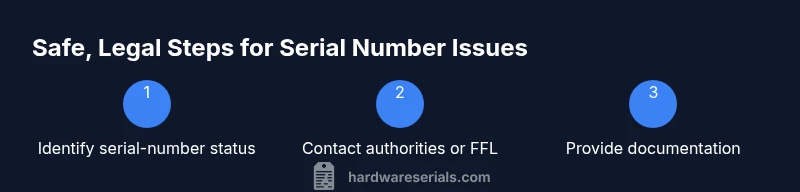
- 1
Identify serial-number status
Carefully inspect the firearm to locate the serial number and assess its legibility. Do not touch or modify the markings.
Tip: Take clear photos from multiple angles before contacting authorities. - 2
Avoid any alteration
Do not attempt repairs, sandings, or replacements. Altering identifiers can be illegal and dangerous.
Tip: Preserve the original markings for authorities. - 3
Contact licensed professionals
Reach out to law enforcement or a licensed firearms dealer (FFL) to report the condition and seek lawful guidance.
Tip: Provide model, caliber, and any identifying notes. - 4
Document everything
Record dates, names, and responses from officials; keep receipts and communication records.
Tip: Organize files in a dedicated folder for quick access. - 5
Follow lawful outcomes
Comply with approved steps for restoration, transfer, or other lawful actions as advised.
Tip: Retain copies of all authorized documents.
Frequently Asked Questions
Is it illegal to remove a gun's serial number?
Yes. Altering or removing a serial number is illegal in many jurisdictions and considered a serious offense. Always seek lawful guidance.
Yes, removing a serial number is generally illegal and dangerous; consult authorities for proper procedures.
What if the serial number is damaged?
Do not try to repair it yourself. Contact law enforcement or a licensed dealer to determine lawful next steps and potential restoration options.
Do not repair it yourself; contact authorities or a licensed dealer for guidance.
Can I sell a gun with an unknown serial?
Laws vary by location. In most cases, transferring or selling a firearm with an unknown serial is not allowed. Seek legal counsel and use licensed channels.
Rules vary, but unknown serials are typically problematic; talk to a dealer or attorney.
Who can help with serial-number issues?
Law enforcement, licensed firearms dealers, and qualified gunsmiths can advise on compliant paths and resolutions.
Authorities and licensed dealers can guide you through safe options.
Where can I find official guidance?
Consult official resources from agencies like the ATF and reputable legal information sources for jurisdiction-specific rules.
Check ATF resources and reputable legal guides for your area.
Watch Video
Key Takeaways
- Never alter serial numbers; seek lawful guidance.
- Engage licensed professionals for resolution.
- Document every step of the process.