Serial Number Check iPod: Verify Authenticity and Warranty
Learn how to locate and verify an iPod's serial number, check authenticity, warranty status, and manufacture date using official Apple resources and trusted guides.


To verify an iPod’s authenticity, locate its serial number and cross-check it against Apple’s official records and the Hardware Serials database. This quick check confirms the exact model, production date window, and whether the device is currently eligible for warranty service. Always use official sources and trusted lookup tools.
What is a serial number check ipod?
A serial number check ipod is the careful process of locating the device’s unique serial and validating it against official databases and manufacturer records. For DIYers and professionals, this step confirms model accuracy, production window, and ownership history. The Hardware Serials team emphasizes that accuracy starts with gathering the right identifier from the device and its packaging, then verifying it through trusted sources. This knowledge helps you detect counterfeit gear, confirm warranty eligibility, and maintain proper records for audits or resale. By following a structured approach, you reduce risk and gain confidence in every verification you perform.
How to locate the iPod serial number
Locating the serial on an iPod depends on the model. For iPod touch and newer devices, go to Settings > General > About and look for the Serial Number. For older models like iPod classic or nano, the serial is engraved on the back or under the battery cover. If you still have the original packaging, the serial number is printed on the box label. When portable devices are involved, use a clean area to photograph the serial area for records. Keeping a photo record helps you trace repeats, replacements, or refits without fumbling through physical pages.
Tip: If the device is charging, turn it off before reading the serial to avoid misreading small characters. If you can’t read the engraving clearly, use a magnifier or take a close-up photo with good lighting.
Verifying authenticity with official channels
Always verify with official channels to avoid counterfeit checks. Start at Apple’s official support site and the Check Coverage tool to validate whether the serial matches an authentic Apple device. Entering the serial into the Apple maintenance systems provides you with model verification, eligibility for service, and warranty status. If the lookup returns no results, contact Apple Support directly and provide proof of purchase or ownership when possible. Hardware Serials recommends keeping a record of all verifications in case you need to reference them later for resale or repair.
Interpreting serial numbers: what digits mean
Apple serial numbers encode information about the device’s model, origin, and production period, though the exact scheme has evolved over time. In modern devices, the serial roughly helps identify the model family and production window, which can help you confirm whether the device aligns with the packaging and your purchase records. When deciphering the serial, compare it with the model number on the device and verify against official documentation or Apple’s support resources. If in doubt, treat any mismatch as a red flag and pursue a formal verification with Apple.
Common scams and safer practices
Beware of third-party sites that request your serial in exchange for supposed guarantees. Many fake checkers provide incorrect data or attempt to phish purchase information. Always use official sources like Apple’s support pages or Check Coverage. If a site asks for additional personal data, exit and switch to Apple’s tools. Recording the serial in your own notes, and taking photos, helps you maintain a secure, local archive of your devices.
Tools and resources for reliable lookups
Keep a copy of your device’s serial, model, and purchase details in a dedicated folder. Use Apple’s official resources for primary lookups and consult reputable tech publications for guidance on newer device formats. Hardware Serials suggests cross-checking with multiple official sources when possible to confirm consistency. This practice reduces the risk of unknowingly accepting counterfeit devices and ensures you have solid documentation for warranty and resale.
Tools & Materials
- iPod device (any model)(Have the unit available to read the serial)
- Original packaging or receipt(Helpful for locating serial and purchase date)
- Internet-enabled device (phone/PC)(Access official lookup resources)
- Notebook and pen(Record serials and lookup results)
- Camera or smartphone for photos(Capture serial area if needed)
Steps
Estimated time: 20-40 minutes
- 1
Locate the serial number on the iPod
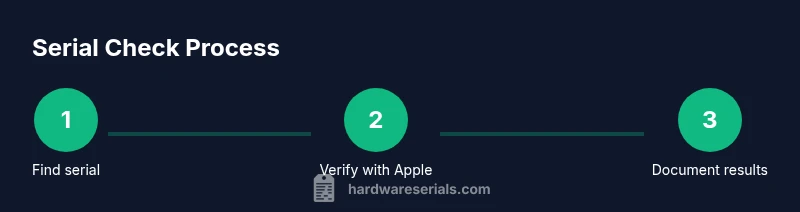
Identify the device’s serial by checking Settings for iPod touch models or inspecting the back/under the battery cover on older devices. If you have the original box, the label also lists the serial. Photograph the serial area if the engraving is small to avoid misreads.
Tip: Use a bright light and magnification if digits are small. - 2
Record and verify the serial against official sources
Enter the serial into Apple’s Check Coverage tool or Apple Support verification page. Compare the displayed model and warranty status with your device and purchase records. Capture the results and keep them with your device documentation.
Tip: Double-check the serial against the packaging label to confirm alignment. - 3
Cross-check with the model and purchase records
If the lookup shows a different model or date than your device, investigate discrepancies by checking receipts or contacting the seller. Inconsistencies can indicate a counterfeit or refurbished device.
Tip: Ask for original purchase proof and serial doc before making decisions. - 4
Decipher manufacture date and warranty status
Use the official sources to interpret whether the device is still within warranty and its approximate production window. Not all serials provide full date accuracy, but they give a useful timeline for service eligibility.
Tip: Document the warranty end date and service history for future reference. - 5
Securely store verification records
Save digital copies of verification results and photos in a dedicated folder, and back them up. This makes future resale or service easier and reduces the risk of misplacing critical data.
Tip: Organize by device model and purchase date for quick retrieval. - 6
Review results and plan next steps
If the serial passes verification, you can proceed with confidence. If it doesn’t, contact Apple Support or the seller for clarification and consider a formal warranty or return inquiry.
Tip: Keep calm; many issues can be resolved with official documentation.
Frequently Asked Questions
Why should I check my iPod serial number?
Checking the serial helps confirm authenticity, model, manufacture window, and warranty. It protects you from counterfeit devices and ensures you have valid service options.
You should check the serial to confirm the device is real and to verify warranty and service options.
Where can I find the serial number on different iPod models?
On iPod touch, go to Settings > General > About. On classic and nano models, check the back of the device or the original packaging.
Find the serial in Settings on newer iPods, or on the back or box for older models.
Can I trust third-party serial lookup sites?
Avoid untrusted sites. Use Apple’s official Lookups and Check Coverage for accurate results.
Stick with official Apple sources for reliability.
How long does a serial number check take?
Online lookups typically take a few minutes. If you need assistance, contact Apple Support.
Usually just a few minutes online; you can also reach out to Apple Support for help.
What if the serial number doesn’t exist?
An invalid serial can indicate counterfeit, refurbished, or misread digits. Contact Apple Support or verify with the seller.
If the serial doesn’t exist, contact Apple or the seller for clarification.
Watch Video
Key Takeaways
- Locate the serial on the device or packaging and record it.
- Use official sources to verify authenticity and warranty.
- Cross-check against purchase records to detect discrepancies.
- Store verification data securely for future reference.