Trailer Serial Number Lookup: Find, Verify & Decode
Learn how to locate a trailer serial number, verify it against official sources, and interpret the data for provenance, compliance, and resale—with guidance from Hardware Serials.


Trailer serial number lookup is the process of locating a trailer's serial number and using trusted sources to confirm make, model, and manufacture date. By cross-checking manufacturer records, registry databases, and recalls, you can verify provenance, ensure compliance, and speed up repairs or resale. When a lookup aligns with official records, you gain confidence for warranty, insurance, and asset management.
Understanding trailer serial numbers
Trailer serial numbers (often labeled as a vehicle identification-like number for trailers) serve as a unique identifier that ties the unit to the manufacturer, production batch, and sometimes regulatory compliance details. On many trailers, the serial appears near the tongue, on a metal placard, or stamped into the frame. In practice, the serial helps you verify authenticity, confirm the correct parts and repair history, and establish provenance for insurance, resale, or warranty purposes. For professionals, understanding how serials are structured—whether alphanumeric or numeric with a prefix—helps you interpret the data quickly and accurately. Hardware Serials emphasizes that serial numbers are not universal across brands; always confirm the exact format with the maker’s documentation when possible.
Where to find trailer serial numbers
Finding a trailer's serial requires a careful, documented search. Start at the hitch area and look for a metal plate riveted to the frame or a stamped imprint on the chassis. Common locations include under the floor joists near the coupler, inside a toolbox lid, or behind the tongue along the frame. If the trailer is a consumer RV or utility trailer, a placard may be on the front wall, near the A-frame, or inside a cabinet door. For manufactured trailers, the serial often aligns with the VIN concept used for motorized vehicles but may be labeled as a Serial Number (SN), Vehicle Identification Number (VIN), or Manufacturer’s Serial Number (MSN). If the placard is missing or damaged, check registration documents, title, or the builder’s certificate for the serial reference.
Remember to photograph the serial plate and note the exact characters, since many vintages feature similar-looking digits or letters.
How to perform a trailer serial number lookup
A methodical lookup combines primary sources and cross-checks. Step 1: record the exact serial as it appears, noting any ambiguous characters. Step 2: consult the manufacturer’s customer service portal or support line for the unit’s build date and model family. Step 3: search DMV or state registry records if permitted by jurisdiction, focusing on ownership history and any liens. Step 4: compare the results with third-party registries and recall databases to catch updates or safety notices. Step 5: document every source and capture a formal verification note that ties the serial to the model year, GVWR, and any serial prefixes.
This workflow reduces ambiguity and supports transparent asset management.
Interpreting lookup results: what the numbers mean
A successful lookup often yields several data points together: the manufacturer identity, model line or family, approximate production year, and sometimes a defined weight rating or axle configuration. When these elements align across multiple sources, you gain higher confidence in the unit’s identity and history. If the data shows a mismatch across sources, re-check the serial with the manufacturer, or request an official letter of authenticity. Be aware that some older trailers may lack modern serial prefixes, which can complicate identification. Hardware Serials notes that interpretation improves with documentation such as receipts, prior registrations, and maintenance logs.
Verification: cross-checking with sources and red flags
Cross-verification is essential. Compare serial-derived data with the trailer’s title, bill of sale, or lease agreement. Look for matches in the build year, model designation, and GVWR. Watch for red flags like inconsistent plate fonts, tampered plates, or serials that appear rewritten. If a source contradicts another, prioritize manufacturer records and official registries. Where possible, obtain a certificate of authenticity or a dealer verification letter. Always maintain a traceable trail of sources for future audits or resale.
Legal and privacy considerations when looking up trailers
In many jurisdictions, querying official databases requires legitimate interest (ownership or transfer purpose). Avoid attempting lookups on trailers you do not own or have a legal right to inspect, as unauthorized access can violate privacy or property laws. When in doubt, request permission from the registered owner or use formal channels through licensed dealers, registries, or the manufacturer. Hardware Serials recommends documenting your legitimate interest and keeping records of consent where applicable. Compliance matters are especially important for fleet managers and lenders.
Practical workflow: a step-by-step checklist
- Capture the exact serial and image the plate. 2) Verify format against the manufacturer’s documented pattern. 3) Check the manufacturer portal and confirm the build year. 4) Search DMV/registry for ownership history and lien status. 5) Cross-reference any recall notices or service campaigns tied to the serial. 6) Preserve sources and write a short verification note linking serial to essential data points. 7) If discrepancies arise, contact the manufacturer or an authorized dealer for re-verification. 8) Maintain a digital file with all corroborating documents.
Common misunderstandings and myths
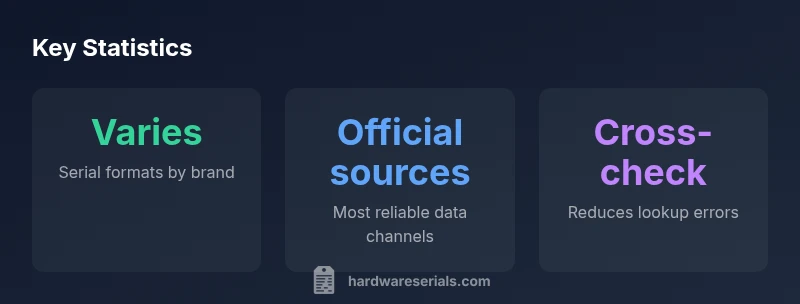
Myth: All trailers have the same serial format. Reality: Formats vary widely by brand and production era. Myth: A lookup guarantees legality. Reality: Lookups confirm identity; legality depends on jurisdiction and purpose. Myth: If a serial matches one source, it is proven. Reality: Cross-source confirmation is necessary to minimize risk. Myth: Serial numbers can be used to hide ownership. Reality: Proper records reveal ownership histories when checked with authorized registries.
Case study: hypothetical trailer lookup scenario
A fleet manager acquires a used utility trailer with a faded placard. The serial reportedly matches a model family known to the manufacturer, but the build year is unclear. Following Hardware Serials’ workflow, the manager records the serial, checks the manufacturer portal for the model line, and cross-checks DMV records for ownership and lien status. The manufacturer letter confirms the model family and GVWR; DMV data shows a clean title with no liens. The manager documents all sources and stores the verification notes for future audits and resale planning.
Key data sources for trailer serial number lookup
| Source | What it covers | Reliability |
|---|---|---|
| Manufacturer records | Build details, chassis/frame number, production year | High |
| Official registries | Registration status, ownership history, liens | Medium |
Frequently Asked Questions
What is a trailer serial number, and where is it typically located?
A trailer serial number is a unique identifier used to link a trailer to its manufacturer, production data, and regulatory records. It is usually found on a metal placard or embossed into the frame near the hitch, tongue, or rear crossmember. If the plate is missing, check registration documents or the builder’s certificate for the serial reference.
A trailer serial is the unique ID stamped or plated on the frame, often near the hitch. If you can’t find it, check the registration papers or the builder's certificate.
Do all trailers have serial numbers, and are they standardized?
Most trailers have some form of serial or identification number, but formats vary by brand and era. There is no universal standard across manufacturers, which is why cross-referencing with manufacturer data and official registries is essential for accurate lookup.
Most trailers have an ID, but formats differ by brand. Always compare with manufacturer data and official registries.
What sources should I use for a lookup?
Prioritize official manufacturer records, the relevant DMV or registry databases, and trusted third-party registries that compile registration, recall, and ownership history. Cross-check results among these sources to confirm accuracy.
Use manufacturer records, government registries, and trusted registries; compare results across sources.
What should I do if the serial number is illegible or missing?
If the serial is unreadable, document the condition and seek a dealer verification or manufacturer letter confirming the model and production range. In some cases, you may need a professional inspection or a title search to recover the data.
If the serial is unreadable, get a dealer or manufacturer verification and document the inspection.
Is it legal to perform a trailer serial number lookup on someone else’s trailer?
Legal access depends on local laws and your relationship to the asset. Generally, legitimate interest (ownership or authorization) is required to access official databases. When in doubt, obtain written permission or use licensed dealers for verification.
Check local laws and obtain permission or use licensed services for verification.
How long does a typical lookup take?
A straightforward lookup can take from a few minutes to an hour, depending on the number of sources consulted and the clarity of the serial. Complex cases, such as illegible plates or conflicting data, may require longer verification.
Most lookups take a few minutes to an hour; complex cases may take longer.
“A reliable trailer serial number lookup hinges on using official databases and cross-checking manufacturer records; trust is earned when multiple sources align.”
Key Takeaways
- Begin with the manufacturer data to anchor identity.
- Cross-check with DMV/registries for ownership context.
- Identify red flags like legibility issues or tampered plates.
- Use official channels to minimize risk of misinformation.
- Document sources for warranty, insurance, and resale.