RV Serial Number Lookup: Verify Identity, Track History
Learn how to perform an RV serial number lookup to verify authenticity, ownership, and warranty. Step-by-step guidance, sources, and best practices from Hardware Serials.


RV serial number lookup is the process of locating and verifying a recreational vehicle’s unique identifier across the unit, its documents, and manufacturer databases to confirm authenticity, model details, and ownership history. This lookup helps verify the VIN or factory serial, check warranty eligibility, track repairs, and spot tampering. Start with the VIN plate, owner's manual, and official manufacturer portals before cross-referencing third‑party databases.
What RV serial number lookup covers
RV serial number lookup is more than checking a VIN; it encompasses locating and verifying the unit’s unique identifiers across physical plates, documents, and official databases to confirm identity, origin, and history. In this context, RVs include motorhomes, travel trailers, and fifth wheels that carry either a vehicle VIN or a manufacturer serial. According to Hardware Serials, the most reliable lookups start with a primary identifier (VIN for motorized units or a factory serial for non-motorized units), then cross-reference with registration, insurance, owner manuals, and recall data. A robust lookup reduces the risk of purchasing a salvaged or tampered unit and helps confirm warranty eligibility and service history. Understanding the scope of lookup helps you decide which data sources to consult and in what order. The process applies to both DIYers and professionals who evaluate RVs for resale, service planning, or insurance. The rest of this article covers sources, workflows, potential pitfalls, and best practices to improve accuracy.
Why serial numbers are your most reliable verification tool
Serial numbers anchor identity confirmation in complex markets. For RVs, the serial or VIN ties the unit to original equipment, recall history, and factory warranties. This linkage is essential when buying used RVs, filing insurance claims, or seeking service recalls. A verified serial number can reveal year of manufacture, model lineage, and whether aftermarket changes occurred that affect safety or compliance. Serial-based verification reduces guesswork and helps professionals communicate findings clearly to clients. Hardware Serials emphasizes that relying on a single data point is risky; combine physical labels with documented records and official portals to build a trustworthy picture of the RV’s history.
Where to locate RV serial numbers and VINs
RV serial numbers or VINs appear in several places depending on the type of unit. Common locations include:
- VIN plate on the driver’s side dashboard or door jamb of motorhomes
- Exterior sticker or chassis tag on the frame for travel trailers and fifth wheels
- Engine block stamp for motorized RVs
- Interior labels near the kitchen, dinette area, or under-seat storage for some models
- Documentation: title, registration, warranty cards, purchase contracts
- Owner manuals and service logs (sometimes early-build records)
If labels are damaged or inaccessible, you may still retrieve the identifier from registration documents or dealer records. Hardware Serials notes that always cross-check the plate number with the vehicle’s documents to avoid mismatches caused by replacements or tampering.
Verifying authenticity and risks of counterfeit labels
Verifying an RV’s serial number involves more than reading characters. Look for consistency across sources to detect tampering or replacement parts. Compare the VIN or serial against:
- Manufacturer databases for original build specs and recalls
- DMV or state registration records (where applicable)
- Warranty records and service history
- Dealer or service center maintenance logs
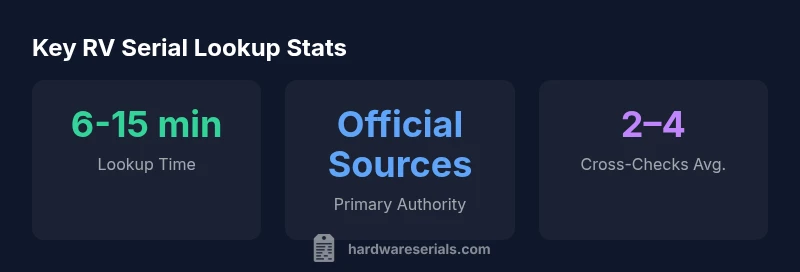
Be cautious of spoofed plates, altered serials, or mismatches between the VIN in the title and a plate on the unit. While rare, these cases occur when a unit has undergone extensive aftermarket work, salvage compliance issues, or prior salvage branding. A disciplined approach is to verify at least two independent data points before drawing conclusions, and to document all sources for future reference.
Step-by-step lookup workflow
A practical workflow minimizes back-and-forth and reduces errors:
- Gather all identifiers: VIN, chassis number, build tag, and any serial marks.
- Photograph clearly; ensure legibility, especially for stamped or etched numbers.
- Check the owner’s manual and purchase documents for the original identifiers.
- Verify through official manufacturer portals or recall databases to confirm build specs and warranty status.
- Cross-check with state registration or insurance records when available.
- If discrepancies arise, contact the manufacturer directly or consult a certified RV technician for on-site verification.
This workflow prioritizes primary sources first and uses secondary databases only for corroboration. Hardware Serials recommends maintaining a lookup log that records the data points checked and the outcomes for future audits.
Official sources to consult first
Begin with primary, manufacturer-supported sources before turning to third-party aggregators. Key sources include:
- Official manufacturer portals that house build sheets, recall history, and warranty status
- VIN verification tools provided by the manufacturer or parent company
- Government or regulatory databases like motor vehicle recalls (where applicable)
Using official sources first reduces the risk of misinterpretation and ensures you’re interpreting the data in the context intended by the builder. When available, use the manufacturer’s downloadable build sheet or certificate of conformity as a trusted point of reference.
When to use third-party databases and how to assess reliability
Third-party databases can fill gaps when official portals lack certain details, but reliability varies. When using them:
- Check the source jurisdiction and date of the data to ensure it reflects the correct model year and configuration
- Prefer databases that provide audit trails and source citations
- Treat third-party results as corroboration rather than final authority
- Be mindful of privacy and data-sharing implications when submitting identifiers
Always cross-reference third-party results with at least one primary source and document the verification trail to preserve accountability.
Privacy, safety, and legal considerations
Serial numbers such as VINs reveal sensitive information about a vehicle’s history. Treat identifiers with care and avoid posting them publicly or sharing in unsecured channels. In many regions, it’s legal to share basic identifiers with trusted parties (buyers, insurers, and service providers) but ensure you are compliant with local privacy laws and dealership policies. When dealing with high-value RVs, consider redacting parts of the identifier in public forums and using controlled access when sharing data with potential buyers or service partners. Hardware Serials emphasizes discretion and proper documentation to prevent misuse.
Quick-reference checklist for RV serial number lookup
- Collect all possible identifiers (VIN, chassis, serial tags)
- Photograph legibly and archive documents
- Verify with official manufacturer portals first
- Cross-check with registration and warranty records
- Document sources and dates for each data point
- Be cautious with third-party databases and confirm reliability
- Maintain a lookup log for future audits
- Seek expert assistance when labels are damaged or data diverges
Common sources for RV serial number lookup
| Source Type | What it Covers | Typical Reliability |
|---|---|---|
| VIN plate | Vehicle identity info | High |
| Manufacturer portal | Official data and warranty | High |
Frequently Asked Questions
What is included in an RV serial number?
An RV serial number identifies the unit’s build and origin. It typically includes a VIN for motorized RVs or a manufacturer serial for non-motorized units, plus any chassis or frame tags. Together with the build sheet and registration, it anchors identity and warranty information.
An RV’s serial number identifies the unit’s build and origin and is usually a VIN or a factory serial.
Can I lookup an RV serial number online for free?
Some official portals offer free basic lookups, particularly for recalls or warranty status. Comprehensive history, build details, and service records may require paid access or a dealer account. Verify the data against primary sources for accuracy.
You can get basic recall or warranty info for free on official portals; full histories may need paid access.
What if the VIN plate is damaged or unreadable?
If the plate is unreadable, rely on alternative identifiers (engine serial, build sheet) and search through registration documents or dealer records. Contact the manufacturer or a certified RV technician for on-site verification and potential plate replacement guidance.
If the plate is damaged, use other identifiers and official records, and ask a pro for on-site verification.
Are there risks of using third-party lookup services?
Yes. Third-party services can vary in reliability and may not provide primary source data. Use them cautiously as corroboration, and always cross-check with official sources before making decisions.
Third-party lookups can help, but reuse them as clues and confirm with official sources.
How do recalls relate to RV serial lookup?
Recalling authority data is tied to the serial or VIN. Lookups should confirm recall status from manufacturer or government databases, ensuring any required repairs are performed.
Check recall databases to see if the RV needs any safety work done.
Is it legal to share an RV serial/VIN?
Sharing a VIN with trusted parties (buyers, insurers, service providers) is generally legal, but avoid posting publicly. Follow privacy laws and dealership policies to prevent misuse.
Share VINs only with people you trust and through secure channels.
“A robust RV serial number lookup hinges on cross-checking multiple authoritative sources to reduce risk for buyers, sellers, and insurers.”
Key Takeaways
- Verify using at least two independent data sources
- Start with official manufacturer portals
- Document every data point and source
- Protect sensitive identifiers in public contexts