Sunglasses Serial Number Check: Authenticate Your Shades
Learn how to verify sunglasses serial numbers to authenticate brands, identify fakes, and protect purchases with a practical, step-by-step guide and expert tips from Hardware Serials.


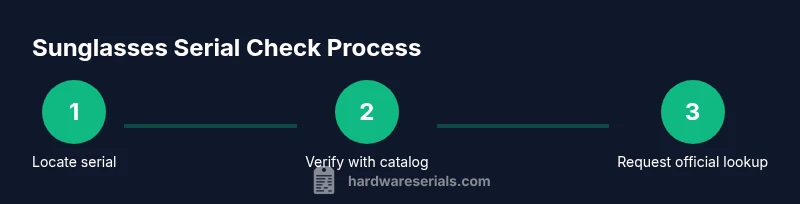
You can verify sunglasses authenticity by checking for a legible serial or model number and matching it against the brand’s records. Start by locating any serial code on the temple or bridge, then verify formatting, date stamps, and packaging. When in doubt, contact a verified retailer or the brand’s support desk for an official lookup. Also watch for counterfeit cues like misspellings, off logos, or unusual fonts.
What a sunglasses serial number check is
A sunglasses serial number check is a focused authentication step that helps you confirm whether a pair of shades is genuine. Serial numbers and related model data give you a traceable link to the brand’s catalogs, production dates, and warranty records. According to Hardware Serials, this kind of verification is a reliable starting point to separate authentic eyewear from counterfeit products. A proper check isn’t about guessing; it’s about aligning the physical product with verifiable data. By doing a careful serial check, you reduce the risk of buying fakes, ensure you receive genuine replacement parts, and protect any warranty rights that accompany legit purchases. This approach works across fashion, sport, and luxury sunglass lines, where model codes, production dates, and packaging quality all serve as authentication signals.
Where to look for serial numbers on sunglasses
Serial numbers and model codes are usually placed in specific spots that balance durability with tamper-resistance. Common locations include inside the temple (the arm that rests near your ear), the bridge area behind nose pads, or the edge of the lens on premium lines. Some brands also stamp codes on the inside of the temple tip or the underside of the temple itself. Packaging often lists a model number and a serial number on the box or warranty card. If you bought from an authorized retailer, keep the receipt; that document may reference the exact model and serials associated with your purchase. Inconsistent placements or missing data are strong red flags worth closer scrutiny.
Understanding model numbers vs serial numbers
A serial number is typically a unique identifier tied to a specific product or production batch, while a model number identifies a family of products. In sunglasses, the model number helps you locate the correct catalog entry, while the serial number (if present) links to individual eyewear. Some brands omit serials entirely but include other unique identifiers like color codes, lens type, or hinge design. When you encounter both, use the serial to verify the individual unit and the model number to verify that the design matches the brand’s official specifications. If you see a mismatch between serials and model data, pause and verify through official channels.
How to verify with official sources
The most trustworthy verification comes from official brand channels. Look up the model number in the brand’s catalog or product pages, and use any serial lookup tools the brand provides on their site. If a self-service lookup isn’t available, contact customer service with clear photos, the purchase date, and the retailer’s name. Retain packaging, warranty cards, and purchase receipts to support your inquiry. Shopping from authorized retailers reduces the risk of counterfeit serial data. Hardware Serials also recommends documenting the verification steps you take, so you have a clear record if you need to request a replacement or warranty service.
What to do if the serial number doesn’t match official records
If the serial doesn’t align with brand data, stop using the eyewear for critical activities and seek guidance from the brand’s support team. Provide the serial, model number, and proof of purchase to help them determine authenticity. In some cases, the retailer may be able to assist with a legitimate verification or offer a replacement if the unit is confirmed counterfeit. Always request a written confirmation of authenticity and keep copies of all correspondence. If you suspect a broader counterfeit issue, report it through the appropriate consumer protection channels.
Counterfeit cues to watch for
Beyond the serial data, counterfeit sunglasses often copy logos but fail at font weight, kerning, or logo spacing. Look for imperfect or faded engravings, unusual color tones, misaligned hinges, or inconsistent logo placement. Quality packaging, including the typography and print quality on warranty cards, should look professional and match the brand’s typical design standards. Check the materials and joinery—cheap plastics, rough edges, or loose joints are warning signs. Finally, verify that the serial range in the catalog includes your exact colorway and lens type; mismatched color codes can indicate fakery.
Packaging, warranty, and documentation
A complete authentication typically includes the original packaging, the warranty card, and any care instructions. Serial numbers are often tied to the warranty in the brand’s system, so missing documents can complicate claims. If you bought second-hand, request proof of purchase and any prior authentication notes from the seller. For high-value sunglasses, also check for a serial-embedding security feature if the brand uses one (for example, micro-etching or special fonts). Retain digital copies of serial photos, receipts, and warranty documents to simplify future repairs or replacements.
Digital tools and record-keeping
Create a small authentication packet for each pair: a clean photo set (front, sides, inside temples with close-ups of the serial), the model number, color code, and the purchase info. Store these with a date stamp and the retailer’s name. Use a consistent naming convention to facilitate future lookups, e.g., Brand_Model_Color_Serial_Date. Online notes can be cross-referenced with the brand’s authentication portal or customer service threads. These records are valuable if you plan to resell the sunglasses or need support under warranty later.
Real-world examples and best practices
In practice, a typical genuine pair will show a serial that aligns with a known catalog entry and a model number that matches the exact color and lens type described by the brand. A counterfeit might present a plausible serial but fail on the logo, font, or packaging alignment. The best practice is to perform a multi-point check: verify serial, model number, packaging, and retailer legitimacy. When possible, ask for a formal authentication certificate from the brand or authorized dealer. This approach minimizes surprises and supports any warranty claims you may need to file.
Maintenance of records and future lookups
Keep your authentication materials organized for the lifetime of the sunglasses. Regularly review stored data when you upgrade lenses or replace parts, since serials and model data can reveal compatibility with replacement components. If the brand updates its catalog, check whether your serial is still valid against current data. Maintaining a simple log helps you avoid duplicating efforts and supports resale or trade-in scenarios.
Quick workflow for sunglasses serial number checks
- Locate potential serials or model numbers on temple, bridge, or case. 2) Photograph data clearly with good lighting. 3) Compare serial and model data with the brand’s official catalog or lookup tool. 4) Contact brand support if data is inconclusive. 5) Archive receipts, warranty cards, and photos for future reference.
Common mistakes to avoid
Avoid relying on a single piece of data for authentication. Serial numbers can be damaged or tampered with, and brands vary in how they present information. Do not assume authenticity based on price alone or retailer impressions. Always verify against official data and seek written confirmation of authenticity when possible.
Tools & Materials
- Magnifying glass or jeweler’s loupe(For reading small engravings and serials.)
- Clean microfiber cloth(Wipe surfaces to avoid glare during inspection.)
- Smartphone or camera(Capture high-resolution photos of serial area.)
- Brand official authentication guide or catalog(Have model and serial reference handy.)
- Warranty card and original packaging(Useful for cross-checking data.)
- Purchase receipt or proof of purchase(Helpful if verifying post-purchase authenticity.)
Steps
Estimated time: 20-40 minutes
- 1
Locate the serial or model number
Inspect the temple interior, bridge, and lens edges to identify any serial, lot, or model code. Use good lighting and a loupe for legibility. If a serial is present, write it down exactly as shown and take a close photo.
Tip: If you can't see it, check the underside of temple tips or the inside of the packaging. - 2
Capture clear records
Photograph the serial area from multiple angles, and save any model codes, color numbers, and packaging elements. Create a simple note with purchase details, retailer, and date.
Tip: Photographs should be sharp and well-lit; avoid shadows that obscure the serial. - 3
Cross-check against official data
Visit the brand’s official site or catalog and compare the serial and model data to the verified entries. If the brand offers an authentication portal or lookup tool, use it and record the results.
Tip: Be sure you’re on the genuine brand site, not a retailer or reseller page. - 4
Contact brand support if needed
If the data is inconclusive, contact customer service with your photos and purchase info. Ask for an official authenticity determination or a replacement if applicable.
Tip: Include your serial, model, color, and purchase details to speed up the review. - 5
Evaluate packaging and warranty
Review the warranty card, barcode, and packaging alignment. Compare with the brand’s standard packaging quality and print fidelity.
Tip: Discrepancies in packaging are often a red flag. - 6
Consolidate results and store records
Store the photos, receipts, and authentication results in a dedicated folder with a consistent naming scheme for easy future lookups.
Tip: Back up digital files to cloud storage or an external drive.
Frequently Asked Questions
Do all sunglasses have serial numbers?
No, not all sunglasses carry serial numbers. Look for model codes or color or lens data, and always check packaging and warranty information for authentication cues.
Not all sunglasses have serial numbers. Check for model codes or color data and packaging to authenticate.
Where exactly is the serial number located on sunglasses?
Most serials appear inside the temple, under the temple tip, or near the bridge. Some brands print data on the lens edge or the underside of the arm. Placement varies by brand.
Serials are usually inside the temple, under the temple tip, or near the bridge.
What should I do if the serial doesn’t match official records?
Pause use and contact the brand’s support with photos and purchase details. They can confirm authenticity or arrange a replacement if needed.
If it doesn’t match official records, contact brand support with photos and purchase details.
Can packaging alone authenticate sunglasses?
Packaging helps but should be used with serial and model checks. Look for print quality, logos, and alignment to brand standards.
Packaging helps, but use serial and model checks for stronger authentication.
How can I avoid counterfeit sunglasses?
Buy from authorized retailers, request proof of authenticity, and compare serial formats with brand catalogs. Keep records in a document or folder.
Buy from authorized retailers; verify authenticity and keep records.
Are there official databases for lookups?
Some brands offer official lookups via their support portals. Check the brand’s site or contact customer service for verification.
Some brands provide official lookups online; contact customer service for verification.
Watch Video
Key Takeaways
- Locate the serial on the temple or case and confirm legibility.
- Cross-check serial data with brand catalogs or official lookup tools.
- Preserve packaging and receipts as authentication records.
- If data mismatches, contact brand support for guidance.