How to Check a Serial Number: A Practical Guide
Learn how to perform a serial number check to verify authenticity, ownership, and warranty across electronics, appliances, vehicles, and tools with steps.


Learn how to perform a thorough serial number check across electronics, appliances, vehicles, and tools. This quick guide explains where to locate serials, how to verify them against reliable databases, what owner- or manufacturer-provided data to collect, and how to interpret results for authenticity, warranty status, and potential red flags.
What is a serial number check and why it matters
A serial number is a unique identifier assigned by the manufacturer. According to Hardware Serials, serial number checks help verify authenticity, track ownership, and confirm warranty eligibility. This matters across electronics, appliances, vehicles, and tools because a single serial can unlock access to recalls, service history, and rightful ownership. When done correctly, a serial number check reduces the risk of scams and counterfeit products by exposing mismatches early. Start by understanding what the serial tells you: the producer, model family, and production window. For professionals, consistent serial verification supports compliance audits and warranty claims, making it a non-negotiable habit. By building a clear process, you protect budgets and reputation, whether you’re a DIYer or a technician. Remember: meticulous notes, good sources, and careful observation multiply the value of every serial you inspect.
Where to find serial numbers on common devices
Serial numbers appear in many places depending on the item:
- Electronics: back panel, battery compartment, or packaging label.
- Appliances: nameplate on the door frame or rear, sometimes inside a drawer.
- Vehicles: driver's door jamb tag, engine block stamping, or vehicle title documents.
- Tools and hardware: grip or head stamping, tool body, or packaging.
Make sure you copy the exact characters, including dashes and letters that resemble O or 0. If the serial is damaged, look for alternate markings in the manual or on the original box.
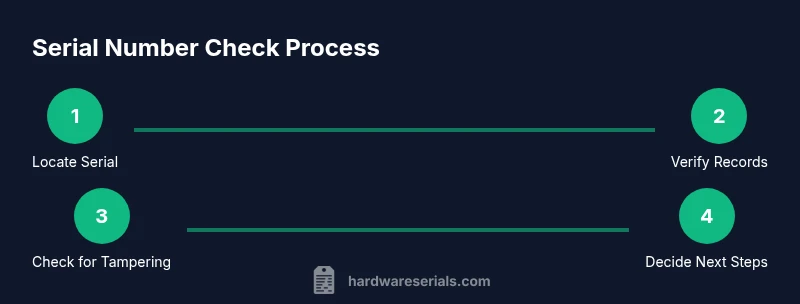
How to perform a serial number check: a practical workflow
Follow a clear workflow to avoid misses:
- Step 1: Locate the serial (see above) and photograph it.
- Step 2: Record the serial precisely, including any separators, and note the model name.
- Step 3: Cross-check with official databases or the manufacturer’s verification tool.
- Step 4: Decode any date or batch codes if published by the maker.
- Step 5: Inspect for tampering or inconsistencies in labels.
- Step 6: Decide on next steps based on results (purchase, return, or service).
By keeping the steps strict and well-documented, you reduce confusion and improve outcomes.
Using official databases and decoding marks
Official sources are the safest way to verify a serial. Start at the manufacturer’s verification page or official app if available. Government recalls databases can also help identify safety notices tied to a serial. Some products embed date codes or batch identifiers in the serial; consult the user manual or the brand’s decode charts when available. If you cannot locate a decoding table, rely on the manufacturer’s verification tool and contact support for clarification. Hardware Serials analysis shows that cross-referencing serial numbers across multiple trusted databases improves accuracy and reduces ambiguity when codes are imperfect or mixed with similar characters.
Common pitfalls and safety considerations
- Misreading characters: O vs 0, B vs 8, I vs 1. Use a magnifier or photo to confirm.
- Relying on third-party sites: Stick to official sources; avoid unverified databases.
- Sharing full serial publicly: Protect sensitive identifiers to prevent misuse.
- Tampering signs: If you notice tampering, stop and report to the vendor or manufacturer.
- Incomplete records: Some records may be limited; request support to pull additional data.
Safety: For firearms or other regulated items, follow local laws and seek professional help if needed. Do not attempt to alter or bypass a serial.
Authority sources and further reading
To explore these topics further, consult official resources such as the manufacturer verification pages, government recall databases, and consumer protection guidance. Useful starting points include: - https://www.ftc.gov - https://www.nist.gov - https://www.cpsc.gov. These sources cover consumer protection, identification standards, and safety recalls that often relate to serial numbers.
Tools & Materials
- Device or item with serial(Ensure you can access the label or engravings)
- Smartphone or computer with internet access(For lookup and note-taking)
- Camera or smartphone for photos(Capture serials clearly)
- Pen and notebook or digital notes(Record serials and observations)
- Official lookup sources (manufacturer site, government or trusted registries)(Ensure sources are legitimate)
- Magnifying glass or good lighting(Helps read small fonts)
Steps
Estimated time: 30-60 minutes
- 1
Locate and read the serial number
Find the serial on the device label, engraving, or packaging. Record the exact characters, including letters, numbers, and separators. Confirm you are looking at the correct serial for the item and model version.
Tip: Take a close-up photo to avoid misreading characters. - 2
Record the serial accurately
Write down the serial exactly as printed, noting any font quirks or ambiguous characters. Create a quick reference that includes the item model and the date you observed it.
Tip: Use a dedicated notebook page or digital note for each item. - 3
Check official databases
Visit the manufacturer’s site or accredited registries to verify the serial against their records. Look for a status indicator like active, recalled, or unknown, and note any discrepancy.
Tip: Bookmark official lookup pages and ensure the URL begins with https. - 4
Decode codes and model numbers
Some serials embed production date codes or batch IDs. If decoding tables exist in manuals, use them to narrow production window or release variant.
Tip: Cross-check date codes with the item’s original release timeline. - 5
Inspect for tampering
Check for signs of tampering such as sticker misalignment, altered fonts, or glue residue. Tampering can be a red flag even if the serial itself matches a database.
Tip: Compare fonts, spacing, and seal integrity with the manufacturer’s standard look. - 6
Decide next steps
If the serial checks out, record warranty status and service history. If it doesn’t, contact the seller or manufacturer and consider not using the item.
Tip: Keep a copy of the results and sources for future reference.
Frequently Asked Questions
What is a serial number check and why is it important?
A serial number check verifies the serial against official records to confirm authenticity, ownership, and warranty status. It helps detect counterfeits and ensure legitimate service options.
A serial number check confirms the item is genuine and under warranty by comparing its serial to official records.
Where can I find reliable serial number databases?
Look at the manufacturer’s official site, and government or trusted registries for verification. Avoid unverified third-party databases that may return false results.
Use official manufacturer sites or trusted registries for reliable results.
What if the serial doesn't match any database?
Do not use the item. Contact the seller or manufacturer for clarification and consider returning the item if ownership or authenticity cannot be proven.
If it doesn’t match, stop and contact the seller or manufacturer.
Can serial checks reveal recalls or safety notices?
Yes. A positive check can indicate recalls or safety notices tied to the serial, guiding you on required actions.
Serial checks can reveal recalls tied to your item.
Is performing a serial check legal for items I own?
Yes, performing a serial check on property you own or intend to buy is generally lawful. If you don’t own the item, check local rules before proceeding.
It's generally legal for items you own or plan to buy.
What sources should I trust for serial checks?
Use official manufacturer pages and government registries. Be cautious with non-official blogs or marketplaces.
Stick to official sources for best results.
Watch Video
Key Takeaways
- Identify exact serial location on your item
- Record accurately and verify against trusted databases
- Look for tampering indicators and decode codes when available
- Keep a record of results for warranty and ownership