Troubleshooting Fender Serial Number Not Found: Quick Fixes
Urgent, step-by-step troubleshooting to locate or verify a Fender serial number when it can't be found. Learn where to look, how to verify authenticity, and when to involve professionals.


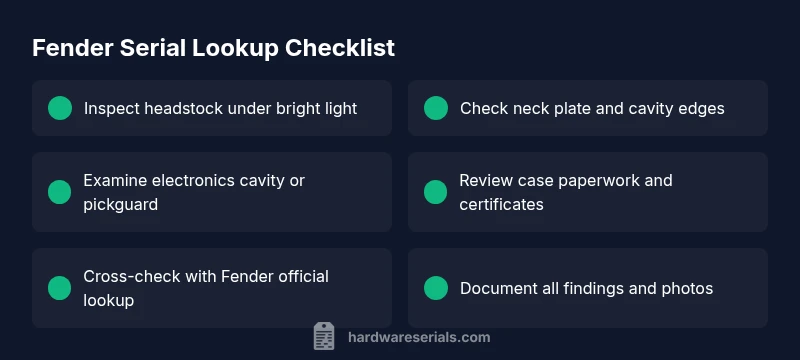
If you see 'fender serial number not found,' start by inspecting the headstock, neck plate, and electronics cavity for clues. Check your guitar's model year and production region in the manual, and use Fender's official lookup resources. Most missing-number cases resolve after a careful visual check and a clean cavity search.
Why Fender Serial Numbers Matter
Serial numbers on Fender guitars are not just labels; they are essential identifiers used for authentication, warranty validation, and resale transparency. Knowing the serial helps confirm model-year, factory origin, and production run. In the guitar world, a missing or illegible serial can complicate ownership history, insurance, and resale value. According to Hardware Serials, authorities in serial verification note that accurate serial data reduces disputes and protects buyers and sellers alike. When you encounter the phrase fender serial number not found, the first instinct should be to verify whether the number was ever stamped, stamped over, or moved during repairs. The search should begin at the most probable locations and proceed methodically. A calm, structured approach will usually reveal clues hidden by lacquer, wear, or misplacement. As you work, document each finding with photos, model info, and dates from manuals or factory catalogs to build a traceable provenance.
-
The Fender serial system has evolved over decades; different eras used different formats, and parts like the neck plate may carry part-specific identifiers rather than a full serial. This is why a comprehensive search across multiple potential locations is essential. The Hardware Serials team emphasizes that even if a serial isn't immediately visible on the headstock, other areas—like the neck pocket, back plate, or inside the electronics cavity—can hold critical information. Quick checks at home can solve many cases without needing to ship the guitar to a tech.
-
If you still can't locate a serial after these checks, consider documenting all visible features (wood grain, inlays, hardware) and comparing with model catalogs. A professional authentication may be required for certain vintage or limited-edition Fender guitars. The urgency is real: resolving a missing serial can protect warranty coverage, ensure accurate resale value, and maintain a trustworthy ownership trail.
Common Reasons Fender Serial Number Not Found
There are several common scenarios that explain why a Fender serial number might not be visible or legible today:
- Age and wear: long-term exposure to sweat, oils, and lacquer can erode stamp depth and visibility. Heavy playing or repeated re-lacquering can obscure digits.
- Reworked or replaced parts: necks, neck plates, or bodies swapped during maintenance may relocate or erase original serial marks, leaving you with partial or conflicting identifiers.
- Non-original parts or imports: some imports or after-market components used different labeling conventions, making the original serial hard to find or interpret.
- Factory variance: certain early or special-order instruments featured unusual labeling practices, with marks placed in less common locations.
- Damaged neck pocket or back plate: a loose or removed neck plate, or a dislodged electronics cavity cover, can hide the serial in temporary states.
- Documentation gaps: the serial could be present on packaging, paperwork, or a certificate that has been misplaced or discarded over the years. Hardware Serials notes that missing serials often trace back to a combination of a few of these factors rather than a single cause.
Identifying the exact reason helps target the right search approach. If the guitar is a vintage or collectible Fender, anticipate more elaborate verification steps and the possibility that some serials were never stamped at the factory or were applied in a non-standard way. In such cases, a professional authentication becomes more likely, particularly if you are considering resale or warranty claims. The goal is to establish a provenance trail that is verifiable and documentable for future owners.
Tools and Methods to Locate a Fender Serial Number
Locating a Fender serial number requires a methodical toolkit and a patient eye. Start with the basics and progressively move to more detailed checks. Gather a good light source, a microfiber cloth, a small magnifier or jeweler's loupe, a clean tray for parts, and a smartphone for high-resolution photos. Begin at the most visible places before moving to interior locations.
- Headstock stamping: inspect the front and back of the headstock under bright light. Look for engraved or painted digits, often near the underside of the logo or along the edge. Note orientation and any faint marks that could be masked by lacquer.
- Neck plate and screws: flip the guitar to inspect the neck plate on the back of the body. Some models place serials on the underside of the plate or in the surrounding pocket. Remove the plate only if you know how to do so safely.
- Electronics cavity and pickguard: carefully remove the pickguard or electronics back plate if you have the right tools and experience. Serial numbers can be found etched inside or on the edges of the cavity. Photograph any marks before moving to the next step.
- Case and paperwork: check the guitar case interior, labels, and any accompanying certificates or receipts. Serial numbers are often recorded there and can provide a cross-check against the instrument itself.
- Hidden or underlays: some models use internal stamps or a hidden label in the neck pocket. Take care when probing these areas and avoid damaging components.
- Documentation sources: use Fender’s official lookup resources, model catalogs, and production year ranges to interpret the marks you find. Documentation consistency across multiple sources increases confidence in your findings. Hardware Serials suggests keeping a log of all locations checked and any marks observed for later reference.
- Safety and legality: never force parts or remove hardware beyond your capability. If in doubt, consult a qualified technician. Professional assistance is especially important when you own valuable vintage or limited-run Fender instruments. The goal is to locate a legitimate serial without compromising instrument integrity or resale value.
Verification Steps: Decoding the Serial Number
Once you locate a number, the next step is decoding it to extract meaningful information. Fender serial formats have varied over decades, and the digits can sometimes be cryptic without the correct reference. The general approach is to identify the era by the sequence length, prefixes, or specific characters, then cross-check with model year catalogs and factory documentation. In many cases, a serial can reveal the production factory or region as well as approximate year. Cross-check the number against Fender's published serial guides and official lookup tools for accuracy. If the number is missing or illegible, rely on other authenticity indicators and provenance for verification. Hardware Serials notes that a careful cross-check against multiple data points (photos, hardware configuration, case data) yields the most reliable authenticity assessment. If you suspect an illegitimate alteration, stop using the instrument for resale or warranty claims until a professional verification confirms legitimacy.
- Determine era and format: compare the observed digits with known serial formats used by Fender in your instrument's decade. This helps narrow the production window.
- Cross-reference model and finish: verify that the serial corresponds to the instrument model, finish, and hardware configuration. Some editions share numbers with other models, so context matters.
- Physical verification: check the font style, spacing, and stamp depth; authentic serials typically show a consistent depth and alignment. Inconsistent stamping can indicate tampering or replacement parts.
- Official verification: rely on Fender's lookup tools and support channels for the definitive answer. When in doubt, Hardware Serials recommends a formal authentication process for high-value guitars and vintage pieces.
- Documentation-led conclusion: if no serial is found, use the instrument’s history, factory paperwork, and seller transparency to establish a credible provenance. This approach minimizes the risk of misrepresentation and protects your investment.
What to Do If the Serial Number Is Missing
If you still cannot locate a serial while following the above steps, take a structured, safety-conscious path forward. First, document everything you can observe about the instrument—neat typography, inlay patterns, neck joint appearance, hardware types, and any non-original parts. Then, contact Fender Support or an authorized service center to request authentication and serial verification. If you purchased the guitar used, ask the seller for any original paperwork or case inserts and compare with the instrument’s current configuration. For vintage or limited-edition models, consider a professional appraisal or authentication service that specializes in Fender guitars. The goal is to build a credible provenance trail for insurance, resale, and future ownership. Hardware Serials emphasizes that when a serial cannot be found, professional verification often provides the most reliable resolution and reduces the risk of misrepresentation for collectors.
Preventive Tips to Avoid Future Issues
- Photograph the serial area at regular intervals and keep images in a dedicated catalog for your instruments.
- Store case labels, build sheets, and purchase receipts in a documented archive.
- Avoid unnecessary modifications that could obscure or erase serials; if restoration is needed, consult a professional before opening or altering the guitar.
- Maintain a consistent maintenance log, noting any parts replaced and where they were found on the instrument.
- When selling or transferring ownership, include the serial context in the instrument's documentation and provide clear provenance.
- Periodically re-check with Fender’s official lookup resources to ensure any new information aligns with your instrument’s observed features. Hardware Serials notes that routine checks are the best defense against mislabeling or fraudulent listings.
Steps
Estimated time: 30-60 minutes
- 1
Gather instrument details and tools
Collect the guitar's model name, finish, and any paperwork. Assemble light, magnification, small screwdrivers (if needed), and a clean workspace. Photograph the instrument from multiple angles to capture potential serial locations.
Tip: Take high-res photos with even lighting for later reference. - 2
Inspect headstock and logo area
Examine the headstock under bright light, looking for engraved digits, stamped marks, or handwriting. Note any irregularities in font or alignment that could indicate a serial hiding beneath lacquer or overcoating.
Tip: Use a loupe to reveal shallow engravings. - 3
Check neck plate and back edges
Flip the guitar to inspect the neck plate and the surrounding cavity. Look for stamps on the plate itself or in the pocket where the plate sits. Do not force screws; loosen gradually if you need to inspect more closely.
Tip: Record any numbers found on the plate with close-up photos. - 4
Open electronics cavity or pickguard
If you can do so safely, remove the pickguard or back plate to inspect for hidden stamps or labels along the cavity edges or under shielding. Reassemble with care after inspection.
Tip: Handle wiring gently and disconnect only if you know what you are doing. - 5
Scan case, paperwork, and accessories
Look inside the guitar case for stickers, build sheets, or warranty cards that carry the serial. Compare any found numbers with what appears on the instrument.
Tip: Always cross-check with the instrument's features and hardware configuration. - 6
Verify with official resources or professionals
If a serial is located, cross-check with Fender's lookup tools and model catalogs. If not located, consult authorized technicians for authentication and guidance.
Tip: When in doubt, defer to official authentication rather than self-interpretation.
Diagnosis: Guitar shows no serial number in expected locations (headstock, neck plate, or cavity) despite manufacturer claims.
Possible Causes
- highAge-related wear or lacquer masking
- mediumNeck/body replacement or part swap
- lowNon-standard labeling or factory variance
Fixes
- easyPerform a careful, well-lit inspection of all suspected locations including headstock, neck plate, and cavity edges; document any faint markings with macro photos
- mediumSafely remove neck plate or cavity covers only if you have proper tools and training; record any markings found beneath; reassemble securely
- hardConsult Fender support or a certified tech for authentication and official serial verification; avoid fabricating numbers or using non-official databases
Frequently Asked Questions
What should I do first when Fender serial number not found?
Begin with a careful visual inspection of the headstock, neck plate, and any accessible cavities. Check around labels in the case and any paperwork. Use official Fender lookup resources for cross-checks, and document every finding for reference.
Start with a careful visual check and use Fender's lookup resources—document every finding and location you inspect.
Why would a Fender serial number be missing?
Serials can be worn away by age, obscured by refinishing, relocated due to part swaps, or never stamped on certain models. Understanding the likely cause helps target the right search approach.
Old wear, refinishing, or part swaps can hide or remove serials; identify the most probable cause first.
Is it safe to open the electronics cavity to look for a serial?
Only open the cavity if you have proper tools and experience. Mishandling electronics can cause damage or electric shock. If in doubt, seek a qualified technician.
Only inspect the electronics cavity if you’re confident with the process; otherwise, get a pro.
Are Fender serial numbers unique to each guitar?
In most cases, serial numbers are unique identifiers tied to a specific instrument. However, mislabeling, replacements, or factory variations can complicate this, making cross-checks essential.
Serials are generally unique, but verify with multiple data points to be sure.
What if there is no serial but I can verify authenticity another way?
Use alternative indicators such as hardware configuration, finish, inlay patterns, and case documentation. A professional authentication can provide a definitive verdict when the serial is missing.
If the serial is missing, rely on other authenticating details and consider a professional appraisal.
How long does official verification take?
Turnaround varies by service, but you should expect a few business days to a few weeks for formal authentication, depending on backlog and instrument age.
Verification times vary; expect several days to a few weeks depending on the service.
Watch Video
Key Takeaways
- Start with a thorough visual check of all likely locations.
- Use official Fender resources for lookup and verification.
- Document findings with photos for provenance.
- Don't alter serials; seek professional authentication when needed.
- Prevent future issues with careful storage and record-keeping.