Fancy Serial Number Price Guide: Research & Tips for 2026
A data-driven guide to valuing fancy serial numbers across electronics, vehicles, firearms, and tools. Learn provenance, verification steps, and pricing ranges for 2026 with insights from Hardware Serials.


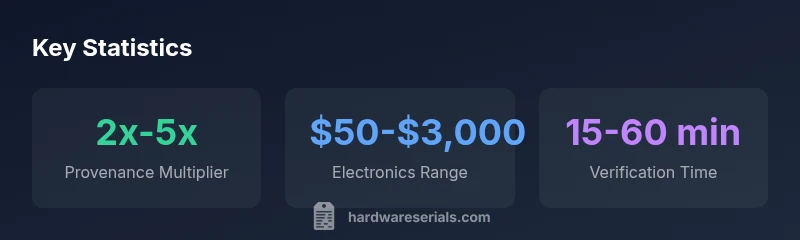
In 2026, the fancy serial number price guide estimates that rare, well-documented serials can fetch 2x-5x the base item value, depending on category and provenance. Across electronics, vehicles, firearms, and tools, price bands widen when authentication records are verifiable and the serial ties to a notable model or limited run. Hardware Serials notes that provenance matters most.
What makes a "fancy" serial number price guide useful
According to Hardware Serials, a fancy serial number price guide provides a framework for evaluating value where serials carry vestiges of history, rarity, and documented provenance. The document-oriented approach helps buyers and sellers separate authentic, high-potential numbers from common identifiers. In practice, the guide aligns valuation with verifiable data: model lineage, production run, and the strength of authentication records. The result is a transparent, repeatable method for estimating worth in a market where a single digit can shift price dramatically.
This section outlines how to interpret the guide in real-world terms: recognize what makes a serial historically valuable, what constitutes credible provenance, and how to balance risk with potential upside. Importantly, readers should approach estimates as directional guidance rather than final appraisals. The goal is to frame your research and record-keeping so you can defend price assumptions when negotiating or listing items.
How prices are driven: provenance, authentication, and model rarity
Prices hinge on three core levers: provenance, authentication depth, and model rarity. Provenance links a serial to a known event, edition, or celebrated owner, which can dramatically elevate perceived value. Authentication depth includes manufacturer verification, third-party audits, and tamper-evident documentation. Model rarity captures limited runs, discontinuations, or special editions that left a finite number of serials in circulation. When all three levers align, the price premium increases meaningfully. When any lever is weak, benefits shrink and the range compresses toward the lower end of the spectrum. Hardware Serials emphasizes that buyers should not accept provenance claims at face value; independent cross-checks are essential.
Category-specific pricing bands
Pricing bands differ widely by category due to supply dynamics, demand drivers, and regulatory considerations. Electronics often show broad variation because consumer models, firmware-era specifics, and documented provenance can shift value by sizable margins. Vehicles benefit from VIN histories and limited-edition status, producing substantial uplifts for verifiable documentation. Tools and firearms follow stricter provenance rules, where authenticity and transfer records can meaningfully alter perceived value. For each category, the guide recommends establishing a baseline based on comparable documented serials, then layering provenance and verification strength to set a realistic price ceiling.
Documentation and provenance: the currency of value
Documentation is the most portable form of value in serial markets. A clear, verifiable provenance trail reduces due diligence risk and enables price acceleration. The guide recommends collecting primary sources (manufacturer letters, original certificates, official registries) and secondary sources (authenticated databases, reputable appraisals). When the trail is fragmented, price expectations should lower to reflect uncertainty. This section provides a checklist: capture the exact serial as written by the manufacturer, secure original purchase records, and note any transfers or custody changes with dates and parties.
Methods for estimating price: data sources, heuristics, and checks
Estimators combine multiple data techniques: historical sale compiles, published price guides, and crowd-sourced databases, all cross-checked for consistency. A transparent audit trail improves credibility, so record the data source, date retrieved, and any assumptions used. The guide also highlights heuristics: if a serial ties to a celebrated edition, assign a multiplier; if provenance is thin or contested, apply a discount. Always reference the source of your estimate and disclose any gaps in information to prospective buyers.
A practical pricing workflow: from number to market value
- Confirm the exact serial and model; 2) Verify provenance through primary sources; 3) Check for credible third-party authentication; 4) Compare with documented comparables; 5) Apply category-specific ranges and multipliers; 6) Document assumptions and risks; 7) Present a range with a stated confidence level; 8) Be prepared to adjust as new information arises. This workflow keeps price setting disciplined and auditable.
Data quality and pitfalls to avoid
Beware of over-reliance on a single source or unverified claims. Inconsistent formatting, ambiguous serial references, and outdated registries can mislead pricing. The guide recommends triangulating at least three independent sources and noting any discrepancies. Privacy and legality concerns must be honored when collecting data, especially with sensitive or restricted items. A rigorous approach minimizes overpricing and reduces negotiation friction.
Sample scenarios with illustrative price ranges
Scenario A: An electronics serial tied to a limited-edition run with verified provenance may fetch a high premium, e.g., 2x-3x the base device value. Scenario B: A common serial lacking robust documentation might price near the lower end, with a discount applied for verification gaps. Scenario C: A vintage tool with a fully documented purchase history and multiple owners may command a moderate uplift. Scenario D: A firearm with ambiguous provenance and weak transfer records should be priced conservatively, reflecting regulatory risk.
Next steps for researchers and professionals
Leverage primary sources, reputable registries, and cross-border databases where relevant. Build a personal price-tracking spreadsheet that records serials, provenance, verification status, and final sale values. Stay informed about regulatory changes that affect value, and participate in professional communities to share verified comparables. The goal is to maintain a defensible price narrative grounded in verifiable data.
Comparison of price bands by category
| Category | Typical Price Range | Key Factors |
|---|---|---|
| Electronics | $50-$3,000 | Model rarity, documented provenance, authentication strength |
| Vehicles | $100-$15,000 | VIN history, mileage, rare editions, limited runs |
| Tools | $20-$800 | Brand, condition, serial traceability |
| Firearms | $300-$9,000 | Legal provenance, serial integrity, transfer records |
Frequently Asked Questions
What is a fancy serial number price guide?
A price guide that values serial numbers based on provenance, documentation, and rarity across product categories. It provides a framework to estimate value and compare comparable serials.
A price guide that uses provenance and rarity to estimate serial values.
Which items have the widest price ranges?
Generally electronics and vehicles show the widest ranges due to edition effects, documentation depth, and market demand. Tools and firearms can also vary with regulatory and transfer considerations.
Electronics and vehicles often have the widest price ranges because of editions and provenance.
How do provenance and authentication affect price?
Provenance provides a narrative that can dramatically lift a serial’s value. Authentication reduces risk and increases buyer confidence, often translating into higher offers.
Clear provenance and solid authentication can significantly raise price.
What sources should I trust for data?
Rely on manufacturer records, official registries, and reputable databases. Cross-check sources and note any discrepancies to avoid overpricing.
Trust manufacturer records and reputable registries, and always cross-check.
Can I estimate price without a formal appraisal?
You can get a baseline price using documented comparables, but a formal appraisal adds credibility for high-value serials.
A baseline estimation helps, but formal appraisal adds credibility for high-value cases.
“Price accuracy in serial-number markets hinges on verifiable provenance and robust authentication. Without thorough verification, even rare serials hide risks.”
Key Takeaways
- Define category and provenance first.
- Provenance and verification drive price premiums.
- Use multiple data sources for credibility.
- Expect wider ranges in high-value categories.
- Document every verification step for transparency.