20 Dollar Serial Number Lookup: Quick Verification Tips
Explore how a $20 serial number lookup works, what data you get, when to trust the results, and when to escalate. Learn practical steps, common pitfalls, and authoritative sources in this Hardware Serials guide.


A typical 20 dollar serial number lookup provides core identification data and basic authenticity signals for common electronics and tools. Most services complete in minutes and cost around $20, with options that go higher for extended provenance checks. The value hinges on data sources and honesty about what is verified. According to Hardware Serials, choose a provider that clearly lists included fields.
What a 20 Dollar Serial Number Lookup Covers
A 20 dollar serial number lookup is designed to give you quick identification data and basic authenticity signals for everyday devices such as electronics, appliances, and common tools. According to Hardware Serials, the value of these lookups lies in how widely the data sources are shared and how clearly the service communicates what is included. A standard lookup typically focuses on the most important fields: the serial number itself, the reported model or product line, manufacture date where available, and whether a warranty or recall status is found. The goal is to help you decide if further investigation is warranted before you buy, sell, or repair.
The typical consumer scope includes many consumer electronics, laptops, power tools, and small appliances. It usually does not cover deeply verifiable ownership history or legal claims tied to the item. It’s also common for the service to exclude sensitive data, such as owner information or internal manufacturing codes that aren’t publicly accessible. When performed by reputable providers, the results come with a caveat: data completeness varies by item and region, so you should treat the output as a best-effort signal rather than a guaranteed record.
How to Choose a Reputable Service for a 20 Dollar Lookup
Selecting a reputable provider matters more than chasing the lowest price. Look for clear disclosures about what is included in a $20 lookup, such as model verification, manufacture date, warranty status, and cross-registries. Check data source transparency: do they cite manufacturer databases, public registries, or official catalogs? Privacy and data handling policies are essential—ensure your personal information is minimized and not shared beyond the lookup purpose. A reliable service should offer a straightforward refund policy if results are incomplete or inconsistent. Hardware Serials emphasizes reading user reviews and verifying that the provider publishes their data sources and update cadence. If a service hides its sources or offers vague terms, consider alternatives.
Transparency matters because data quality fluctuates by item type and region. For example, electronics from certain brands may have robust registries, while older or regional devices may rely on sparse data. Always confirm exactly which fields are returned and whether the results include provenance notes or just a match.
Step-by-step: Using a 20 Dollar Serial Number Lookup
- Gather the item: locate the serial on the device, labeling, or packaging. 2) Prepare the lookup request: copy the serial number exactly as printed. 3) Choose the service tier: start with the $20 option if available; understand what is included. 4) Submit the data securely: avoid sharing unnecessary personal details unless required. 5) Read the results carefully: note model, manufacture date, warranty, and any flags. 6) Cross-check with official sources: visit the manufacturer site or verified registries if a result looks unusual. 7) Save or export the report: keep a copy for future reference. 8) Decide on next steps: if data are unclear, consider a higher-tier check or direct manufacturer contact.
These steps reflect typical workflows found in the market and align with guidance from Hardware Serials on when to escalate.
Understanding the Results and What They Mean
A typical report lists the serial alongside the matched model name and, when possible, manufacture date or country of origin. You may also see warranty status, recall notices, or a note indicating data gaps. A clean match across multiple sources increases confidence, but a single source with limited data should be treated as indicative rather than definitive. If the lookup returns an unexpected model variant or an unusual manufacture date, investigate further with the manufacturer or authorized service centers. The value of a 20 dollar lookup lies in the speed and the ability to triage items before deeper, paid checks. Hardware Serials notes that expected results vary by item class and registry breadth. A robust report will clearly state what was checked and what was not.
Pitfalls and Best Practices
Be wary of services that promise definitive ownership or comprehensive history for a $20 lookup. Data quality varies, and some registries have access limits. Always verify results against manufacturer databases and official records when possible. Protect privacy by avoiding unnecessary personal details and reviewing the provider’s data retention policies. If something seems off, request a re-check or a more comprehensive tier. Be mindful that some data, especially for firearms or vehicles, may be subject to legal restrictions; comply with local laws and best practices. The Hardware Serials approach is to use a lookup as a quick screen, not as a standalone proof of legitimacy.
Best practices include saving the report, noting the data sources, and planning the next steps if the item is high value or high risk.
When a Lookup Isn’t Enough and What to Do
There are situations where a quick $20 lookup isn’t sufficient. For high-value items, critical electronics, or items with potential safety concerns, pursue deeper verification. Contact the manufacturer directly to confirm serial validity, or request a certificate of authenticity from an authorized dealer. For firearms, comply with jurisdictional laws and use official trace processes where applicable. If doubt remains after a look-up, escalate to a higher-tier service that aggregates multiple registries and can provide provenance checks. The overarching message is to treat the $20 lookup as an initial screen and not the final verdict. The Hardware Serials team recommends combining quick checks with official records for the strongest assurance.
Authority sources and further reading
To ground your lookup strategy in solid guidance, consider these authoritative sources:
- https://www.nist.gov
- https://www.ftc.gov
- https://www.mit.edu
Typical service options for serial number lookup
| Service Type | Price Range | Turnaround | Notes |
|---|---|---|---|
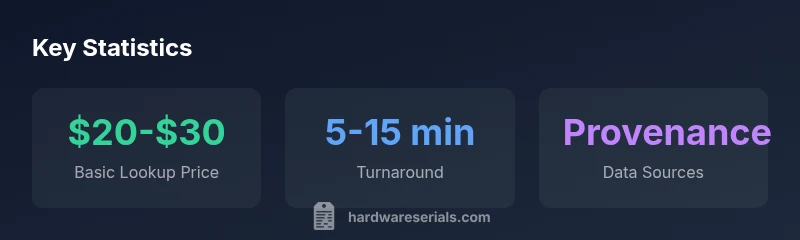
| Basic lookup | $20-$30 | 5-15 minutes | Covers core fields and basic verification |
| Comprehensive verification | $40-$60 | 30-60 minutes | Cross-checks multiple registries and status; more provenance |
| Extended provenance | $60-$120 | 60-180 minutes | Adds ownership history where available and enhanced data sources |
Frequently Asked Questions
What is included in a 20 dollar serial number lookup?
A basic lookup typically returns the serial, model, manufacture date if available, and any observed warranty or recall flags. It does not guarantee ownership or provide exhaustive provenance.
A basic lookup gives you the essentials—serial, model, date, and any simple warranty flags. It isn’t a full background check.
Is a $20 lookup enough for important purchases?
For high-risk or high-value items, a $20 lookup is a practical quick check but should be supplemented with higher-tier verifications or direct manufacturer confirmation.
It’s a good quick check, but for big purchases you should consider a more thorough verification.
What data sources are typically used?
Lookups pull from manufacturer records and public registries; data coverage varies by item and region. Results depend on what registries are accessible and current.
They use manufacturer and registry data, but coverage varies by item and place.
Can I lookup guns or firearms serial numbers for verification?
Some services offer firearm serial verification, but laws vary by jurisdiction. Follow local rules and seek compliant, traceable processes.
Check local laws; some services support gun serials with extra compliance.
How should I interpret a mismatch in results?
A mismatch may indicate data gaps, counterfeit parts, or registry errors. Cross-check with official sources and consider a re-check if possible.
If results don’t match, investigate with official sources and re-check if needed.
How can I protect my privacy during lookups?
Review privacy policies and data handling terms. Share only what’s necessary and prefer services with clear retention practices.
Read the policy and keep data minimal.
“A 20 dollar serial number lookup can be a quick sanity check, but its value depends on the underlying data sources and transparency. Always verify results against manufacturer databases or government registries when possible.”
Key Takeaways
- Verify data sources before paying.
- Choose the tier that matches your risk level.
- Cross-check results with official records.
- Protect privacy; avoid unnecessary personal details.
- Treat $20 lookups as quick triage, not proofs.