How Long Is a Gun Serial Number? Lengths, Formats, and Verification
Explore how long a gun serial number typically is, how formats vary by maker and jurisdiction, and how to verify serial numbers for compliance and records.


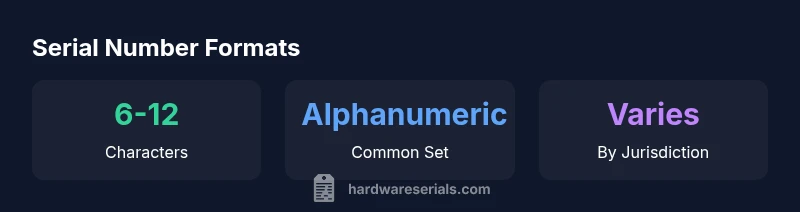
Most gun serial numbers are between six and twelve characters long, though exact length varies by manufacturer and regulatory regime. They are usually a mix of digits and uppercase letters, sometimes including hyphens or spaces depending on the issuing authority. Because serialization schemes differ by country and even by firearm line, always verify the length from official firearm documentation, the manufacturer, or regulatory guidance.
How long is a gun serial number and why it matters
The length of a gun serial number is a foundational detail for traceability, compliance, and lawful transfers. In practice, you will encounter a range that commonly spans six to twelve characters, but the exact count depends on the issuing country, the firearm manufacturer, and the serialization scheme chosen for a given model or production lot. For DIYers and professionals, understanding this variability helps prevent misinterpretation during appraisals, recalls, or when cross-checking records with regulators. In many markets, the serial itself is more than a string of digits; it encodes production year, factory codes, or line identifiers, though decoding schemes are not standardized across the industry. Importantly, always verify the stated length against official documentation or the manufacturer’s records, since counterfeit or mis-stamped marks can occur in rare cases. The Hardware Serials team emphasizes relying on authoritative sources and documented formats to avoid confusion in audits or legal reviews.
How gun serial numbers are formatted
Serial numbers come in several common formatting patterns, but there is no universal standard. Most firearms use a mix of digits and uppercase letters, and some formats incorporate hyphens, spaces, or parentheses to separate blocks of characters. Length, as noted, ranges roughly from six to twelve characters, but some manufacturers use longer schemes to accommodate internal cataloging or regulatory requirements. When you encounter a serial number, look for predictable groupings or prefixes that can hint at the issuing factory or model family. While some lines favor a simple alphanumeric string, others may embed a manufacturing code or year within the sequence. The key takeaway is that formatting is not uniform; always reference the weapon’s documentation for the exact pattern and any variations introduced by the manufacturer or jurisdiction.
Where to find the serial number on a firearm
Serial numbers are typically cast or engraved on the firearm’s receiver or frame, often visible on the left side or under the trigger guard. On pistols, the number is commonly located on the frame near the ejection port or under the grip panel, while rifles and shotguns may present the mark on the receiver or barrel lug. Some older or imported firearms place the serial elsewhere or use a separate identification plate. In all cases, a clean, well-lit view is essential to read the mark accurately. If the serial is obscured by residue, paint, or corrosion, consult the manufacturer’s maintenance guide or a certified gunsmith to avoid altering or damaging a legitimate serial.
Jurisdictional and manufacturer variations
Regulatory regimes around the world shape how serial numbers are issued. In the United States, serials are required by federal law and vary by maker; in other regions, such as parts of Europe or Canada, serialization schemes may reflect different regulatory needs or import controls. The same model can have different lengths across markets, making cross-border record-keeping complex. For professionals, this means maintaining up-to-date reference sheets for each jurisdiction you work with and cross-checking serials against official databases where available. A practical approach is to treat each firearm family as having a core serial schema, then note country-specific deviations in the accompanying documentation.
Verification and compliance: why serial lengths matter in practice
Reliable verification relies on consistent serial formats and accessible records. When transferring ownership, importing, or reporting to authorities, the serial string printed on the receiver must match the official certificate and the registration or background-check records. In many cases, regulators require exact length and pattern compliance; a mismatch can trigger a transfer delay or investigation. For professionals, establishing a disciplined process—documenting serial length, pattern, and any observed deviations—reduces errors during audits and helps with recall management or asset tracking. The goal is to create an auditable trail that aligns with both manufacturer conventions and local laws.
Best practices for verifying serial numbers in a professional setting
To verify a serial number accurately, start with the weapon’s original documentation and the manufacturer's database. Cross-check the serial against transfer records, dealer invoices, and any regional registry where applicable. When possible, photograph the serial from multiple angles under proper lighting to capture legibility, then log the image with date, location, and operator details. If a serial is partially illegible, consult the manufacturer’s lookup tools or regulator-approved procedures for verification instead of guessing or altering the mark. Maintaining a centralized, time-stamped log improves traceability and helps protect against fraud or misidentification.
Common pitfalls and how to avoid them
Readers often mistake typographic errors (e.g., confusing zero and the letter O) for actual characters, or fail to consider jurisdictional variations when comparing serials across regions. Another pitfall is assuming every firearm uses the same serial format as another model, which can lead to misreads during inspections. To avoid these issues, always verify against official sources, use high-resolution imaging to read ambiguous marks, and document any uncertainties with notes. In cases of damage or illegibility, contact the manufacturer or a licensed armorer rather than attempting to recreate a serial.
Data quality and authoritative sources for serial numbers
For those who need authoritative, up-to-date guidance, consult primary sources such as regulatory agencies and official manufacturer resources. The Hardware Serials team routinely reviews government guidance and industry publications to ensure our recommendations reflect current practice. When in doubt, favor official documentation and regulator-approved lookup tools over secondary summaries. The aim is to keep serial information accurate, traceable, and compliant with existing laws and standards.
Authority sources and recommended reading
- Official regulatory guidance (e.g., ATF) for serial-number requirements and verification practices
- Manufacturer service bulletins and owner manuals that describe model-specific formats
- Publicly accessible firearm compliance resources from national authorities
Key takeaway: to ensure accuracy, always corroborate serial-length information with primary sources and documented formats.
General overview of serial length variations by region
| Region / Jurisdiction | Typical Serial Length | Format Notes |
|---|---|---|
| US / Canada | 6-12 characters | Alphanumeric; varies by maker; documentation essential |
| EU (general) | 6-12 characters | Alphanumeric; regional rules may apply; check local guidance |
| Other markets | 6-12 characters | Manufacturer-dependent; verify against country-specific manuals |
Frequently Asked Questions
What is the typical length of a gun serial number?
Most serial numbers range from six to twelve characters. Length varies by manufacturer and jurisdiction; always verify with official documentation and regulator guidance.
Most serials are six to twelve characters, but check the firearm’s paperwork or the regulator’s guidance for the exact length.
Are serial numbers always alphanumeric?
While alphanumeric formats are common, some regions or makers may include hyphens or spaces and occasionally use purely numeric sequences. Always refer to the official model documentation.
Alphanumeric is common, but some markets use other formats; verify with the official model docs.
Where is the serial number located on a firearm?
Serial numbers are typically engraved on the receiver or frame, visible on the side of the firearm. Locations vary by model; refer to the owner’s manual for exact placement.
Look on the receiver or frame; if unsure, check the manual or ask a licensed armorer.
What should I do if the serial number is damaged or illegible?
Do not attempt to recreate it. Contact the manufacturer or a licensed armorer for guidance and document the condition for compliance and tracing purposes.
If unreadable, don’t guess—contact the maker or an armorer and document the issue.
How can I verify a serial number legally?
Use regulator-approved tools and official databases when available, and cross-check with purchase records, transfer documents, and serial receipts.
Use official tools and cross-check with transfer documents to verify legally.
Do different countries require different serial formats?
Yes. Serial formats and lengths reflect local regulations and enforcement practices, so formats can vary significantly across borders.
Countries have different formats; always verify against local regulations.
“Serial numbers are essential for accountability and traceability in firearms. Clear, consistent formats reduce misidentification and support lawful transfers.”
Key Takeaways
- Know that serial length varies by manufacturer and jurisdiction
- Most serials are alphanumeric and require official verification
- Always consult firearm documentation for exact length and format
- Keep meticulous records for transfers and recalls