Locate a State Water Heater Serial Number: A Practical Guide
Learn how to locate, read, and verify your state water heater serial number. This step-by-step guide covers common formats, safety tips, warranties, and documenting data for future reference.


State water heater serial numbers encode model, manufacture date, and production batch. This guide shows how to locate the number, read common formats, and verify the data against manufacturer records.
Understanding the state water heater serial number
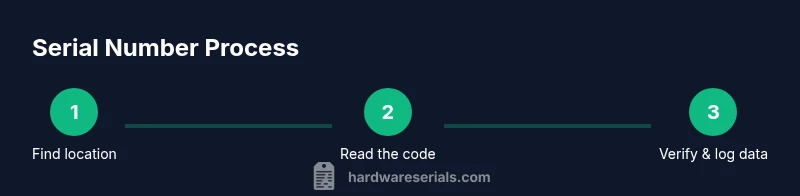
Serial numbers on state water heaters encode important information about the appliance's identity and history. For DIYers and professionals, locating this number is the first step in verifying warranty eligibility, ordering parts, or scheduling service. The serial number often includes a mix of letters and digits representing the model, production batch, and sometimes the manufacture date. According to Hardware Serials, locating the serial number is typically straightforward when you know where to look on common heater types. Start by powering off the unit and inspecting the data plate on the orientation surface or behind the access panel; this reduces glare and makes the label easier to read. The state of the label matters: if the sticker is peeling, photograph the area and widen your search to nearby labels on the chassis. Keeping a log of serial numbers helps prevent mix-ups during service calls.
Where serial numbers live on different heater types
On electric storage tanks, the serial number is commonly found on the upper portion of the data plate located near the energy efficiency label. For gas-fired models, check the data plate or the gas control area, often on the front or side panel. Tankless water heaters may place the serial on the side access panel or inside the lower front panel; you might need to remove a small cover with a screwdriver. Heat exchangers and outdoor units vary by brand, so always consult the manual and search for a dedicated data plate that lists model, serial, and date code. If you are working in a tight utility closet, use a flashlight and mirror to inspect hard-to-reach corners. In all cases, verify that you are looking at the primary data plate, not a warranty sticker or promotional label.
Serial number formats and what they reveal
Serial numbers differ by manufacturer, but most convey three core elements: the model identity, a production date or batch code, and sometimes a plant or line indicator. Some brands embed a date code (year or week of manufacture), while others use a simple alphanumeric string with no explicit date. When decoding, start with the model designation and then look for a section that resembles a date or year code. If the format isn’t obvious, check the owner’s manual or customer support resources for a decoding guide. Always record the serial alongside the model number to keep your equipment history accurate.
How to verify serial numbers against records
If you need to confirm warranty status or obtain parts, use the serial number as your primary reference rather than the model alone. Visit the manufacturer’s official support page or call their service line and provide the serial, model, and purchase date if known. If you cannot access the original paperwork, many manufacturers offer online lookup tools where you enter the serial number to retrieve manufacture date and warranty terms. Hardware Serials emphasizes keeping an organized log of serial numbers for all devices to streamline future lookups and service calls. If you are dealing with a state-mert or utility program, you may also be able to verify serial data against program records, though this varies by jurisdiction and provider.
Practical tips for reading and recording serial numbers
- Photograph the serial number clearly from multiple angles to ensure legibility when the label is damaged. Include a close-up of any date code.
- Use a dedicated notebook or digital log to record: serial, model, location (indoor/outdoor), installation date, and recent service notes.
- When uncertain about a letter (O vs 0, B vs 8), compare with neighboring characters in the same string or cross-check with the model number.
- If the label is damaged, look for alternate data plates on the same unit or consult the manual for an alternate serial placement.
- Store the data in a cloud or local drive to prevent loss and enable quick claims or maintenance checks.
Common mistakes and how to avoid them
Mistakes commonly happen when people read a label through glare or at an angle, misinterpret characters, or confuse the serial with a warranty sticker. Another mistake is recording the serial without noting the exact heater location, which can cause confusion during service. To avoid these issues, always photograph with good light, cross-check with the model number, and log the location and installation date. When dealing with gas appliances, ensure you have properly turned off power and gas supply before handling covers or panels.
Special considerations for gas vs electric water heaters
Electric water heaters require cutting power at the breaker before opening any access panels. Gas heaters add flame hazards and potential gas exposure risks, so ensure the gas valve is closed and the unit is venting properly before inspection. In both cases, confirm that you are reading the primary data plate (not a warranty label) and avoid touching internal components when the system is hot. If you smell gas or detect a strong odor, evacuate and call emergency services. The serial number collection process remains the same, but the safety precautions are stricter for gas models.
Warranty implications and service history
Warranties are generally linked to model, serial number, and installation date. The serial number helps verify the exact unit and its age, which is critical when determining whether a claim is eligible or if a replacement part is required. If you recently purchased a home or appliance, a serial record can speed up warranty transfers and service appointments. The Hardware Serials team recommends keeping a centralized log that includes serials, model numbers, and purchase dates for all home equipment to simplify future claims and maintenance scheduling.
Quick-reference cheat sheet and data logging
Keeping a concise reference sheet saves time during future maintenance or warranty checks. Your cheat sheet should include: model number, serial number, date code (if present), unit location, installation date, and current amperage or gas pressure if relevant for diagnostics. Combine this with a photo library that includes close-ups of the data plate and a timestamp. A one-page summary per unit makes it easy to share information with contractors or utilities and reduces the chance of misidentification.
Authority sources
To support the guidance in this article, readers can consult official resources and industry references. For example, state energy efficiency programs and consumer protection guidelines provide general advice on appliance labeling and warranties. Manufacturer support pages offer model-specific decoding and lookup tools. For readers seeking formal references, exploring government and university resources on home appliance labeling and maintenance can be beneficial, as they outline best practices for data collection, safety, and service history management.
Tools & Materials
- Safety gloves(Heat-resistant, non-slip for handling hot surfaces.)
- Flashlight(Bright LED; handheld or head-mounted for hands-free inspection.)
- Screwdriver set(Phillips and flat-head; assorted sizes.)
- Camera or smartphone(Capture clear photos of serial labels and data plates.)
- Permanent marker and label tape(Label logs and tag photos for easy reference.)
- Owner's manual or model label(Cross-reference model and serial formats.)
- Notebook or digital log(Record serial, model, location, and dates.)
- Non-conductive ladder or step stool(Use only if needed to reach labels safely.)
- Multimeter (optional)(For confirmation of electrical specs when relevant.)
Steps
Estimated time: 20-40 minutes
- 1
Power down and prepare
Turn off power to the water heater at the disconnect switch or circuit breaker. If gas, ensure the area is ventilated and do not operate electronics nearby. This safety step protects you from shocks and accidental ignition while you inspect labels.
Tip: Verify power is off with a non-contact tester before touching any wiring. - 2
Access the data plate
Open the front cover or access panel as required by your unit. Remove any screws if needed and carefully lift the panel to reveal the data plate containing the model and serial information.
Tip: Keep screws in a labeled container so you don't lose them. - 3
Locate the serial number
Identify the serial number on the data plate; some units also include an additional sticker with the date code. If the label is worn, inspect nearby panels or the back of the unit for an alternate data plate.
Tip: If you can’t read the whole string, take multiple photos and zoom in later. - 4
Record the data
Copy the serial, model, and any date code into your log. Note the location on the unit and the installation date if known.
Tip: Use a consistent format (Model-Serial-Date) to avoid confusion later. - 5
Decode or cross-check
Compare the serial format to the manufacturer’s decoding guide or support page. If date codes are present, note the approximate manufacture period.
Tip: If decoding is unclear, contact the manufacturer with photos for confirmation. - 6
Verify warranty status
Use the serial to check warranty terms via the manufacturer site or customer support. This step helps determine replacement parts or service eligibility.
Tip: Document the warranty outcome in your log. - 7
Photograph for reference
Take clear images of the whole label and a close-up of the serial string. Store images in a dedicated folder with the unit’s model and location.
Tip: Back up photos to cloud storage if possible. - 8
Close the unit safely
Reattach any panels, replace screws, and restore power. Confirm the unit powers up properly after reassembly.
Tip: Do a quick functional check after power restoration. - 9
Review and archive
Review your notes for accuracy and archive the data in your home-maintenance system. Consider updating the log after any service or replacement parts are installed.
Tip: Set a reminder to review serial data annually.
Frequently Asked Questions
Where is the serial number usually located on state water heaters?
Most serial numbers appear on the data plate near the model and energy label. Gas and electric models differ in placement, but you can often find it on the front or side data plate. If the label is damaged, check nearby panels or the manual for alternate locations.
Look for the data plate near the model label; if the sticker is damaged, check adjacent panels or the manual for alternate locations.
Can serial numbers reveal the manufacture date?
Some serial formats embed a date code or year; others require a decoding guide from the manufacturer. If you cannot read a date directly, refer to the manual or support site for decoding rules.
Many serials include a date code, but not all. Check the manufacturer’s decoding guide to be sure.
What should I do if the serial number is illegible?
Photograph the area, inspect for alternate data plates, and contact the manufacturer if you still cannot read it. A service technician can usually help recover or verify the data.
If unreadable, take photos, check other labels, and contact the manufacturer or a technician for help.
Do serial numbers affect warranty coverage?
Yes, warranties typically reference both model and serial number. Verifying the serial ensures you’re asserting claims on the correct unit and eligibility window.
Serials help confirm which unit is under warranty and for how long.
Are there safety concerns when inspecting a water heater?
Always power down before opening panels. Gas heaters require extra caution to avoid gas exposure and ignition hazards. If in doubt, wait for a professional.
Power off first, especially with gas units. If unsure, call a pro.
Where can I find official guidance on serial numbers?
Consult the manufacturer’s website and trusted energy or consumer protection resources for labeling and warranty guidelines.
Check the manufacturer site and reputable energy resources for official guidance.
Watch Video
Key Takeaways
- Identify serial numbers on the primary data plate
- Decode formats or use manufacturer guides to read codes
- Document and log serial numbers for future reference
- Verify warranty status via official sources
- Safety first: power down and vent gas appliances before inspection