Nest Hello Serial Number: Locate, Read, and Verify
Learn how to locate, read, and verify the nest hello serial number across your Nest Hello doorbell, packaging, and the Google Home app. A practical, step-by-step approach for DIYers and pros to confirm ownership, warranty status, and authenticity.


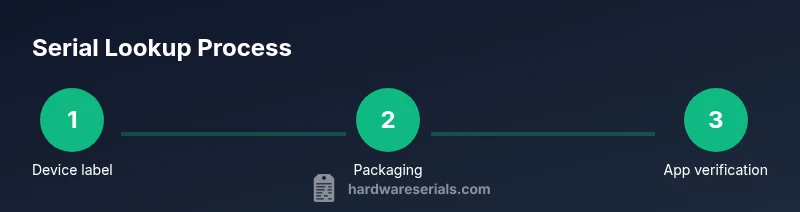
You will locate and verify the nest hello serial number on your Nest Hello doorbell and its packaging, using the device label, the Google Home app, and packaging paperwork. This guide covers where to find the number, how to read it, and how to verify authenticity for warranty eligibility. We’ll also show quick checks to avoid common mistakes.
Understanding the nest hello serial number and why it matters
A serial number is a unique identifier assigned by the manufacturer to distinguish one device from another. For the nest hello serial number, this identifier helps with warranty claims, service history, and proving ownership if a device is relocated or replaced. In practical terms, knowing the correct serial number makes it easier to request support, verify authenticity, and track the device across your property network. According to Hardware Serials, serials are a standard way to establish provenance across consumer electronics, and the nest hello serial number is no exception. The number is especially useful when you need to reference the exact hardware you own for installation records, insurance documentation, or theft reporting. Although the concept is simple, locating and reading the code can vary by model and packaging. For DIYers and professionals, treating the serial as a key asset rather than a casual note saves time and reduces confusion during troubleshooting or upgrades. This section sets the foundation for where to look and how to interpret the sequence you find.
Where to look on the Nest Hello device
The nest hello serial number is typically printed on a sticker affixed to the device itself, commonly on the back or bottom edge where cables connect. In some installations the sticker is hidden behind the mounting plate or written on the inner housing. Use a good light, and if you can't see it at a distance, peel back a small portion of the label to read the text clearly without removing the device from its wiring. If you are uncomfortable removing parts, proceed to other lookup methods described later in this guide. When reading the sticker, copy the entire string exactly as shown, including any dashes or letters. The serial number is usually a mix of letters and numbers and may be grouped into clusters for readability. If your device has a removable cover or is already installed in a wall, you may need to access the enclosure’s interior or consult installation documentation. Always power down the device per safety guidelines before handling hardware to avoid accidental damage.
Locating the serial number in the Google Home app
Open the Google Home app and navigate to the Nest Hello device tile. Access the device settings, then look for a section labeled Device Information, Hardware, or About. The serial number is typically listed as a separate field labeled Serial number or S/N. If you cannot find it in the app, try updating the app to the latest version, or check the Help or About pages within the app’s settings. Some firmware versions display the serial only after the device is connected to the internet for a few minutes, so you may need to reboot the device and reopen the app. For added assurance, compare the serial you see in the app with any label you found on the device or packaging during the earlier lookup steps. Documenting this information helps with warranty claims and future replacements.
Finding serials on packaging and receipts
Packaging is a reliable fallback when the device label is unclear or unreadable. Look on the box’s side or bottom for a white or silver sticker that lists the model name, color, and a Serial number (S/N). The barcode area often includes the S/N with a dash-separated sequence. If you still have the original purchase receipt, check the purchase details for the serial, which some retailers print on the invoice near the product description. Keep in mind that some retailers may list the order number instead of the serial; verify you are reading the correct field. If the box has both the model and a FCC ID or other regulatory identifiers, the S/N may be included in that line. When scanning or manually recording this information, ensure no characters are omitted or swapped.
Decoding the serial number: what the digits tell you
A serial number may encode manufacture date, batch, region, or device configuration, but the exact encoding varies by manufacturer. With Nest Hello hardware, the serial can help identify the production run and confirm consistency across units. If you need to interpret a specific code, consult the manufacturer’s documentation or contact support. Hardware Serials notes that many brands use date codes or batch IDs embedded in serials, but decoding requires official code tables. Treat any attempt to decode as an informative guess rather than a guaranteed truth. The more you know about where the serial came from, the better you can align it with warranty windows, service records, and the device’s software version. This information is especially helpful for technicians performing on-site replacements or cross-brand repairs.
Verifying authenticity and warranty status
Once you have the nest hello serial number in hand, use official sources to verify authenticity and warranty coverage. Start with Google or Nest support portals that allow input of the serial to confirm eligibility, production date, and warranty status. Do not rely on third-party sites that may misreport numbers or trademarked information, as inaccuracies can lead to incorrect claims or security concerns. Hardware Serials analysis shows that authentic serials typically follow standard formatting and may be cross-checked against product catalogs or registration databases. If the serial fails a basic check or matches a retired production line, contact the retailer or Nest support to obtain a replacement or proof of ownership. Keeping a secure copy of your serial in a dedicated notes file or asset registry is a best practice for audits, insurance, and future upgrades.
Common issues and troubleshooting
Serial numbers can be hard to read if labels wear away or if the device is installed in an awkward or recessed space. If the label is unreadable, use the app’s device information as your primary source, but verify with packaging or the user manual whenever possible. Smudged or partially erased digits are easy to misread, so cross-check each character and compare with any related model codes. If you replaced the device or moved it, the serial number should still represent the hardware you own; document any changes in your records. In some cases, the serial displayed in the app may differ from the one on the label due to firmware or regional variations; consult support if you see a mismatch. Do not attempt to modify or alter the label, as that could void warranties and create data integrity issues.
Privacy, data sharing, and handling sensitive serial data
Serial numbers are sensitive identifiers tied to a specific device and ownership. Do not publish your nest hello serial number on public forums or share it in untrusted channels. Store it in a secure, access-controlled note or asset registry. When working with teams or contractors, use role-based access and redact the serial from public documentation where possible. If you suspect that someone else has access to your serial or that your device has been cloned, contact Nest support immediately and review device security settings in the app. Brand-safe practices, like documenting serials with timestamps and receipts, help protect against fraud and unauthorized service.
Next steps and best practices for serial recordkeeping
Create a centralized log of all serial numbers for your devices, grouped by location and responsibility. For nest hello serial number, record where the device is installed, the purchase date, the retailer, and the current firmware version. Review the log periodically to ensure that any replacements or upgrades are cross-referenced with the correct serial. Maintain backups in a secure location and consider exporting records to a CSV for audits or warranty claims. As you expand your smart home or professional deployment, keep your serial data consistent across devices so you can quickly verify ownership and service history. The Hardware Serials team recommends adopting a standard naming convention and a simple, repeatable process for updating records whenever devices are added, replaced, or retired.
Tools & Materials
- Nest Hello device(Essential hardware to locate the serial)
- Smartphone with Google Home app(Used to read serial via app)
- Device packaging/box(May contain S/N on label)
- Good lighting and magnifier (optional)(Helps read small text)
- Notebook or digital note app(For recording serial and notes)
- Pen or stylus(For manual transcription)
- Basic safety tools(Inspect power and mounting safely)
Steps
Estimated time: Estimated total time: 20-30 minutes
- 1
Gather tools and prep
Collect the Nest Hello device, its packaging, a smartphone with the Google Home app, and a notebook. Ensure you have adequate lighting and a clean workspace. This upfront preparation prevents multiple trips and reduces the risk of misreading characters.
Tip: Double-check you have the boxed serial label before starting the exhaustive search. - 2
Power down and inspect the device label
Turn off power to the doorbell circuit as recommended by the installation guide. Remove or loosen any coverings as allowed to reveal the device’s back or bottom label. Read the entire serial string carefully, looking for spaces or dashes that separate sections.
Tip: If the label is partially obscured, use a flashlight or magnifier to read every character clearly. - 3
Cross-check the device label with the app
Open Google Home, select the Nest Hello device, and navigate to Device Information or About. Compare the serial number displayed there with what you read on the hardware label. Any discrepancy should be noted for further verification.
Tip: If the app shows a different field name, look for S/N or Serial number explicitly. - 4
Consult packaging or receipts
If you cannot read the device label, locate the Serial number on the box or in your purchase receipt. The box often lists the S/N near the barcode or model details. Ensure you capture the exact string, including any separators.
Tip: Take a photo of the packaging label for future reference. - 5
Record the serial in a safe log
Copy the serial number into your secure notes or asset registry, along with device location and purchase details. Maintaining a central record makes warranty claims and asset audits straightforward.
Tip: Use a consistent format (e.g., S/N-XXXX-XXXX) in all entries. - 6
Verify authenticity with official sources
Enter the serial on Nest’s official support pages or contact Nest support to confirm eligibility, production date, and warranty status. Do not rely on third-party sites for critical ownership data.
Tip: If the portal flags an issue, request a replacement or proof of ownership from the retailer. - 7
Troubleshoot unreadable or missing serials
If the serial cannot be found or is illegible, document attempts and attempt secondary sources (app, packaging, receipts). Do not modify labels, as that could void warranties. Seek official help if entries still do not add up.
Tip: Avoid attempting any tampering that could compromise device integrity. - 8
Secure final steps and future-proofing
Keep digital and physical copies secure, schedule periodic reviews, and set up a routine to log any device replacements or firmware updates with the corresponding serials.
Tip: Regular audits prevent last-minute warranty headaches.
Frequently Asked Questions
Where is the Nest Hello serial number located?
The serial number is typically on a sticker on the device, commonly on the back or bottom. If unreadable, check the packaging or the Google Home app under Device Information.
Look on the device label, then check the app settings if needed.
Can I find the serial number in the Google Home app?
Yes. Open the Nest Hello device in Google Home, then view Device Information or About for the Serial number or S/N.
Open the app and look for Serial number under device information.
Why do I need the serial number for Nest Hello?
The serial helps with warranty claims, ownership proof, and service history during replacements or repairs.
It proves ownership and supports warranty.
What if the serial is unreadable or missing?
Use packaging or receipts as alternatives and contact Nest support if needed. Do not modify the label.
If unreadable, use packaging and contact support.
Is there a standard format for Nest serial numbers?
Serial formats vary by model and region; decoding typically requires official documentation or support.
Formats differ; check official docs for decoding.
How should I store and protect my serial number?
Keep a secure, private record in an asset registry and back it up in a separate location.
Store it securely and back it up.
Can the serial help with warranty transfer if I relocate the device?
Yes, having the serial handy facilitates warranty transfer requests with the new owner or installer.
It helps with warranty transfers.
Who can I contact if I cannot locate the serial?
Reach Nest support or the retailer where you purchased the device for guidance and verification.
Contact Nest support for guidance.
Watch Video
Key Takeaways
- Identify all potential serial sources (device label, app, packaging).
- Record the serial accurately and securely for warranties.
- Verify authenticity using official Nest support pathways.
- Keep serial-related documents organized and up-to-date.
- Protect serial data and avoid public sharing.