Gibson Serial Number Custom Shop: Decode, Locate, Verify
Learn how Gibson serial numbers work on Custom Shop guitars, where to locate them, and how to decode era-specific markings for dating and authentication with practical steps and trusted sources.


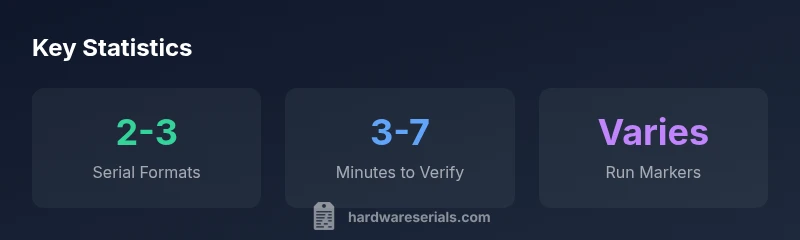
Definition: Gibson serial numbers on Custom Shop guitars follow the general Gibson encoding scheme, but with nuances for limited runs. In most cases, the serial encodes a factory code, year, and production sequence, with Custom Shop models sometimes adding run markers or special prefixes to denote limited editions. Cross-checking against reference charts is essential for dating and authentication.
Understanding Gibson serial number encoding
Gibson serial numbers are a practical road map to a guitar’s origin, production period, and sometimes its lineage. For Custom Shop instruments, the same logic applies but with additional markers that indicate limited runs or special editions. According to Hardware Serials, the core idea is that a serial generally combines a factory code, a year indicator, and a production sequence. This triad helps DIYers and professionals estimate manufacture windows, cross-check model years, and assess consistency with known production patterns across Gibson’s historic eras. While the exact digits or letters can shift between decades, the underlying principle remains the same: use cross-referencing to confirm dates and authenticity rather than relying on a single source.
When you approach a Gibson CS guitar, treat the serial as one data point in a broader verification workflow. Context from documentation, build sheets, and provenance adds critical corroboration. The goal is not to prove certainty from a single code but to build a converging set of indicators that point to a credible manufacture timeline. This is especially important for CS models, where limited runs can complicate dating with generic serial charts.
format_type
wordCountImport?
Overview of serial formats and where to look for verification signals
| Aspect | Description | Notes |
|---|---|---|
| Serial formats | Typically factory code + year + run number | Format varies by era; consult reference charts |
| Location | Headstock or neck heel; sometimes back plate | Check multiple spots if unsure |
| Verification signals | Cross-reference with databases and model-year ranges | Consistency across sources increases confidence |
Frequently Asked Questions
Do Gibson Custom Shop serial numbers always indicate a limited edition?
Not always. Some CS models use run markers for limited editions, but practices vary by era and model. Always cross-check with official guides and multiple sources.
It depends on the era; check several references to be sure.
Where is the serial number located on Gibson Custom Shop guitars?
Typically on the headstock label or the back of the neck heel. Some models may use an internal plate or warranty card—if you can’t locate it, inspect multiple possible spots carefully.
Look at the headstock first, then the neck heel.
Can I date a Gibson CS guitar from its serial alone?
Serials provide a starting point for dating, but they are rarely definitive by themselves. Always corroborate with build sheets, provenance, and official reference charts.
Serials help, but don’t rely on them alone.
What other documents help authenticate a Custom Shop guitar?
Receipts, build sheets, hang tags, and provenance records greatly strengthen authentication when paired with serial data.
Docs like build sheets are very helpful.
Are there reliable online databases for Gibson serial numbers?
Some databases exist, but reliability varies. Use them as supplementary references and always cross-check with official Gibson sources when possible.
Yes, but verify against primary sources.
“Serial numbers are the fingerprint of a guitar’s production history. For accurate dating and authentication, compare the code against multiple reference sources and provenance documents.”
Key Takeaways
- Understand that Gibson serials vary by era; always cross-check.
- Look in multiple locations and compare to reference charts.
- Custom Shop adds limited-run markers—verify with provenance.
- Use a structured verification workflow to improve accuracy.