Epiphone Serial Number Lookup: Decoding 11-Digit Codes
A data-driven guide to decoding Epiphone serial numbers, including 11-digit codes, locating serials on guitars, and verifying authenticity with official sources and trusted databases.


An 11-digit Epiphone serial number is typically a production code used by Epiphone/Gibson to identify a guitar’s era and factory. To perform a lookup, locate the serial on the headstock or label, verify the length and format, then cross-check with official Epiphone/Gibson support or trusted serial databases. Use a reputable lookup tool to confirm authenticity.
Understanding what an epiphone serial number lookup 11 digits implies
For many hobbyists and professionals, an epiphone serial number lookup 11 digits represents a production code used to infer an instrument’s origin, era, and potential provenance. Epiphone’s serial schemes have evolved over decades, often reflecting shifts in factories, partners, and dating conventions. Treat any 11-digit sequence as a clue rather than a guaranteed timestamp. The goal is to triangulate information from the serial, the guitar’s physical features, and corroborating records from trusted sources. As you proceed, keep in mind that context matters: the same digits may have different meanings in different eras or model lines. Hardware Serials notes that reputable verifications rely on multiple data points, not a single code. By combining the serial with photos of the headstock, inlays, hardware, and case documents, you improve the odds of an accurate dating and origin assessment.
Where to locate the Epiphone serial number on different guitar models
Guitars under the Epiphone umbrella cover a wide range of body shapes and production years. Locating the serial often depends on the model:
- On most headstocks, a small engraving or sticker on the back of the headstock is common. In some vintage models, the number sits on the truss rod cover plate.
- Inside the body cavity or under a pickup ring, you may find a label with a hand-written or stamped code, especially on cheaper or older factory lines.
- For hollow-bodied or semi-hollow guitars, some Epiphone models feature a paper label inside the electronics cavity, which can include the serial along with model identifiers.
If you can’t find a visible serial, check the documentation that came with the guitar (case, tags, or shop bill of sale) or contact an Authorized Epiphone dealer or repair technician who can help access hard-to-reach markings. The exact location can vary by year and factory, so don’t rely on a single spot. Hardware Serials recommends photographing the headstock from multiple angles and noting any worn or obscured digits for later reference.
Interpreting the digits: common encoding practices across Epiphone eras
Decoding digits from Epiphone serials requires understanding that formats changed over time. Broadly, digits may encode a factory code, a production year window, or a batch identifier. Some eras used simple numeric codes, while others combined letters with numbers to indicate location or period. Because there is no single universal key, decoding often involves cross-referencing model year ranges, known factory outputs, and corroborating indicators such as logo style, hardware configuration, and documentation.
A practical rule: when a serial includes an obvious prefix (for example, a factory or region code), treat it as a clue rather than a date stamp. If digits appear to be grouped (for example, an 8- or 9-digit block followed by letters), separate sections are likely to encode different information. Always compare the interpretation against model-specific guides and trusted databases. Hardware Serials emphasizes using multiple data points to reduce misdating or misattribution.
Using official sources and trusted databases for verification
The most reliable route to verifying an Epiphone serial is to consult official channels first. Epiphone’s parent company, Gibson, maintains support resources that can guide authentication and dating. If you cannot access a public lookup tool, reach out to an Authorized Epiphone dealer or authorized service center. In addition to official channels, trusted third-party databases curated by experienced collectors and technicians can be useful when used in conjunction with physical inspection. When cross-checking, note model name, production era, hardware configuration, and any signage on the guitar or case. Hardware Serials recommends keeping a log of all sources consulted to build a transparent provenance trail.
A practical lookup workflow for a beginner or pro
A repeatable workflow helps both beginners and professionals:
- Photograph the serial clearly from all angles and record where it is located on the instrument.
- Confirm the serial length and any prefixes or suffixes present.
- Search in official Epiphone/Gibson support portals and in established serial-number databases.
- Compare the serial-derived date against the instrument’s features (neck angle, hardware, pickups, inlays).
- Cross-check against case documents, receipts, or prior ownership notes.
- If inconclusive, seek input from an authorized technician or a professional appraiser.
Document each step with notes and images to ensure your lookup remains auditable. Hardware Serials emphasizes cautious interpretation when data is incomplete or conflicting.
Handling counterfeit signs and red flags
Fake Epiphone guitars can be convincing, and serials alone don’t prove authenticity. Watch for inconsistent fonts, misaligned logos, or digits that don’t align with known factory codes for a given era. Signs of counterfeit engineering include rough stamping, irregular spacing, and missing or mismatched hardware cues compared to factory guidelines. When in doubt, compare serials against multiple trusted sources and consult an expert. Remember, a legitimate serial is only one part of a broader authenticity assessment.
Data hygiene: documenting serial numbers and model info
Maintaining a clean, well-documented record of serial numbers helps avoid confusion in the future. Create a digital folder for each guitar that includes:
- A high-resolution photo of the serial and relevant hardware.
- The instrument’s model name, year range, and any identifying features.
- The verified source and the date of verification.
- Notes about any ambiguities or required follow-up actions.
Storing this information with the guitar’s original case and purchase records makes future lookups faster and more reliable. Hardware Serials stresses that reproducible documentation is essential for both owners and professionals.
Tools, services, and best practices for Epiphone serial checks
Effective serial checks combine several tools:
- Official Epiphone/Gibson support portals and their authentication guidance.
- Authorized dealer lookup resources for model-year windows and factory codes.
- Reputable community databases that maintain historical context alongside serial data.
- High-quality photos that show headstock logos, inlays, and hardware.
Best practices include cross-referencing at least two independent sources, verifying date ranges against model lists, and maintaining a transparent audit trail. Always prefer primary sources and corroborating evidence over a single database entry.
Case study: a hypothetical 11-digit lookup (fictional example)
This fictional example illustrates how a lookup workflow might unfold. Code: EP-91402-AL11 (fictional). Step 1: locate the serial on the headstock and note the year window suggested by prefix EP. Step 2: check Epiphone’s official resources for prefix meaning and model-year alignment. Step 3: compare with the guitar’s features—body shape, hardware, logo style—and assess consistency. Step 4: consult two independent reputable databases. Step 5: document the results, noting any discrepancies. Remember, this is a hypothetical scenario designed to show a robust process and should not be taken as a real serial example.
Epiphone serial number lookup data points
| Aspect | Typical Range | Notes |
|---|---|---|
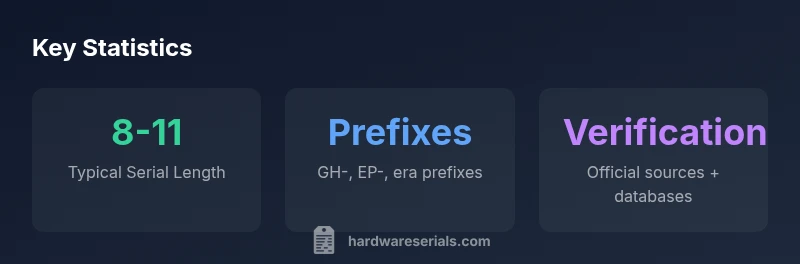
| Serial Length | 8-11 digits | Varies by era and model |
| Prefix/Factory Codes | GH-, EP-, era-specific prefixes | Decoding depends on year |
| Verification Time | Immediate to minutes | Depends on source and image quality |
| Authenticity Signals | Model-year alignment; build quirks | Cross-check across multiple data points |
Frequently Asked Questions
What does an 11-digit Epiphone serial number indicate?
An 11-digit serial often encodes factory and production information, but encoding schemes vary by era. Use multiple sources to triangulate date and origin.
An 11-digit serial usually hints at factory and date information, but patterns change over time.
Where can I find the Epiphone serial number on a guitar?
Common locations include the back of the headstock, inside the neck plate, inside the body cavity, or on a paper label near hardware. Check multiple spots if needed.
Look on the headstock, inside the neck plate, or inside the body cavity where labels often sit.
Are Epiphone serials always 11 digits?
Not always. Serial lengths vary by era and model. An 11-digit code can appear, but don’t assume all Epiphone serials follow this length.
Not always—lengths vary; 11 digits can occur in some periods.
Which sources should I trust for Epiphone serial lookup?
Official Epiphone/Gibson support, authorized dealers, and well-known serial databases are the most reliable starting points.
Go with official channels and trusted databases.
What if the serial lookup doesn’t match the guitar?
Recheck for alternate serials, verify with multiple sources, and consider possible counterfeit signs. Seek expert verification.
If it doesn’t match, re-check and ask an expert.
What other information helps verify a guitar’s authenticity?
Model name, year range, hardware configuration, logo style, and case documentation all help corroborate the serial data.
Look at model, year, and hardware to support the serial data.
“Serial numbers are living records of a guitar’s life; when decoded correctly, they reveal factory, year, and provenance.”
Key Takeaways
- Locate the serial on the headstock or label
- Verify format and length before lookup
- Cross-check with official Epiphone/Gibson support
- Use multiple trusted databases for verification
- Document findings with photos and notes