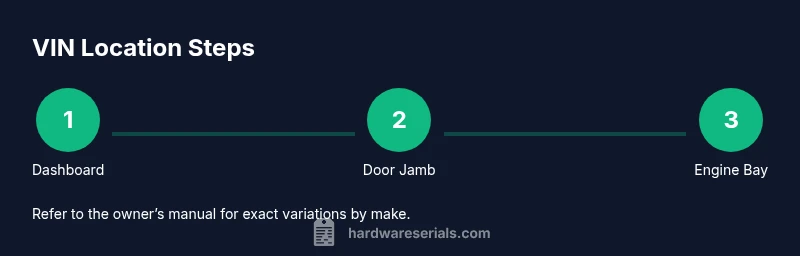
Where Can You Find VIN Number on Vehicle
Learn where to locate the VIN on most vehicles, including dashboards, doors, engines, and frames. This guide covers step-by-step checks, official documents, and secure verification to help DIYers and pros.


This guide answers where can you find vin number on vehicle by listing the most reliable locations, how to read the VIN, and how to confirm it matches official documents. You’ll learn common spots, what to check if a plate is missing, and how VINs appear on dashboards, doors, engines, and frames.
What a VIN is and why location matters
A Vehicle Identification Number (VIN) is a unique code that identifies a specific vehicle. For DIYers and professionals, knowing where to find the VIN is essential for registrations, recalls, and parts matching. While the exact placement can vary by make and country, most vehicles share a core set of reliable locations. Understanding these spots helps you verify the VIN quickly and avoid mistakes when buying, selling, or ordering components. According to Hardware Serials, consistent VIN location across sources reduces the risk of misidentification and fraud. In this section we establish the why and set the stage for practical, hands-on locating techniques across different vehicle types.
Primary VIN locations: dashboard and door jamb labels
For most passenger cars, the dashboard VIN label is visible from outside the car, near the bottom of the windshield on the driver’s side. It is usually a metal plate or a sticker with the 17-character VIN. The driver’s door jamb sticker is another reliable source; it often includes the VIN along with tire pressure and manufacturing details. Some models also print the VIN on the radiator support or inside the engine bay. Always compare any VIN you find with official records (registration, title, or insurance documents) to ensure accuracy and consistency. If dirt or grime obscures the code, gently wipe with a clean cloth and use a flashlight or phone camera to capture a clear view.
Engine bay and under-hood VIN sources
A number of manufacturers place the VIN in the engine bay area, typically on a metal plate near the front, on the firewall, or along the core support. In some older or specialty models, the VIN may be stamped into a bracket or crossmember rather than printed on a label. When inspecting the engine bay, avoid moving parts or hot components and keep your hands and tools clear of belts. If you cannot read the VIN here, move to other locations on the vehicle; the VIN is almost always accessible somewhere on the exterior or chassis.
Other common labels: chassis, frame, windshield etch
In addition to the dashboard and door jamb, the VIN can appear on the vehicle’s chassis or frame in some markets. Frame-stamped VINs are more common on trucks, commercial vehicles, and trailers. Some vehicles feature a windshield-etch VIN, etched into the glass or printed at the edge of the windshield. Where visible, the etch remains readable even if other labels wear. When documenting, take multiple photos of each location to ensure you capture the full VIN without glare.
How to read and verify a VIN across documents
A standard VIN is 17 characters long and is structured in three main parts: WMI (World Manufacturer Identifier), VDS (Vehicle Descriptor Section), and VIS (Vehicle Identifier Section). Each segment encodes information about the vehicle’s manufacturer, model, body style, engine, and the serial number. Use the VIN to pull details from official sources such as the manufacturer’s site, title documents, and recall databases. Always cross-check the VIN against your vehicle’s title, registration, and insurance card to confirm they match. This cross-verification reduces the risk of fraud or misidentification.
Vehicle type variations: motorcycles, trailers, and commercial vehicles
While passenger cars share the same 17-character VIN standard in many regions, motorcycles, trailers, and some commercial vehicles may have slightly different placements or additional labels. Motorcycles often place the VIN on the frame near the steering head, while trailers can display VINs on the hitch area or frame rails. Commercial vehicles may use multiple VIN labels for the cab and the trailer. If you’re unsure, consult the owner’s manual or manufacturer resources; the VIN should be readable with proper lighting and positioning.
What to do if a VIN plate is missing or damaged
If the VIN plate or label is missing, damaged, or illegible, start by checking all other known locations mentioned above. Obtain documents that contain the VIN and contact the manufacturer or a licensed dealer if you cannot verify the VIN through exterior labels. Do not attempt to alter or recreate a VIN, as this is illegal and can void warranties or complicate registrations. In many jurisdictions, the VIN can still be located through official records by providing the vehicle’s make, model, year, and other identifiers.
How to safely photograph and store VIN information
When documenting VINs for records, use good lighting, a steady hand, and multiple angles. Take close-ups of every readable character and include context shots showing the surrounding labels. Save digital copies in a dedicated folder labeled with the vehicle’s make and model year. If you’re sharing VIN info online or with a mechanic, redact the last few characters when posting publicly to protect against misuse.
Quick-reference VIN lookup checklist
- Inspect dash label near the windshield on the driver’s side.
- Check the door jamb sticker on the driver’s side.
- Look in the engine bay for a metal plate or stamped VIN.
- Search for windshield etch or frame stamping if applicable.
- Cross-check the VIN with registration and title documents.
- If any label is unreadable, photograph and seek official assistance.
Common mistakes to avoid when locating a VIN
- Relying on a single location; always verify multiple sources.
- Believing older models don’t use 17-character VINs; many regions still follow 17-character norms.
- Using damaged or altered VINs, which can lead to legal issues and incorrect parts identification.
- Sharing full VIN publicly; practice VIN privacy and avoid exposing it in public forums unless needed for legitimate reasons.
Tools & Materials
- Owner's manual or vehicle registration(Use it to cross-check the VIN against what you find on the vehicle.)
- Flashlight or mobile light(Helpful for dim labels, especially under the hood or in the frame areas.)
- Mirror or camera to aid viewing(Useful for hard-to-see spots like high dashboard corners or under frames.)
- Clean cloth(Wipe away dirt or grime to improve readability.)
Steps
Estimated time: 15-25 minutes
- 1
Identify the most likely VIN locations
Begin with the dashboard label on the driver’s side and the door jamb sticker on the driver’s door. If visibility is poor, move to the engine bay and the windshield etch if present. Check multiple spots to confirm consistency across sources.
Tip: Start with the dashboard label first; it’s usually the quickest read. - 2
Inspect the dashboard VIN label
Stand outside the vehicle and look through the windshield at the lower corner of the driver’s side. Read the 17-character sequence left to right. If glare or dirt obscures characters, adjust lighting or clean gently.
Tip: Take a photo from slightly angled view to reduce glare and ensure all characters are legible. - 3
Check the driver’s door jamb sticker
Open the door and locate the sticker on the door frame or edge. Confirm that the VIN matches the dashboard label and other documents. Note any additional codes such as tire pressure or manufacturing date.
Tip: If the sticker is worn, check the window area near the top hinge or the B-pillar label as alternatives. - 4
Examine the engine bay for a VIN plate
Look for a metal plate or stamped code on the radiator support, firewall, or engine block. Ensure you read all characters clearly; avoid belts and hoses that obscure the digits.
Tip: Use a flashlight at a low angle to reveal faint engravings. - 5
Cross-check with official documents
Compare all readable VINs with the vehicle title, registration, and insurance card. If any mismatch is found, do not rely on the VIN alone; contact the manufacturer or dealer for verification.
Tip: Keep digital copies of documents for quick reference during verification.
Frequently Asked Questions
Where is the VIN located on most cars?
Most cars place the VIN on the dashboard near the windshield and on the driver’s door jamb sticker. If unreadable, check the engine bay, windshield etch, or chassis label.
The VIN is usually on the dashboard by the windshield and on the driver’s door label; if needed, check the engine bay or chassis label.
Can VINs be found on motorcycles or trailers?
Yes. Motorcycles often have the VIN on the frame near the steering head, and trailers typically display it on the frame or hitch area.
Yes—most bikes have the VIN on the frame near the steering head, and trailers on the frame or hitch area.
What if the VIN plate is missing or damaged?
If a VIN plate is missing or unreadable, use other locations and official documents to verify. Contact the manufacturer or dealer for assistance and avoid attempting to recreate the VIN.
If the VIN plate is missing, check other locations and documents; contact the manufacturer or dealer for verification.
Is a VIN always 17 characters long?
In many regions, VINs are 17 characters long, but there are exceptions for older or regional vehicles. Always rely on manufacturer documentation for the exact format.
Most VINs are 17 characters, but some older models may differ. Check the manufacturer’s details for your vehicle.
Can I use the VIN to check recalls or warranty status?
Yes. The VIN is used to look up recalls and warranty status on manufacturer sites and recall databases. Cross-check with official sources.
Yes—the VIN helps you check recalls and warranties on the manufacturer site.
Watch Video
Key Takeaways
- Identify the four primary VIN spots (dashboard, door jamb, engine bay, frame/etch).
- Always cross-check the VIN with official documents for accuracy.
- Use good lighting and multiple angles to read the VIN clearly.
- Do not alter VINs or rely on a single source for verification.
- Protect VIN privacy when sharing information publicly.