What to Do with VIN Number: A Practical Guide
Learn how to locate, decode, verify, and use VIN numbers safely—from recalls to maintenance and resale—with a practical, step-by-step approach from Hardware Serials.


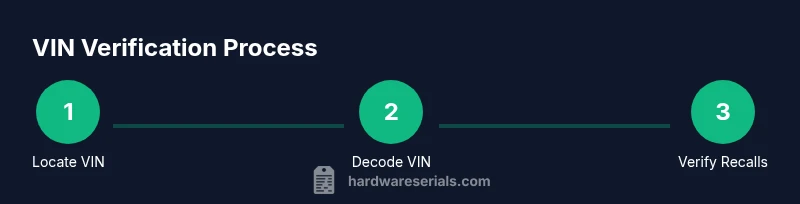
Using a VIN number, you can confirm a vehicle’s identity, verify its history, check recalls, and ensure correct parts. Start by locating the VIN, then decode its sections to understand origin, model year, and features. Use official databases to verify authenticity and to document your findings for safety and resale.
What to Do with VIN Number: Why it matters
A VIN, or Vehicle Identification Number, is a unique code assigned to every vehicle by the manufacturer. For DIYers and professionals, the VIN is your first stop for identifying the exact asset you’re dealing with, confirming its history, and verifying compatibility for parts or recalls. In short, a VIN ties a vehicle’s identity to its history, manufacturing details, and ongoing maintenance needs. When you know what to do with vin number, you can separate genuine records from fakes, protect yourself in a sale, and speed up repair work. Hardware Serials emphasizes that mastering VIN basics is not optional for anyone who works with cars, motorcycles, boats, or other motorized equipment. A solid VIN foundation makes it easier to verify ownership, check for open recalls, and ensure that warranty coverage aligns with the correct product and model year.
Finding the VIN on vehicles and other gear
Vehicles usually expose the VIN in a few standard places. The door jamb opposite the driver’s seat and the lower edge of the windshield on the driver’s side are the most common on cars and light trucks. Motorcycles often stamp the VIN on the steering head or the frame near the front. Boats and recreational vehicles may place the VIN on the hull or the vehicle’s data plate. Appliances and electronics carry serial numbers rather than VINs, but the same detective work— locating a unique identifier and recording it—applies. When you’re dealing with a used asset, always photograph the VIN and jot down its digits in your notes. If the VIN isn’t obvious, consult the owner’s manual or the manufacturer’s service portal for the exact location.
VIN structure and what each section means
A standard VIN is 17 characters long and is divided into three main sections:
- WMI (World Manufacturer Identifier) characters 1–3 identify the country and the manufacturer.
- VDS (Vehicle Descriptor Section) characters 4–9 describe model, body style, engine, and safety features.
- VIS (Vehicle Identifier Section) characters 10–17 include the model year, assembly plant, and a unique serial number.
In addition, position 9 is the check digit, used to validate the VIN by a mathematical rule. Interpreting these segments helps you confirm that a VIN corresponds to the correct vehicle, avoid mislabeling during a sale, and verify that the configuration matches the parts you’ll order. As a practical tip, you can use a fictional example like A1B2C3D4E5F6G7H8I to visualize how segments map to different attributes without exposing a real vehicle’s data.
The check digit and authenticity: why it matters
The check digit, located at position 9 in most 17-character VINs, is a check against input errors. It is calculated using a standardized formula that weighs letters and numbers in the other positions. If the check digit doesn’t align, there’s a high chance the VIN was recorded incorrectly, altered, or misrepresented. While you can’t rely on the check digit alone to verify a vehicle’s history, it is a powerful early screening tool during a VIN verification workflow. Always cross-check with official sources to confirm the overall integrity of the VIN.
How to decode a VIN: manual methods and tools
Decoding can be done by hand for a basic read of origin, year, and model, or you can lean on online VIN decoders and manufacturer portals. Start by separating the VIN into WMI, VDS, and VIS segments. Use the first three characters to infer country and manufacturer; use characters 4–8 (and sometimes 9) to identify model specifics; look at character 10 to deduce the model year and character 11 for the plant; and finally, characters 12–17 provide a sequential production number. For a thorough check, compare decoded details against the vehicle’s title, registration, and service records. If any mismatch appears, pause and re-check the VIN, as fraud or clerical errors are common in used-vehicle transactions.
Checking recalls and safety issues with your VIN
Once you have the VIN, you can search official recall databases to see if the asset has outstanding safety campaigns. The National Highway Traffic Safety Administration (NHTSA) maintains public recall information, and you can enter the VIN directly on their site to pull recall status and repair recommendations. If you’re evaluating a used vehicle, look for any open campaigns that haven’t been completed and verify whether the remedy has been performed. Remember to check not only for active recalls but also for campaigns that might affect specific build years or regions. This VIN-based diligence protects you from latent safety issues and costly repairs later.
Verifying VIN authenticity and avoiding fraud
VIN cloning and tampering are real risks in the used-vehicle market. If the VIN plate looks altered, the font differs from surrounding stamps, or the VIN shown in the dash differs from the one on the title and the vehicle’s data plate, treat it as a red flag. Always verify the VIN across at least two independent sources: the title or bill of sale and the manufacturer’s portal or dealership records. If possible, compare the VIN plate to the chassis or engine bay where it’s stamped. Keep in mind that criminals may duplicate VINs to conceal theft or to misrepresent a stolen vehicle as yours; running a VIN check across official databases with the help of a specialist is a prudent safeguard.
Using VIN for maintenance, parts, and warranty
With an accurate VIN, you can order compatible parts by confirming the exact year, trim, engine, and body style. Parts catalogs often prompt you for VIN-derived details to auto-select the correct components. This reduces returns and incorrect orders. For warranty coverage, your VIN links to the original warranty terms and any active service campaigns. Keep a local VIN record alongside purchase and service receipts so you can reference it during maintenance, insurance claims, or when you request a repair under warranty. In the long run, a precise VIN profile streamlines diagnostics and repairs.
VIN and resale value: what buyers consider
When buyers assess a used asset, they often drill into the VIN history to understand wear, maintenance, and repair consistency. A clean history with timely recalls addressed, documented maintenance, and a consistent VIN across all records signals reliability and trust. Conversely, repeated discrepancies or gaps in service history tied to the VIN trigger questions about provenance and potential hidden damage. As always, be transparent—provide a VIN-linked history report and receipts to avoid disputes and to support confident pricing.
VIN vs serial numbers on non-vehicle devices
Not all devices use a VIN; appliances, computers, and gear typically have serial numbers rather than VINs. The core idea is the same: a unique identifier that ties the asset to its origin and service history. The strategies for locating, recording, and validating a serial number are similar: photograph, document, verify against official databases, and check for recalls or safety advisories when applicable. For owners and technicians, understanding the difference helps prevent confusion during maintenance or resale, especially when buying or selling mixed fleets of equipment.
Practical 10-minute VIN verification workflow
Many buyers and technicians benefit from a quick, repeatable workflow. In about 10 minutes, you can locate the VIN, confirm its length and format, perform a basic cross-check with public records, and record the results. Step-by-step: 1) Locate VIN; 2) Confirm length is 17 characters; 3) Check the 9th character as the check digit; 4) Decode basic attributes using a trusted decoder; 5) Search recall databases; 6) Verify against the title and service records; 7) Photograph and archive results; 8) Note any discrepancies and plan next steps.
Common pitfalls and safety reminders
Protect your data and avoid scams: never share full VIN in unsecured channels, verify the VIN across multiple sources, and beware of sellers who refuse to disclose or provide supporting documents. Safety reminders: check with official databases, confirm the VIN matches the vehicle’s physical identity, and never rely on a single source for critical decisions.
Authoritative sources and further reading
- National Highway Traffic Safety Administration (NHTSA) VIN and recalls: https://www.nhtsa.gov/vehicle-identification
- National Motor Vehicle Title Information System (NMVTIS): https://www.nmvtis.gov
- Carfax and other major publications for history reports: https://www.carfax.com
Tools & Materials
- Owner's manual or vehicle title(To verify the VIN and ownership records.)
- Smartphone or computer with internet(Access VIN databases, recall lookups, and dealer portals.)
- Camera or notes app(Capture VIN visuals and key observations.)
- VIN decoder or reference guide(For basic decoding of WMI/VDS/VIS.)
- Access to NMVTIS/NHTSA/DMV portals(Official sources for recalls, title, and verification.)
Steps
Estimated time: 10-20 minutes
- 1
Locate the VIN
Identify all standard VIN locations on your asset (door jamb, windshield, engine bay, etc.) and photograph the plate. Confirm you have a 17-character string before proceeding.
Tip: If the VIN plate is damaged, compare the digits on the data plate with the title or registration. - 2
Verify the length and format
Count characters to ensure you have exactly 17 and note any non-standard characters or spaces.
Tip: Ignore spaces or dashes when counting; use the raw VIN. - 3
Check the 9th digit (check digit)
The 9th character is the check digit used to validate the VIN. If it looks inconsistent, re-check the VIN for transcription errors.
Tip: A mismatch here often signals an error or tampering. - 4
Decode basic attributes
Use a decoder to map WMI (1–3), VDS (4–9), and VIS (10–17) to country, manufacturer, model year, and plant.
Tip: Cross-check decoded data with the vehicle’s title and service records. - 5
Cross-check with official records
Search NHTSA recall databases and NMVTIS or DMV portals using the VIN to confirm history and safety campaigns.
Tip: Document each source you consult for transparency. - 6
Look for recalls and campaigns
Identify any open recalls or safety campaigns tied to the VIN and note required remedies.
Tip: Ask the seller for proof of completed recalls if evaluating a used asset. - 7
Verify authenticity with the manufacturer
If possible, contact the manufacturer or authorized dealer to confirm VIN legitimacy and build details.
Tip: Provide the full VIN and observe any required verification steps. - 8
Create a VIN record
Store the VIN, decoded attributes, and history checks in a dedicated note or file with dates and sources.
Tip: Back up the record in two locations.
Frequently Asked Questions
What is a VIN number?
A VIN is a 17-character code that uniquely identifies a vehicle, encoding its origin, model, and production details. It’s the primary reference for ownership, history, and parts compatibility.
A VIN is a 17-character code that uniquely identifies a vehicle and helps verify its history and parts.
Where can I find the VIN on my vehicle?
Common VIN locations include the driver’s door jamb, the windshield near the dashboard, the engine bay, and the vehicle’s title or registration documents.
Look for the VIN on the driver’s door jamb, windshield, or title to begin the lookup.
Why should I decode my VIN?
Decoding reveals country of origin, manufacturer, model year, and specific features, which helps ensure correct parts and accurate history.
Decoding tells you origin, model year, and parts compatibility, which is essential for maintenance and buying decisions.
Can a VIN be used to hide a vehicle’s past?
Yes, fraud can involve VIN tampering or cloning. Always verify the VIN across multiple trusted sources and look for discrepancies.
VIN tampering is possible; always verify the VIN with several reliable sources to protect yourself.
What should I do if the VIN doesn’t match my documents?
Do not proceed with the purchase or transfer. Ask for corrected documents or a certified VIN check from the seller or dealer.
If the VIN doesn’t match your documents, don’t complete the deal until it’s resolved.
Is a VIN the same in all countries?
VIN systems are similar but can have country- or region-specific codes. The 10th character indicates model year in many regions, with other differences in codes.
VIN formats vary by region, so always verify country-specific details when buying abroad.
Watch Video
Key Takeaways
- Identify the VIN locations on vehicles and assets.
- Decode WMI, VDS, VIS to verify origin and model details.
- Always verify recalls via official databases.
- Document VIN history for safer buying or selling.
- Protect against VIN tampering by cross-checking with multiple sources.