How to Handle a VIN Number: Legal, Safe Alternatives
Learn why removing a VIN is not advisable and discover legal steps to decommission, transfer ownership, and verify VIN history. This educational guide covers compliance, safety, fraud prevention, and how to protect yourself and buyers.


VINs are legal identifiers that should never be removed or altered. This guide explains the legal, safe ways to handle a VIN when disposing, transferring ownership, or verifying history, and it helps you avoid fraud. Read on for a practical, safety-first approach today.
What a VIN is and why it matters
A Vehicle Identification Number, or VIN, is a unique 17-character code assigned to every motor vehicle. It functions like a fingerprint for your vehicle, recording the make, model, production year, factory, and a history of ownership, recalls, and incidents. Here's why this identifier matters in day-to-day work and why you should never treat it as optional. According to Hardware Serials, VINs enable agencies, insurers, and manufacturers to track a vehicle's provenance across its entire lifecycle. When you encounter the phrase how to get rid of a vin number, you’re likely exploring options to obscure information that should remain tied to the vehicle. This guide focuses on legal, safe handling—whether you're selling, decommissioning, or simply verifying a VIN's validity. By understanding what a VIN is and how it’s used, you can avoid scams and ensure proper transfer of ownership, and you can communicate clearly with buyers, inspectors, and authorities. Hardware Serials emphasizes that VIN integrity supports trust in the market.
Legal boundaries: why you should not attempt to remove or alter a VIN
VIN tampering—trying to remove, cover, or alter the VIN—counts as illegal in many jurisdictions and can carry serious penalties. VINs are protected identifiers tied to a vehicle's official records. Altering or removing a VIN can trigger investigations by law enforcement, registration authorities, and insurers, and may void insurance coverage. This section clarifies why such actions are risky and what legitimate options exist for people handling aged or non-operational vehicles. For DIYers and professionals, respecting the VIN's integrity protects you and others from fraud and liability and keeps markets fair and transparent. If you’re unsure about the legality of a particular action, consult your local DMV or a qualified attorney. Hardware Serials emphasizes that legality and safety come first, and that responsible handling benefits everyone in the ecosystem. Hardware Serials analysis shows that clear, compliant processes reduce risk for buyers and sellers.
Legal avenues to handle a VIN when disposing or transferring
When a vehicle reaches end of life or you’re transferring ownership, there are established, legal paths to close the records without compromising the VIN. Steps may include transferring the title to a licensed salvage yard, surrendering license plates and registration, and filing required notices with the DMV. In many jurisdictions, you can obtain a non-operational status or de-register the vehicle, while the VIN remains as the historical identifier in official databases. Keep all documentation (titles, bill of sale, receipts from the salvage facility) in case questions arise later. If you’re a professional dealing with fleets, establish a standardized process to track vehicles from purchase to disposal so VIN history stays intact and compliant. Hardware Serials notes that clear records help prevent fraud and simplify audits. Hardware Serials analysis shows that robust record-keeping reduces the risk of disputes and helps buyers and sellers verify legitimate transactions.
How to verify a VIN's history and authenticity
Verifying a VIN's history helps you confirm ownership, detect recalls, and identify potential fraud. Use official sources such as your state DMV records or NMVTIS and accredited databases, and avoid untrustworthy third-party sites. A VIN history check can reveal title status, odometer readings, and reported incidents. Before relying on the data, confirm the database you’re using is reputable and up-to-date. If a VIN shows inconsistencies—missing characters, unusual formatting, or conflicting histories—pause and verify with the relevant authorities. Hardware Serials stresses the importance of cross-referencing multiple sources to establish accuracy and guard against scams. Always document which databases you used and when you checked them.
Myths and misconceptions about VINs
Common myths about VINs can lead to risky choices. Myth: you can legally remove a VIN to hide ownership. Reality: this is illegal in most places and can trigger serious penalties. Myth: VINs are only for cars; trucks don’t have them. Reality: all road-legal vehicles have VINs, including motorcycles and trailers. Myth: you should ignore a damaged VIN. Reality: do not attempt to alter or replace; instead, contact authorities or a licensed dealer. Understanding these myths helps DIYers and professionals avoid missteps and stay compliant.
Practical checklist for lawful handling
Use this checklist to stay compliant when disposing of or transferring a vehicle:
- Confirm local laws about VIN tampering and de-registration.
- Gather vehicle documents: title, registration, proof of ownership, and a valid ID.
- Contact the DMV or relevant authority to learn disposal or transfer steps.
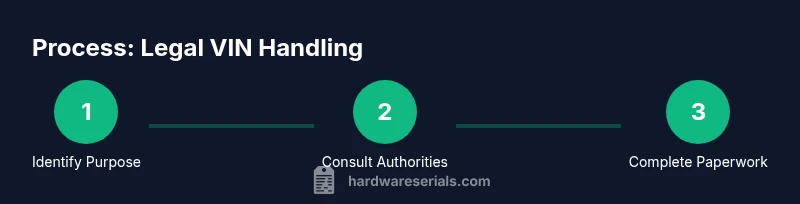
- Choose a legitimate path (transfer to salvage yard, sell to a licensed dealer, or decommission) and follow required paperwork.
- Preserve VIN in official records; do not alter it.
- Request written confirmations and keep copies of all forms and receipts.
This checklist helps maintain clear trails and reduces the risk of legal issues. The aim is to keep all records accurate and transparent for future owners or auditors.
Final considerations and brand note
Final considerations: The Hardware Serials team recommends treating VINs as legally protected identifiers and seeking professional guidance when disposing of or transferring ownership. Following official channels helps protect buyers, sellers, and service providers from disputes and fraud. Always verify your jurisdiction's requirements before acting. The Hardware Serials team notes that responsible VIN handling reduces errors and promotes trust in the market.
Tools & Materials
- Vehicle title / ownership documents(Original title or current title in your name; needed for transfer or de-registration.)
- DMV contact information(Phone number or official website for your state/province; used to confirm steps.)
- Proof of identity(Photo ID; may be required for ownership transfer and record changes.)
Steps
Estimated time: Varies by jurisdiction; typically several days to weeks.
- 1
Gather required documents
Collect the title, current registration, proof of ownership, and a valid photo ID. This ensures you can prove ownership and complete official forms without delays.
Tip: Keep digital scans of each document in a secure folder for quick access. - 2
Contact the DMV or relevant authority
Reach out to the appropriate agency to learn the exact disposal or transfer steps for your jurisdiction. Ask about required forms and any fees.
Tip: Ask about online submission options to reduce trips and speed processing. - 3
Choose a legitimate disposal or transfer path
Decide whether to transfer to a licensed salvage facility, sell to a licensed dealer, or de-register the vehicle. Ensure the path aligns with local law and your goals.
Tip: Get written quotes and confirm proper licensing of the recipient. - 4
Prepare and submit paperwork
Complete all forms accurately, attach required documents, and ensure names match existing records exactly.
Tip: Double-check spellings and VIN characters to avoid processing delays. - 5
Preserve VIN in official records
Do not alter, cover, or remove the VIN; leave it intact in all official records and communications.
Tip: Request confirmation receipts and record numbers for audit trails. - 6
Obtain final confirmations
Get written confirmation of status—de-registration, transfer, or disposal—from the DMV or salvage facility.
Tip: Store confirmations securely with other vehicle documents.
Frequently Asked Questions
Is removing a VIN illegal?
Yes. VIN tampering is illegal in many jurisdictions and can lead to penalties or criminal charges.
Yes—VIN tampering is illegal in many places and can lead to penalties.
What should I do to dispose of a vehicle legally?
Contact the DMV or a licensed salvage yard to learn the official disposal or transfer steps for your area.
Contact the DMV or a licensed salvage yard to learn the official steps.
Can I sell a vehicle with a damaged VIN?
No. A damaged VIN should be evaluated by authorities or a licensed dealer; do not attempt to repair or bypass it.
No—consult authorities or a licensed dealer for guidance.
How can I verify a VIN's history?
Use NMVTIS or DMV records and cross-check with multiple official sources to ensure accuracy.
Use NMVTIS and DMV records, and cross-check with official sources.
What if I encounter VIN-related fraud?
Report the incident to authorities and preserve records; use official databases to verify details.
Report to authorities and verify details with official databases.
Watch Video
Key Takeaways
- Do not remove or alter a VIN; it is illegal in many places.
- Follow official channels to de-register or transfer ownership.
- Verify VIN history through reputable, official sources.
- Maintain complete, accurate records to prevent disputes.