How to Get a Clean VIN Number: A DIY Guide for Vehicles
Discover how to verify and obtain a clean VIN number for your vehicle. This step-by-step guide covers where to look, red flags to spot, and date/ownership checks to ensure trustworthy vehicle records.


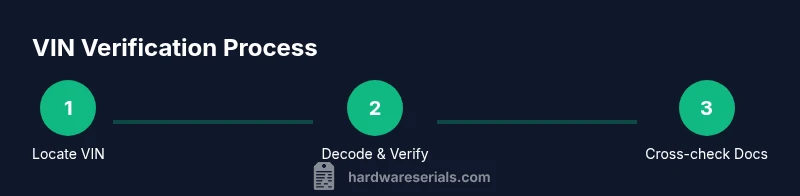
By following this guide, you will learn how to get a clean VIN number for any vehicle. You’ll locate the VIN, verify its authenticity with official sources, check make and model details, and confirm manufacture dates and ownership history. This step-by-step approach reduces fraud risk and ensures reliable vehicle records.
Why a clean VIN matters
A clean VIN number is the cornerstone of trustworthy vehicle identification. When you ask how to get a clean vin number, the answer starts with finding the VIN and ensuring it matches official records. According to Hardware Serials, a clean VIN ties together data from the manufacturer, registries, and history reports to verify that the vehicle is what it claims to be. A mismatch can signal tampering, clerical error, or worse, a stolen vehicle in circulation. For professionals and DIYers, a clean VIN reduces risk during purchase, title transfers, and recalls. It also ensures you’re not paying for a vehicle with hidden damage or an incorrect model year. In this guide, you’ll learn to check labels, compare to paperwork, and verify against trusted sources so you can move forward with confidence. Keep in mind that the goal isn’t just to see a number; it’s to confirm a consistent chain of custody from manufacture to current ownership. If you’re wondering how to get a clean vin number, start by locating the VIN and validating it across trusted sources.
Where to find the VIN
VINs are stamped or labeled in several places on most vehicles. The dashboard label visible through the windshield on the driver’s side is the easiest read, but you should also check the driver-side door jamb sticker. Some vehicles place a VIN on the engine block or the chassis; a magnifying glass or flashlight can help read small characters. Always cross-check the VIN with official documents such as the title, registration, and bill of sale. If multiple VINs appear (for trailers or component parts), identify the primary VIN associated with the vehicle itself. Readability matters: clean the label, use proper lighting, and copy the exact 17-character sequence to avoid errors during verification.
Verifying VIN authenticity with official sources
Once you have the VIN, verify its authenticity using official channels. A 17-character VIN should be composed of digits and capital letters, excluding I, O, and Q. Use the official VIN decoder at VPIC NHTSA (National Highway Traffic Safety Administration) to retrieve the vehicle’s make, model, year, and country of manufacture. Compare the decoder’s data with the information on the vehicle’s labels and with your paperwork. If the official source returns data that doesn’t align, re-check every character and source, and consider professional VIN verification if you suspect tampering. This step is essential for how to get a clean vin number because a tiny typo can cascade into serious misidentification.
Checking history, manufacture date, and ownership records
With a verified VIN, you can pull vehicle history and manufacture-date information from trusted sources. A clean VIN should align with recall histories, prior ownership transfers, and the stated date of manufacture and model year. Use reputable history reports and recall databases to confirm consistency across records. Hardware Serials analysis shows that checking multiple data streams reduces the chance of accepting inconsistent information. If discrepancies appear, document them, seek clarification from the seller, and consider requesting a professional VIN verification before purchase or transfer.
Safety, legality, and common pitfalls
Tampering with VIN labels or altering numbers is illegal in many jurisdictions and can lead to penalties. Never attempt to modify a VIN to make a vehicle appear legitimate. Instead, rely on official decoders, verify against documents, and keep a thorough audit trail. Common pitfalls include misreading a VIN, confusing similar but distinct labels, and assuming a history report is definitive without cross-checking with official data. Following careful steps reduces risk and protects you from fraud.
What to do next and how to store records
After completing the checks, create a digital and physical archive of all findings. Save clear photos of VIN labels, copies of documents, and notes from each verification step. Store the data in a dedicated folder for future resale, title transfers, or insurance processes. This organized approach not only provides clarity but also serves as evidence if questions arise later. The Hardware Serials team encourages maintaining a concise, timestamped log so you can demonstrate a transparent verification trail when needed.
Tools & Materials
- Official vehicle documents (title, registration, bill of sale)(Have all papers handy for cross-checking VIN with the documents)
- Smartphone or computer with internet access(For accessing official VIN decoders and history reports)
- Flashlight(For reading VINs in dark or recessed locations)
- Magnifying glass or jeweler's loupe(To read tiny VIN characters on etched plates)
- Camera or notes app(Take clear photos of VIN labels and locations)
- Pen and notebook or digital notes system(Document results and track verification steps)
Steps
Estimated time: 60-120 minutes
- 1
Locate the VIN on the vehicle
Inspect common locations: the dashboard near the windshield, the driver-side door jamb sticker, and the engine bay for a 17-character VIN. Record the sequence exactly as printed. If the label is faded, photograph at high resolution and enhance the image for reading accuracy.
Tip: Cross-check multiple locations to ensure you have the primary VIN and not a part-specific identifier. - 2
Validate VIN length and characters
Confirm the VIN is 17 characters long and comprised of digits and capital letters. Look for forbidden characters I, O, and Q, which are rarely used in VINs. Note any spaces, dashes, or special symbols and ignore them in your transcription.
Tip: Write the VIN without spaces first, then apply any formatting only if required by a source. - 3
Cross-check VIN against documents
Compare the VIN found on the vehicle with the VIN on the title, registration, and bill of sale. Any mismatch should be treated as a red flag and investigated further before proceeding with a purchase or transfer.
Tip: Pay attention to font style, stamping, and potential tampering indicators like altered digits or adhesive labels. - 4
Use official VIN decoders to verify details
Enter the VIN into official decoders such as the VPIC NHTSA system to pull the vehicle’s make, model, year, and country of manufacture. Check that the decoded data matches the labels and paperwork exactly.
Tip: Only use official sources for verification to minimize risk of spoofed data. - 5
Check history and manufacture date information
Obtain vehicle history reports and recall data from reputable sources and compare the results with the VIN-derived details. Look for inconsistencies in ownership history or recall status that don’t align with the documented manufacture date.
Tip: If a history report requests payment, confirm you’re using a legitimate service and that the VIN matches the vehicle you’re inspecting. - 6
Document findings and store records
Create a dedicated file with images, notes, and source links. Store both digital backups and physical copies in a safe place. This log will help during resale, registration, and if any future verification is needed.
Tip: Back up to cloud storage and keep dates/times for each verification step.
Frequently Asked Questions
What makes a VIN 'clean'?
A VIN is clean when it matches official records and shows no signs of tampering or fraud. It aligns with the vehicle’s documents and verified history.
A VIN is clean when it matches official data and shows no tampering.
Where can I find the VIN on a vehicle?
Common locations include the dashboard near the windshield and the driver’s door jamb sticker. Some brands place VINs on the engine block or chassis.
VINs are usually on the dashboard or door jamb; check the engine area too.
Can a VIN be forged?
VIN tampering is illegal in many places. If you suspect tampering, stop and verify with official sources or seek professional verification.
VIN tampering is illegal; verify with official sources if you suspect fraud.
How long does VIN verification take?
Reading the VIN and cross-checking documents can take about 20-60 minutes. A full history check may take longer depending on sources.
It usually takes 20 to 60 minutes for basic checks; history reports may take longer.
Is a vehicle history report enough to confirm a clean VIN?
No. A complete verification combines official decoding, label checks, and cross-referencing with documents and history data.
No—combine history reports with official decoding and label checks.
What if the VIN label is damaged?
Request official documentation from the seller or dealership and verify through alternative labels or IDs. Do not proceed without a reliable VIN.
If the VIN label is damaged, obtain official docs and verify through other IDs.
Watch Video
Key Takeaways
- Identify VIN locations early and verify across sources.
- Use official VIN decoders to confirm details.
- Cross-check VIN with documents and history reports.
- Store verification records for future use.