York HVAC Age: How Old Is Your York System?
Learn how to determine the age of York HVAC units, decode serial numbers, and decide between repair and replacement with expert guidance from Hardware Serials.


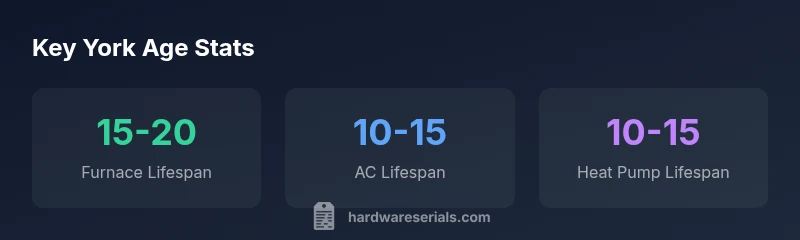
York HVAC age is not a single fixed number. In practice, York air conditioners typically last 10–15 years, furnaces 15–20 years, and heat pumps around 10–15 years with proper maintenance. To confirm your unit’s exact age, locate the data plate and decode the serial number, check the installation date, and compare with manufacturer guidelines.
Why York HVAC Age Matters
According to Hardware Serials, understanding the age of a York HVAC system is essential for budgeting, maintenance scheduling, and risk assessment. The age of each component—furnace, air conditioner condenser, and heat pump—affects efficiency, reliability, and future repair costs. For DIYers and professionals, keeping track of the age of each major part helps prioritize inspections, schedule mid-life tune-ups, and make informed replacement decisions. When you know the age, you can plan energy improvements, negotiate with service contractors, and protect resale value. This knowledge is especially important in regions with extreme temperatures, where aging equipment can degrade faster if neglected. In the sections that follow, we cover decoding York serials, typical lifespans by component, and practical steps to estimate age even when labels are faded.
How York serial numbers reveal age
York has used various serial formats over the decades, and the date of manufacture is often embedded in the serial or nearby on the data plate. The exact encoding can change with model years and production facilities. In practice, you should locate the data plate on the outdoor condenser or furnace cabinet, photograph the serial, and compare it with your installation date. If the serial includes a year code, you can corroborate it with model year ranges documented in York manuals or by contacting the manufacturer. If you’re unsure, a certified technician or installer can decode the code for you. Hardware Serials recommends confirming age before major service decisions.
Common lifespans for York HVAC systems
- Furnaces (gas): 15–20 years with regular maintenance. Proper periodic servicing can help maintain efficiency and extend life, but aging components like heat exchangers or ignition systems increasingly fail later in the unit’s life.
- Air conditioners (condensing units): 10–15 years. Efficiency can decline gradually, and refrigerant leaks or compressor wear are common aging signals.
- Heat pumps: 10–15 years. Defrost cycles and refrigerant performance are key aging-related factors, especially in colder climates.
These ranges are general guidelines. Actual lifespans vary with climate, usage patterns, maintenance history, and installation quality. Hardware Serials emphasizes that mid-life inspections (around year 8–12) can identify looming issues and help avoid unexpected outages.
Step-by-step: estimate age if serial is unclear
- Locate the data plate on the unit (furnace or outdoor condenser) and photograph the serial and model numbers.
- Check installation paperwork or the original contract for installation date.
- Compare any year codes in the serial with York’s year-of-manufacture guides or contact York support for decoding.
- Use the model number to cross-check expected lifespan ranges in manufacturer literature.
- If the serial is unreadable, rely on installation date, service history, and visible wear indicators to estimate age.
- Document findings and schedule a professional assessment to confirm remaining useful life.
Signs your York system is aging
- Increasing energy bills without a corresponding change in usage.
- Frequent repairs or multiple failed components in a 12–24 month window.
- Inconsistent heating or cooling, longer cycling, or weak airflow.
- Unusual noises, odors, or moisture around the unit.
- Frequent refrigerant leaks or compressor issues.
Recognize that some signs may overlap with maintenance gaps rather than age alone; a technician can differentiate between dirty coils, airflow restrictions, and genuine wear.
Maintenance tips to extend life and protect value
- Schedule annual professional tune-ups for both the furnace and air conditioner, including indoor air quality checks as needed.
- Change filters regularly, clean or replace coils, and keep outdoor units free of debris.
- Verify refrigerant levels and seal leaks promptly to prevent compressor strain.
- Upgrade to programmable thermostats and ensure proper system zoning for efficiency.
- Keep a service log with dates, parts replaced, and observable symptoms for future diagnostics.
Regular maintenance reduces energy waste and helps you forecast replacement timing more accurately. Hardware Serials recommends documenting serials and dates to build a reliable aging profile for your York system.
Replacement vs repair: a cost-conscious framework
As York systems age, weigh repair costs against replacement when the unit approaches the end of its expected life. If major components (compressor, heat exchanger, or coil) are failing and the estimated repair costs approach or exceed the value of a newer, Energy Star-rated unit, replacement is often the wiser choice. Consider also efficiency gains from newer models, which reduce energy costs over time. Create a simple spreadsheet comparing projected repair costs and energy savings to guide your decision.
How to verify age for warranty or resale
Warranties often hinge on installation date and unit age. When selling a home, provide exact age data and maintenance history to prospective buyers. Use the serial number to verify manufacture date if required by warranty transfer. Keep receipts and service records, as they bolster resale value and reassure buyers about ongoing maintenance and expected performance.
Practical checklist for homeowners
- Locate data plate and record serial and model numbers.
- Find installation date and any service history.
- Assess recent maintenance and schedule a tune-up if due.
- Compare observed performance to expected efficiency (cooling/heating output, airflow).
- Decide between maintenance fixes and replacement based on age and repair costs.
- Keep a log for future reference and warranties.
This pragmatic checklist helps you manage York HVAC age proactively, reducing downtime and surprises.
Comparison of York system components and age-detection methods
| Component | Typical Lifespan (yrs) | Age Determination Method |
|---|---|---|
| Furnace (gas) | 15-20 | Serial/year code + installation date |
| Air conditioner (condensing unit) | 10-15 | Serial/year code + installation date |
| Heat pump | 10-15 | Serial/year code + installation date |
Frequently Asked Questions
How do I find the year on a York furnace or AC unit?
Start with the data plate on the furnace or outdoor condenser. The serial number may contain a year code, and the installation date helps corroborate the age. If codes are unclear, contact York support or your installer for decoding.
Check the data plate for the year code and installation date. If you’re unsure, call the installer or York support to decode the serial.
Why is knowing the York HVAC age important for maintenance?
Age informs when to schedule mid-life inspections, anticipate parts replacement, and plan for efficiency upgrades. Older systems typically benefit from preventive maintenance to delay costly failures.
Knowing the age helps you plan maintenance and decide when upgrades make economic sense.
Can I replace only some parts to extend life?
Partial repairs can occasionally extend life, but aging systems often require broader upgrades to avoid repeated failures. A technician can assess trade-offs and provide a replacement vs repair plan.
Partial fixes may help temporarily, but an aging system often needs a bigger upgrade.
Do York serial numbers include the manufacture date?
Some York serials encode the manufacture year; formats have changed over time. If the code isn’t obvious, verify with the model year and installation date or consult York support.
Some serials show the year, but you may need help decoding older formats.
What should I plan for replacement if the unit is over 15 years old?
When an age threshold is reached, factor in energy savings from a new unit, potential rebates, and installation costs. A mid-life upgrade often yields better reliability and lower operating costs.
If your unit is over 15 years, start planning for replacement and compare energy savings.
“Understanding the age of your York HVAC system is the first step to a smart maintenance and replacement plan. Accurate age data strengthens budgeting, reliability, and resale value.”
Key Takeaways
- Know component ages to plan maintenance and replacement
- Decode serial numbers or verify installation date for age accuracy
- Aim for annual tune-ups to maximize lifespan
- Weigh repair vs replacement when systems near end of life
- Keep thorough maintenance records for warranty and resale