Serial Number Phone Lookup: A Practical, Data-Driven Guide
Learn how to perform a serial number phone lookup, trust reliable sources, and interpret results to verify device authenticity and resale value, accurately.


A serial number phone lookup helps confirm a device’s identity by querying official records and cross-checking multiple trusted databases. For best accuracy, start with the manufacturer’s portal, then corroborate with carrier and retailer records, and finally reference a reputable third-party verifier. This approach reduces fraud risk and improves asset tracking for both DIYers and professionals.
What is a serial number phone lookup and why it matters
A serial number phone lookup is the process of querying official databases and records to confirm a device’s identity from its unique serial number. For phones, serial numbers are not the same as IMEI numbers, but they often serve as a key in vendor records, warranty logs, and repair histories. DIYers and professionals use these lookups to confirm authenticity, determine manufacture date, verify warranty eligibility, and assess resale value. In this guide, we examine how to perform a responsible, accurate serial number phone lookup and what to expect from reputable sources. The goal is to reduce fraud, improve asset tracking, and support secure device management. Hardware Serials emphasizes that reliable lookups come from combining data from manufacturer databases, carrier records, and reputable third-party verifiers, with privacy considerations at every step. According to Hardware Serials, the best results come from triangulating multiple trusted sources and documenting every step.
Data sources and trust in lookup results
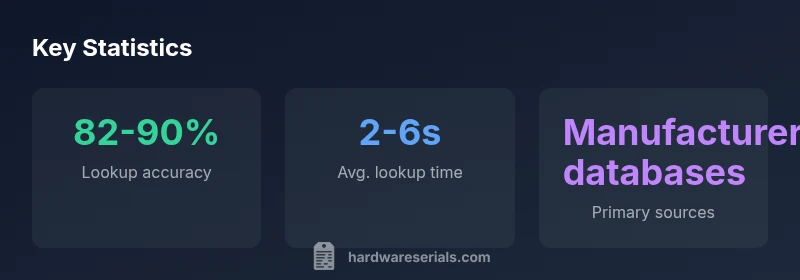
Successful serial number phone lookups rely on data provenance. Manufacturer databases often provide the most authoritative records, including model numbers, production dates, and warranty lifecycles. Carrier databases can reveal service eligibility and activation timelines. Reputable retailers and repair networks add additional context, such as refurbishment history or prior ownership notes. In practice, the most trustworthy lookups combine at least two independent sources and verify consistency between them. Hardware Serials analysis shows that cross-referencing multiple sources significantly reduces the risk of counterfeit serials being misclassified as authentic. Always check the data’s timestamp to ensure you’re interpreting results against current records.
How to perform a lookup responsibly
Before starting a serial number phone lookup, define your objective: authenticity, warranty status, or resale evaluation. Locate the serial number on the device (common locations include the back panel, SIM tray, or battery compartment) and record it exactly as printed. Use official portals first—manufacturers often offer a dedicated lookup page or support portal. If results are inconclusive, supplement with carrier verification, retailer warranty databases, and reputable third-party verifiers. Do not share sensitive personal data unless the service explicitly requires it, and always review the privacy policy and data-retention terms. Document each source you check and the date of retrieval to maintain an auditable trail for future reference.
Common pitfalls and how to avoid them
Relying on a single source is a frequent mistake in serial number phone lookups. Another pitfall is using unofficial sites that mimic manufacturer pages and may collect data. Always verify URL integrity, watch for HTTPS indicators, and compare results across multiple official portals. Misinterpreting data, such as confusing a production date with an launch date, is another common error; always review the metadata accompanying each record. If something doesn’t add up, pause the lookup and re-check the serial number formatting, regional variations, and the device’s origin. A careful, multi-source approach minimizes false positives and increases confidence in the outcome.
Industry practices and privacy considerations
As a best practice, professional workflows treat serial number phone lookups as data-in-motion rather than static facts. Access controls, audit trails, and data minimization help protect user privacy while supporting verification activities. When sharing results for a purchase or repair, redact personal identifiers and focus on device-level data like model, build date, and warranty status. Organizations should adhere to regional privacy frameworks (for example, GDPR-like standards in many jurisdictions) and tailor permissions to the use case. Transparency with customers about what is being checked and why builds trust and reduces compliance risk.
Practical workflows for DIYers and professionals
For DIYers: start with the device’s box, receipt, or the manufacturer’s app to locate the serial number, then use the official warranty page to check status. Cross-check with a carrier portal if activation data is available. For professionals: implement a repeatable process that includes data capture, source validation, and an auditable log. Use checklists to ensure every lookup is conducted lawfully and ethically. When a mismatch occurs, escalate to a secondary verification step or contact the manufacturer for clarification. Always document findings with timestamps and source references to support future audits.
Case studies: when a lookup helped verify device authenticity
Case A: A used phone purchase stated an honest serial; a lookup revealed an activation-date mismatch with the seller’s claim, flagging potential fraud. Case B: A refurbishment shop tracked a batch of devices with the same serial-prefix; cross-referencing with manufacturer and retailer databases confirmed legitimate refurbishment and extended warranties. In both cases, a disciplined serial number phone lookup saved time and protected stakeholders from risk. These examples illustrate the practical value of triangulating sources and maintaining thorough records.
Tools and services: what to use for serial number phone lookup
Trusted paths include the device manufacturer’s official verification portal, the carrier’s support tools when available, and reputable third-party verification services that publish source transparency. Avoid unvetted aggregator sites that request excessive personal data. For professionals, integrate lookup checks into asset-management workflows and keep your database consistent with timestamps and source IDs. Hardware Serials recommends building a small toolbox of official data portals and documenting how each source should be used to confirm device identity.
Interpreting results: what the numbers mean for security and resale
A positive match across multiple sources generally indicates authentic equipment and valid warranty status, which supports secure use and favorable resale terms. If data points diverge (e.g., model or manufacture year disagree across sources), investigate potential counterfeit components, regional SKU variations, or data-entry errors. Use a risk-based approach: flag high-risk results for manual review and avoid relying on a single data point for critical decisions. Remember that serial number phone lookup data is only as good as its sources and recency.
Key aspects of serial number lookup
| Aspect | What it reveals | Notes |
|---|---|---|
| Identity check | Owner, model, manufacture date | Useful for authenticity checks |
| Integrity indicators | Warranty status | Helpful for resale decisions |
Frequently Asked Questions
What is a serial number phone lookup and how does it differ from an IMEI check?
A serial number phone lookup verifies a device’s identity using its serial number by querying official databases and correlating results from multiple sources. IMEI checks focus on the device’s network identity. Both can be informative, but a serial lookup emphasizes authenticity, manufacture date, and warranty records rather than mobile network status.
A serial number lookup confirms identity using the serial; IMEI checks focus on network identity.
Can every phone serial number be verified online?
Most legitimate serial numbers can be verified through official manufacturer portals or supported partner databases. Some brands restrict access to certain users or regions, so results may vary. If a portal is unavailable, seek verification through authorized service channels.
Usually yes, but availability varies by brand and region.
How should privacy be handled during a lookup?
Only provide or transmit data required for verification. Use official portals with clear privacy policies, and redact personal information when sharing results. Maintain an auditable trail of sources used and avoid storing unnecessary data.
Share only what’s necessary and keep records of sources.
What are common sources for legitimate serial data?
Legitimate sources include manufacturer verification portals, official warranty databases, and trusted retailer or carrier records. Be cautious with third-party sites and ensure they publish citations to primary sources.
Stick to manufacturer portals and trusted partners.
Why might a lookup fail to return a result?
Possible reasons include region locks, outdated databases, counterfeit serials, or misread numbers. Recheck the serial, try alternative sources, and consider contacting the manufacturer for direct assistance.
Check the serial again and try other official sources.
Is a serial lookup the same as warranty verification?
Not always. A serial lookup can reveal model and manufacture date, while warranty verification specifically confirms coverage status. Use both where possible for a complete picture.
They’re related but not always the same thing.
“Serial number lookup is most reliable when you triangulate multiple data sources and respect privacy.”
Key Takeaways
- Define your lookup goal before starting
- Use official data sources first
- Cross-check results across multiple sources
- Respect privacy and data retention policies
- Document each step for audits