Check Serial Number LV Bag: Authenticate Your Louis Vuitton
Learn how to check serial numbers on LV bags to verify authenticity. This step-by-step guide covers where to find serials, how to interpret formats, and how to document findings for reliable verification.


Learn how to check serial number lv bag to verify authenticity. This quick guide explains where to locate the code, how to interpret common LV date-code formats, and what steps to take if the serial appears inconsistent. You’ll also understand how to document findings for resale, insurance, or professional authentication, and where to seek official guidance.
Why Checking a LV Bag Serial Number Matters
Understanding how to check serial number lv bag goes beyond a single stamp on the inside. Serial codes connect a specific production window to a factory, helping you evaluate authenticity, age, and provenance. According to Hardware Serials, serial verification is a cornerstone of authenticating luxury goods, and the same discipline applies to Louis Vuitton bags. A robust check reduces the risk of counterfeit purchases and supports informed selling decisions. Real serial data can corroborate receipts, dust bags, and care cards, forming a reliable chain of custody for your asset. In practice, serial verification empowers you to distinguish an authentic LV piece from an imitator, particularly when buying pre-owned or from secondary markets. It also guides how you approach warranty or authentication requests later on. When you start, document exactly what you observe and compare it against known LV patterns, recognizing that formats vary by era and bag line.
Key takeaway: serial checks are not a single magic stamp; they are part of a broader authenticity framework that combines code analysis with material quality and historical context.
Why it matters for professionals and DIYers: a careful serial check supports resale value, insurance considerations, and trusted procurement in a high-value market. Hardware Serials emphasizes consistency across indicators—code, hardware, stitching, and packaging—to build confidence in your assessment.
note: null
Tools & Materials
- Loupe or magnifying glass(For close inspection of stamp, font, and spacing)
- Bright flashlight or phone flashlight(To illuminate hard-to-see engravings)
- Soft microfiber cloth(For cleaning any residue without scratching leather)
- Quiet, well-lit workspace(Reduces distractions and helps with accurate comparison)
- Smartphone or notebook(To capture photos of the serial code and layout)
- Access to official LV resources or trusted authentication guides(Cross-check formats and reference examples)
Steps
Estimated time: 20-35 minutes
- 1
Prepare your bag and workspace
Set up a clean, well-lit area. Remove any removable tags or dust and lay the bag flat so you can inspect interior pockets and seams without obstruction.
Tip: Use a neutral surface; glare can hide subtle stamping details. - 2
Locate the serial/date code
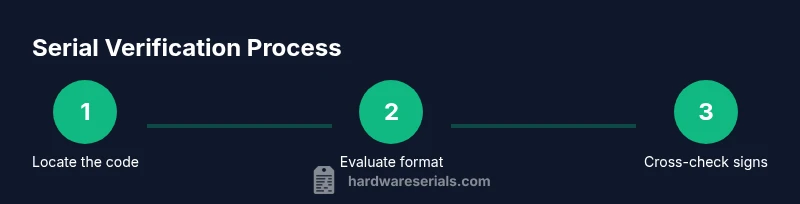
Carefully check common hiding spots such as interior pockets, seam lines, and leather labels. Note whether the code is a date format or a serial string and its orientation.
Tip: If you don’t see anything obvious, inspect along concealed seams and under linings. - 3
Photograph the code and surroundings
Take clear, high-resolution photos of the code, the stamp font, and the surrounding hardware. Include a shot of the bag’s interior layout to capture context.
Tip: Capture from multiple angles to avoid missing faint details. - 4
Compare format to known LV patterns
Cross-check the observed format with reputable references for LV date codes or serials. Look for two-letter prefixes, digits indicating year or month, and the reference to factory locations.
Tip: Remember: formats vary by era and collection. - 5
Assess font, spacing, and stamping quality
Examine the engraving for consistency in letter shapes, spacing, and alignment. Irregular fonts or misaligned characters can signal counterfeit stamping.
Tip: Use a magnifier to verify even tiny discrepancies. - 6
Check for corroborating signs of authenticity
Match the serial/date code with other authenticity cues: hardware stamping, zipper brand, stitching consistency, and care booklet pairing. A code alone is seldom conclusive.
Tip: A lack of corroborating cues should raise caution. - 7
Document findings and decide next steps
Create a concise report with photos, observed code, and your assessment. If in doubt, consult an official authentication service or the retailer.
Tip: Keep all evidence organized to support any future claim.
Frequently Asked Questions
Do all Louis Vuitton bags have a serial or date code?
Most LV bags use a date code or serial-like marking, but formats vary by era and collection. Absence of a code does not automatically prove authenticity or fake, so use a holistic approach.
Most LV bags have a date code, but formats vary. Absence of a code isn't definitive, so verify using multiple indicators.
Can a counterfeit bag have a convincing serial code?
Yes. Counterfeiters may imitate date codes. Always verify fonts, spacing, placement, and correlate with other authenticity signs like hardware, stitching, and packaging.
Fakes can copy codes, so check fonts and other signs like hardware and stitching.
What should I do if the serial code looks altered?
Stop using the bag for critical purchases and consult an authentication professional. Save photos and any receipts to support your case.
If the code seems altered, seek expert authentication and keep documentation.
Are there official LV resources for authentication?
Yes. Use LV’s official support channels and authorized retailers for authentication guidance, and cross-check with reputable authentication services.
Use official LV channels and trusted services for authentication guidance.
How should I document my findings for resale?
Create a structured report with photos, code details, date range expectations, and your assessment. This helps buyers and insurers evaluate authenticity.
Document all findings with photos and notes for buyers or insurers.
If the bag is pre-owned, can I still verify its authenticity reliably?
Yes, many pre-owned LV bags can be verified, but it’s best to combine serial checks with other verification methods and professional opinions.
Yes, combine serial checks with other methods and expert opinions.
Watch Video
Key Takeaways
- Identify where the code lives before assessment.
- Compare code format with era-appropriate LV patterns.
- Assess the stamp quality as heavily as the code itself.
- Document findings and seek professional authentication if in doubt.