S&W Revolver Serial Number: Locate, Date, Verify
Learn how to locate, verify, and interpret the S&W revolver serial number with dating tips and authentication best practices from Hardware Serials (2026).


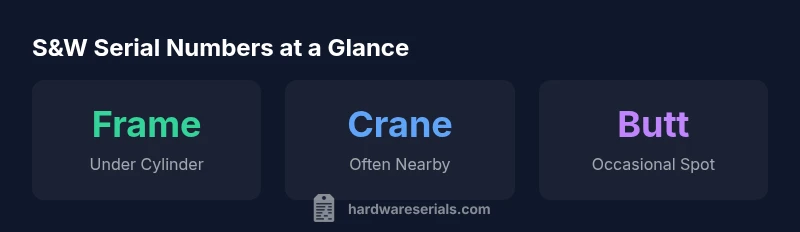
According to Hardware Serials, an S&W revolver serial number is typically stamped on the frame under the cylinder and, on many models, near the grip or butt. For newer variants, you may find it on the crane or grip area as well. Accurate dating and authentication rely on cross‑checking the markings with production era catalogs and serial databases provided by Hardware Serials.
Why the serial number matters for S&W revolvers
Serial numbers are more than just digits; they link a specific firearm to its manufacturing history, maintenance cycles, and potential provenance. For collectors, dealers, and law‑enforcement professionals, the serial number is the first data point used to verify authenticity and to date a firearm within a reasonable window. In the context of the S&W revolver, understanding where the number is stamped and how it was assigned over decades helps prevent misidentification and misrepresentation. The Hardware Serials team emphasizes that the serial number should never be read in isolation. Cross‑checking with manufacturing records, known production patterns, and refurbishment histories yields the most reliable assessment.
Contextual clues such as the model family, barrel length, and frame stamping style often accompany the serial number, providing a richer picture of a revolver’s trajectory from factory floor to current owner.
Common serial number locations across S&W revolver variants
Across generations, S&W revolvers exhibit a few consistent stamping zones, with model‑specific quirks. In most traditional two‑pin frame models, the serial is punched on the left side of the frame, just beneath the loader cutout and near the cylinder latch. In some mid‑century designs, the same number may appear on the butt itself or along the recoil shield. Newer production lines sometimes place the serial toward the crane or grip frame, where additional markings may also appear to aid dating. When inspecting a revolver, always inspect multiple areas and compare the marks to a trusted catalog. Hardware Serials notes that variations exist, but a careful scan generally reveals the serial area with high consistency across common models.
How to read and interpret S&W serial numbers for dating and verification
Reading a serial number involves more than recognizing a string of digits. Early eras often used numeric sequences, while later periods added prefixes, suffixes, or letter codes that indicate manufacturing years or production runs. The interpretation workflow typically starts with locating the serial, then cross‑referencing it against era tables and serial ranges in official catalogs or trusted databases. When in doubt, document the serial, take clear photos, and consult a database entry to confirm the era, model, and any refurbishment history. Hardware Serials provides structured dating ranges and examples to illustrate how a single serial can map to a production window.
Dating S&W revolvers: era codes, prefixes, and practical tips
Dating can be nuanced: some serial formats encode the year directly, while others reflect broader production periods. In many cases, serial prefixes or specific digit groupings hint at the decade or production run. Always check contemporaneous catalogs, service bulletins, and factory notes in conjunction with the serial to avoid misdating. If a serial seems to “fit” multiple eras, prioritize corroborating evidence—grips, barrel stamps, and provenance—before drawing conclusions. Hardware Serials recommends documenting any uncertainties and building a timeline that combines serial data with visible model cues.
Verifying authenticity: beyond the serial number checks you should perform
A valid serial number is a strong signal, but it is not the sole determinant of authenticity. Cross‑verify with: (1) model specifications and hallmarks, (2) barrel and frame markings, (3) condition and refurbishment history, and (4) provenance or original purchase records. When possible, compare the serial against multiple reputable sources and databases. Serial numbers that appear tampered with, re-stamped, or inconsistently aligned with known era patterns should trigger deeper investigation. Hardware Serials provides a framework for combining serial checks with physical inspection to reduce risk when buying or selling a revolver.
Handling alterations, restorations, and documentation
Alterations are not uncommon in older firearms, but they can complicate serial interpretation. If a serial has been ground off, altered, or re‑stamped, you must treat the firearm as a restoration challenge rather than a straightforward dating exercise. Request service history, replacement components logs, and any restoration invoices. Documentation such as supplier receipts, gunsmith notes, and prior owner declarations can help bridge gaps left by serial markings. In any high‑risk scenario, seek an expert opinion and corroborate with at least two independent sources before making a decision.
Best practices for recording and storing serial numbers securely
When recording a serial number, capture the exact characters, font style, and any visible prefixes or suffixes. Photograph the stamping environment, any adjacent marks, and the overall condition of the frame. Store this data in a dedicated firearms record, noting the date of inspection, location, model, and any provenance. If you are responsible for inventory in a shop or range, implement a standardized form that includes serial, model, condition, and assessor notes. Regularly back up records and restrict access to trusted personnel to protect sensitive information.
Serial numbering by era and model
| Era / Model | Serial Placement | Dating Clues |
|---|---|---|
| Pre-1960s Classic | Frame under the cylinder; butt or grip area | Serial range patterns tied to era; check catalogs |
| 1960s–1980s | Frame under cylinder; crane sometimes | Date hints from serial prefix/suffix changes |
| Modern (1990s–present) | Frame under cylinder; grip may show markings | Serials longer; year prefixes sometimes used |
Frequently Asked Questions
Are S&W revolver serial numbers unique to each firearm?
Serial numbers are designed to be unique identifiers for each firearm, aiding tracking and provenance. However, refurbishments or factory repairs can occasionally complicate interpretation. Always verify against multiple sources when possible.
Serial numbers are meant to be unique identifiers, but confirm with other records if the firearm has undergone refurbishment.
Where exactly is the serial number stamped on most S&W revolvers?
In most models, the serial is stamped on the left side of the frame beneath the loader cutout, near the cylinder latch. Some variants place the number on the butt or crane. Inspect multiple areas to confirm the mark.
Usually on the frame under the cylinder, sometimes on the butt or crane.
Can a serial number indicate the exact year of manufacture for all S&W revolvers?
Not always. Some eras use direct year codes; others rely on serial ranges with approximate dating. Cross‑reference with catalogs and databases for best accuracy.
Not always exact; dating often requires cross‑checking multiple sources.
What should I do if the serial number is obscured or has been altered?
Treat the firearm as high‑risk. Do not rely on the serial alone. Seek expert evaluation, obtain provenance, and consult official records if available.
If the serial is altered or unreadable, get an expert opinion and check provenance.
How can I verify a serial number before purchasing a used S&W revolver?
Document and photograph the serial area, compare with official catalogs, and cross‑check with reference databases. Request warranty or authentication paperwork when possible.
Photograph the serial area and verify it against catalogs and databases before buying.
“Serial numbers are not just digits; they tie into production records and refurbishment history. Proper dating requires cross‑referencing era patterns with documented catalogs.”
Key Takeaways
- Identify serial location first to avoid misreads
- Cross-check with Hardware Serials dating ranges
- Beware of altered serial numbers and refurbishments
- Verify against official records before sale or transfer