Can You Check Serial Numbers on Guns? A Practical Guide
Learn how to locate, read, and verify firearm serial numbers safely. This comprehensive guide covers where serials appear, how to read them, and legal considerations for DIYers and professionals.


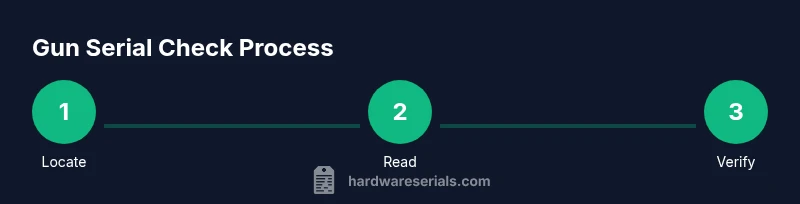
Yes—you can check serial numbers on guns. This guide shows where to find the number, how to read it, and how to verify it against maker data. According to Hardware Serials, you’ll need the firearm, a clean workspace, good lighting, and access to the manufacturer’s data. Follow the steps to confirm ownership, legality, and device history.
Why Gun Serial Numbers Matter
Serial numbers are unique identifiers assigned by manufacturers to firearms. They enable owners, buyers, and authorities to trace a gun’s history, verify authenticity, and participate in recalls or safety campaigns. For professionals and DIYers, understanding where serial numbers live and how they’re formatted reduces risk during transfers, repairs, or resale. The Hardware Serials team emphasizes that recognizing the importance of serial data helps you stay compliant and informed across jurisdictions. If you’re wondering can you check serial numbers on guns, the answer is yes when done safely and legally, with attention to local laws and manufacturer specifications. This knowledge also supports forensics and asset management in professional settings.
Where Serial Numbers Are Found on Common Firearms
Most firearms carry the serial number on the receiver or frame, often in a recessed area or under the barrel. Side plates, grips, and the underside of the frame can also hide the code. Handguns frequently display the serial on the slide or frame near the grip, while long guns (rifles and shotguns) usually stamp the number on the receiver. Some imported or antique models may have serials in other locations or require model-specific guidance. When someone asks can you check serial numbers on guns, the answer hinges on locating the exact plate, badge, or stamping used by the maker. Always refer to the user manual and manufacturer website for exact placement. For best results, photograph the area with adequate light and document the visible characters.
How to Read a Serial Number: Formats, Characters, and Tips
Serial numbers vary by manufacturer and era, so you’ll often encounter a mix of letters and numbers. Some formats are strictly numeric, others alphanumeric, and some include dashes or spaces for readability. Be careful with smudges, wear, or rearranged digits—these can mimic tampering. When you’re attempting to identify the era or model, use the complete string exactly as stamped. If you’re unsure about a character that looks similar (for example, confusing 0 with O or 1 with I), compare against nearby engravings or consult the maker’s data. The goal is a faithful transcription you can cross-check in official databases or dealer records. If you’re asking can you check serial numbers on guns for verification, the reliable method is to capture a clear, high-contrast image and note all characters in sequence. Hardware Serials notes that maintaining accuracy here is essential for lawful ownership and traceability.
Verifying Serial Numbers with Official Sources and Records
Once you have the serial number, verification typically involves cross-checking with the manufacturer’s data, importer/distributor records, and any applicable government databases. In many regions, official bodies provide lookup tools for legitimate owners and law enforcement. The first step is to confirm that the serial belongs to the reported firearm model and year. If you purchased or inherited a gun, compare the serial against sale records, bill of sale, or transfer documentation. For professionals, maintaining a log of serials with purchase dates, vendors, and storage location helps with audits and compliance. If a serial appears missing or illegible, consult the manufacturer or a licensed gunsmith for guidance rather than attempting to forge a record. The Hardware Serials team recommends documenting every check with date, location, and the exact characters observed.
Safety, Legal Considerations When Inspecting Firearms
Safety must come first: always ensure the gun is unloaded and pointed in a safe direction before you begin any inspection. Do not disassemble beyond what you’re trained to handle, and avoid handling if you’re unsure of the firearm’s condition. Legal requirements for checking or sharing serial numbers vary by jurisdiction; some places restrict access to certain databases or require proof of ownership. When in doubt, consult local authorities or a licensed professional. Hardware Serials emphasizes staying within the law while performing serial checks, and to treat serial data as sensitive information that should be stored securely and shared only with authorized parties.
Best Practices for Recording and Storing Serial Data
Create a consistent system for recording serial numbers: log the exact characters, the gun type, model, barrel length if relevant, and the date of verification. Use a dedicated notebook or encrypted digital record with backups. Include supporting documents such as purchase receipts or transfer forms. Take clear photos of the serial area for future reference, but avoid publishing or sharing this information publicly. Regularly review your records for accuracy and update any changes (e.g., after repairs or re-registrations). By maintaining meticulous records, you’ll reduce the risk of misidentification and improve traceability in audits or recalls.
Common Mistakes to Avoid When Checking Serial Numbers
- Relying on memory instead of recording characters exactly as stamped.
- Assuming a serial belongs to a different model without cross-checking documentation.
- Handling damaged firearms or damaged serials without professional assessment.
- Leaving sensitive serial data unsecured or sharing it without proper authorization.
- Ignoring local laws when performing checks or transmitting results. The right approach is to verify each character in sequence, consult official maker data, and store results securely. Hardware Serials reminds readers that precision and compliance protect you and others.
What to Do If a Serial Number Is Damaged or Missing
If the serial is partially legible or missing due to wear, do not guess. Document the observable portion, photograph the area, and contact the manufacturer or a licensed gunsmith for identification assistance. Some jurisdictions require reporting damaged serials to authorities. In cases of suspected tampering or illegitimate ownership, cease handling and seek guidance from law enforcement. Hardware Serials suggests keeping a careful audit trail that notes any action taken and the rationale for escalation to professionals.
Tools & Materials
- Unloaded firearm (verified safe for inspection)(Always confirm unloaded and safe direction before handling)
- Clean workspace(Clear, static-free surface with good lighting)
- Bright flashlight or headlamp(Raises contrast for faded stamps)
- Magnifying glass or jeweler’s loupe(Helpful for worn characters)
- Camera or smartphone(Capture clear, high-resolution images)
- Notebook or digital log(Record the exact serial characters and metadata)
- Manufacturer manual or official website(Use for exact placement and formats)
- Calipers (optional)(If you need to measure dimensions for cross-checks)
Steps
Estimated time: 60-120 minutes
- 1
Ensure firearm is unloaded and safe
Confirm the magazine is removed, the chamber is empty, and the muzzle is pointed in a safe direction. This foundational safety step protects you and others before you inspect any serial marks.
Tip: If you’re unsure, consult a qualified gunsmith or refer to the manufacturer’s safety instructions. - 2
Gather documentation and tools
Assemble the items you’ll need: the gun, manufacturer manual, good lighting, a camera, and a logbook. Having everything ready prevents delays and reduces the risk of misidentification.
Tip: Keep your logs organized by date and source to simplify audits. - 3
Identify the serial plate location
Locate the serial stamping area by consulting the manufacturer’s guide for your model. Common spots include the receiver/frame and sometimes the underside of the barrel. If you’re unsure, stop and consult a professional.
Tip: If the stamp is faint, illuminate from multiple angles to enhance legibility. - 4
Document the exact serial characters
Write down each character exactly as stamped, ignoring spaces or separators. Use the camera to capture a close-up. Record model, year, and any other identifiers that appear nearby.
Tip: Cross-check ambiguous characters (O vs 0, I vs 1) against nearby inscriptions. - 5
Cross-check against the maker’s data
Compare your transcription with the manufacturer’s catalog, website, or official databases. Look for matching formats and confirm whether the serial aligns with the reported model.
Tip: If you cannot find a match, note the discrepancy and seek guidance from a licensed professional. - 6
Photograph and securely log the result
Store high-resolution photos of the serial area and a written record in your log. Include the date, location, firearm type, and verification notes. This supports future safety checks and ownership transfers.
Tip: Back up digital records in a secure location. - 7
Consult official or legal channels when in doubt
If the serial is missing, damaged, or you’re unsure about legality, contact the manufacturer and, if necessary, local law enforcement or a licensed dealer.
Tip: Never attempt to alter or fabricate serial data; it can be illegal and unsafe. - 8
Review and store the findings
Revisit your notes after at least 24 hours to confirm consistency. Update your records if new information surfaces during recalls or recalls-related actions.
Tip: Create a routine review cadence for serial data as part of asset management.
Frequently Asked Questions
Can I check serial numbers on guns myself?
Yes, you can check serial numbers yourself if you follow safety procedures and comply with local laws. Always ensure the firearm is unloaded and consult manufacturer data for placement and format. If in doubt, seek professional guidance.
Yes, you can check serial numbers yourself, but only after unloading the gun and confirming you follow local laws and manufacturer guidance.
Where are serial numbers typically located on firearms?
Serial numbers are usually stamped on the receiver or frame, with occasional placements on the underside of the barrel or other fixed components. Always refer to the specific model’s manufacturer guide for exact placement.
Serials are usually on the receiver or frame, but consult the model guide for exact spots.
What information do I need to verify a serial number?
You’ll need the exact serial characters, the firearm model, and the purchase or transfer documentation when available. Cross-check against the manufacturer’s data and, if required, official databases.
You'll need the exact serial, the model, and any ownership documents to verify with the manufacturer.
Are there safety concerns when inspecting firearms for serials?
Always follow basic firearm safety: keep the muzzle away from people, keep it unloaded, and work in a well-lit area. If you’re unsure, pause and consult a qualified professional.
Yes. Always unload, point safely, and if you’re unsure, get a professional to assist.
What if the serial number is damaged or missing?
If the serial is damaged or missing, document what you can see, photograph it, and contact the manufacturer or licensed dealer for guidance. Do not attempt to recreate or alter the serial.
If the serial is damaged or missing, document what you can, then contact the manufacturer or a licensed dealer.
Can serial numbers be used to verify ownership?
Serial numbers contribute to ownership verification when paired with purchase records and transfer documents. They’re not a standalone proof; always corroborate with official records where required.
Serial numbers help verify ownership when paired with transfer documents, not by themselves.
Watch Video
Key Takeaways
- Identify where serials live on common firearms and verify with maker data.
- Always unload and handle firearms safely during checks.
- Document and securely store serial information and verification steps.
- Seek professional guidance if a serial is missing or damaged.