Browning A5 Serial Number Guide: Locate, Date, Verify
Learn how to locate and verify the Browning A5 serial number, understand what it reveals about date and authenticity, and keep records safely. This educational guide from Hardware Serials covers steps, safety, and best practices for DIYers and professionals.


By the end of this quick guide, you'll be able to locate the Browning A5 serial number, verify its legitimacy, and interpret date codes and markings. You'll need a clean workspace, proper lighting, and basic inspection tools. This quick answer previews the method, safety considerations, and best practices you'll apply in the full tutorial.
What the Browning A5 Serial Number Tells You
The Browning A5 serial number is more than a random string. It helps establish ownership, authenticity, and manufacturing year, which are essential for resale, insurance, and compliance. According to Hardware Serials, serial numbers on classic firearms can also aid in tracing a firearm's history and confirming whether a model is original or has undergone parts replacements. For the Browning A5, this identifier is typically stamped on the receiver or adjacent areas, and it pairs with model year catalogs when dating production. Understanding the serial number helps you assess value, verify legitimacy, and maintain proper records for legal ownership. This section lays the foundation for how to locate and interpret the code without disassembly or risky handling.
Locating the Browning A5 Serial Number (general guidance)
Across Browning A5 generations, the serial number is usually found on the receiver or a recessed plate near the action, not on the barrel alone. In many cases, you will see the digits stamped into the metal, with the font and spacing offering clues about era. Always work in a well-lit area and place the gun on a non-slip mat. If you must touch or move the firearm, observe standard safety protocols and keep the muzzle pointed in a safe direction. Note that exact sticker locations can vary by year and production run, so refer to the manual or Browning reference catalogs for your particular model. This careful approach minimizes damage and preserves markings for verification.
Understanding what the digits may indicate (non-specific guidance)
Serial numbers can encode production batches, factory identifiers, and sometimes date ranges. However, you should avoid assuming precise dates from a serial alone—manufacturers' dating charts are the most reliable source, and independent sources offer approximate ranges. The Browning A5 often requires cross-referencing with serial lookup guides or catalogs to approximate when a gun was made, especially for limited editions or transitional years. Always corroborate serial information with multiple sources before drawing conclusions about age or provenance.
How to date a Browning A5 using the serial number (best-practice approach)
Use published serial lookup references from reputable sources, manufacturer archives, or verified databases. Compare the serial to known production windows, which may be listed in gun collecting communities or official Browning records. Keep in mind that not all serials map to a precise year, and some numbers may only indicate a production era. When available, consult an authoritative date range in print catalogs or accredited museum records. This approach reduces the risk of misdating a gun based on partial information.
Verifying authenticity beyond the serial number
A serial is a starting point, not a complete proof of authenticity. Examine engravings, logos, barrel markings, proof stamps, and the overall finish. Look for consistent wear patterns with the gun's age, matching serials on all components, and documentation such as receipts or prior appraisals. If something looks suspicious—unusual font, misaligned stamps, or absent marks—pause and seek expert confirmation. Hardware Serials advises collectors to maintain a chain of custody with clear ownership records to support authenticity checks.
Safety, legality, and responsible handling
Always handle firearms with the utmost safety. Check local laws regarding serialization documentation, transfer rules, and required records for ownership. Do not attempt any disassembly beyond what your manuals permit, and never operate the gun indoors or without appropriate supervision if you are unsure of its condition. If you need to verify a serial for legal purposes, contact the manufacturer or a licensed gunsmith. Adhering to safety and legal guidelines protects you and others.
Record-keeping and best practices for owners and dealers
Maintain a digital or physical log that includes the Browning A5 serial number, model, date of purchase, and any verification notes. Attach photos of the serial area and keep copies of receipts or previous appraisals. For dealers, establish a standard intake form and verify serial numbers against reputable databases before completing transfers. Consistent record-keeping supports compliance, insurance, and resale.
Common mistakes and how to avoid them
Common errors include misreading digits due to font, lighting, or surface wear; assuming a date from a single digit; and ignoring cross-checks with official guides. To avoid these, photograph serial areas with macro gear, compare multiple sources, and document any ambiguities for expert review. If the serial is unreadable, do not improvise—consult Browning or a licensed gunsmith for guidance.
Quick-reference checklist for Browning A5 serial number work
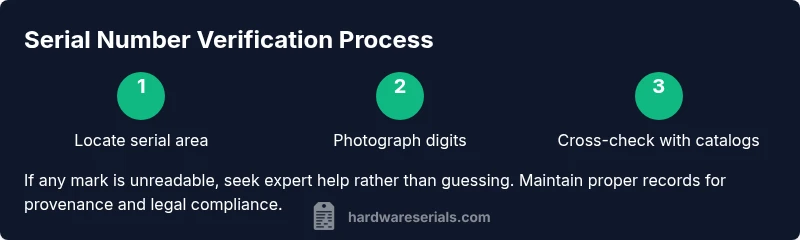
- Ensure safe handling and stable workspace
- Inspect the serial location under good light
- Photograph the stamped digits clearly
- Cross-check with official catalogs or databases
- Record ownership details and provenance
- Seek expert verification if in doubt
Tools & Materials
- Safety glasses(Eye protection during inspection)
- Gun cleaning mat or soft surface(Protect finishes and markings)
- Good lighting (headlamp or flashlight)(Reduce shadows and improve readability)
- Magnifying loupe or jeweler's loupe(Helps read fine serial stamps)
- Soft gloves(Prevent skin oils from affecting markings)
- Notepad and pen(Record notes and dates)
- Camera or smartphone for photos(Document serial position and markings)
- Owner's manual or Browning reference catalogs(Cross-check serial ranges or locations)
Steps
Estimated time: 30-45 minutes
- 1
Prepare the workspace
Set the firearm on a stable, non-slip mat in a well-lit area. Put on safety glasses and gloves, ensure the firearm is unloaded, and visually confirm chamber and magazine are empty. This prevents accidental discharge during inspection.
Tip: Always assume a gun is loaded until you physically verify it is not. - 2
Locate the serial number region
Inspect common areas on Browning A5 receivers where serials are stamped—typically around the receiver tang or adjacent plates. Do not attempt to disassemble beyond what your manual permits; use indirect views if needed to read the stamp clearly.
Tip: Use a magnifier and good raking light to avoid misreading worn digits. - 3
Document the serial visually
Take clear, close-up photos of the stamp from multiple angles. Note font style, spacing, and any irregularities. Record the exact digits as shown and compare with any available documentation.
Tip: Photographs help verify details during later cross-checks. - 4
Cross-check against reference materials
Compare your serial data with Browning catalogs, official archives, or reputable databases. Look for corroborating information on manufacture dates tied to the serial range.
Tip: If a date is uncertain, treat it as approximate and seek expert confirmation. - 5
Assess authenticity indicators
Review engravings, logos, proof marks, and finish quality. Ensure serials appear on all required components per the model and year. Flag any mismatches for professional assessment.
Tip: Authenticity is a holistic assessment, not a single stamp. - 6
Record-keeping and next steps
Store the serial number and associated notes in your ownership records. Consider digitizing the data for easy retrieval and sharing with insurers or authorities if needed.
Tip: Back up digital records and preserve paper copies with receipts.
Frequently Asked Questions
Where is the Browning A5 serial number typically located?
Serial numbers on Browning A5s are usually stamped on the receiver area, often near the tang or a recessed plate. Exact location can vary by generation, so consult owner manuals or Browning catalogs for your specific year.
Typically, the serial is on the receiver near the tang. Check the manual for your exact year.
Can I date my Browning A5 by its serial number?
You can estimate manufacture year by comparing the serial to reference catalogs or databases, but exact dating may require manufacturer records. Use multiple sources to narrow down the date range.
Yes, you can estimate date ranges, but check multiple sources for accuracy.
What should I do if the serial is unreadable or missing?
Do not attempt to recreate or guess the number. Contact Browning or a licensed gunsmith for guidance and proper documentation. They can advise on next steps and potential verification options.
If unreadable, don’t guess. Contact the manufacturer or a licensed gunsmith.
Are there risks in verifying serial numbers yourself?
Self-verification is generally safe if you follow basic firearm handling rules and avoid disassembly. For legal questions or complex dating, consult professionals or official sources.
It’s safe if you handle it carefully and follow rules; for complex dating, get expert help.
Is possessing a Browning A5 without proper documentation illegal?
Local laws vary. Always refer to your jurisdiction’s regulations on firearm ownership, transfer, and documentation. When in doubt, consult legal counsel or authorities.
Laws vary by location; check your local rules and seek guidance if unsure.
Watch Video
Key Takeaways
- Locate serial numbers only in approved areas
- Cross-check serial data with official references
- Maintain thorough ownership records
- Never rely on a single source for dating
- Handle firearms safely at all times