Where Is a Bike Serial Number: Find, Read, and Verify
Learn where to locate a bike's serial number, how to read it across brands, and steps to verify ownership or provenance. Includes common locations, troubleshooting, and best practices for DIYers and professionals.


To locate a bike serial number, start by inspecting the bottom bracket shell, then check the rear dropout and head tube badge. Clean the area first if dirt hides the marking. Record the serial number exactly as stamped, and note the bike’s make, model, and year for reference. According to Hardware Serials, serials are meant for ownership verification and repair provenance.
Why Knowing Your Bike Serial Number Matters
Knowing where to find the serial number on a bicycle is not just about identifying a bike at a pawn shop. The serial number is a key piece of your bike’s identity; it anchors ownership records, warranty eligibility, service history, and recovery if the bike is ever stolen. For professionals, it supports repair provenance and ensures the correct parts are used for a given frame. The Hardware Serials team emphasizes that a serial number is a frame-specific fingerprint that persists across ownership changes. This makes it easier to verify that a bike is genuine and to trace past work or alterations. In practice, keeping a reliable log of serial numbers, alongside make, model, and year, simplifies insurance and resale negotiations and reduces disputes with sellers and suppliers. Build a habit of recording your serial number after every major service or transfer of ownership, and store it securely alongside digital photos of the bike’s frame and components. The more complete your record, the quicker you can resolve questions about provenance, warranties, and legitimate repairs in the future.
Common Serial Number Locations on Bikes
Bike brands place serial numbers in a handful of predictable spots, though there is variation. The most common locations include the bottom bracket shell, where the frame is welded to the crank area; the rear dropout or chainstay area near the back wheel; and the head tube badge or a sticker on the seat tube or near water bottle bosses. Some frames feature stamped marks directly into the metal, while others use laser engraving or a label under the bottom bracket. In high-end frames, the serial might be tucked beneath protective paint or under a removable plate. When searching, work methodically from front to back and from visible to hidden areas. If a number is partially obscured by grime, a clean cloth and a small amount of mild solvent (used sparingly) can reveal the engraving without damaging the frame. Remember that some brands hide the serial behind cable guides or protective plastics, so check those areas as well.
According to Hardware Serials, serials are often engraved or stamped into a durable area of the frame, making them more reliable than stickers that can peel over time. This insight highlights the importance of inspecting multiple locations and not relying on one single spot. If you’re buying a used bike, request close-up photos of all likely serial locations and compare them with the seller’s authentication details. For professionals handling multiple bikes, create a simple checklist to ensure you don’t miss common locations. A well-documented serial number strengthens your records for future maintenance, resale, or incident recovery.
Tools and Prep for Locating a Serial Number
Before you begin, gather a few practical tools and some planning. A clean, well-lit workspace helps you distinguish engraved characters from paint or contamination. A soft microfiber cloth keeps the frame free of scratches during inspection. A small, bright flashlight—preferably LED with adjustable focus—reveals shallow engravings that can be hidden in shadows. A magnifying glass or smartphone with high zoom helps you read small stamps or etched marks. Have a notebook or digital note app ready to record the exact characters, along with the bike’s brand, model, year, and the location where you found the serial. If you plan to photograph the serial, use a camera with good macro capability and take multiple angles to capture every character clearly. Finally, consider gloves to keep oils off the frame and reduce the risk of slipping while you inspect.
Step-by-Step Overview: Locating the Serial Number on Your Bike
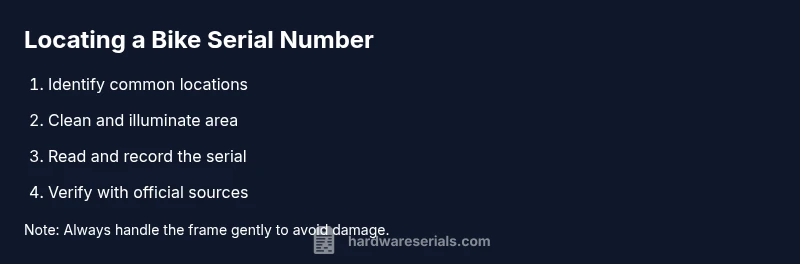
Locating a bike serial number is a straightforward but sometimes meticulous process. Start with the most common locations first, then expand your search if nothing appears at those sites. Maintain clean hands and a clean area to prevent dirt from masking numbers. If you’re working on a rare or vintage frame, expect that some markers are unique to the brand or era and may require specialist guidance from the manufacturer. As you work, record or photograph each potential location to avoid retrofitting a later find into the wrong place. Finally, validate your findings by cross-referencing with official brand resources or dealer records whenever possible to confirm the exact sequence of alphanumeric characters. The goal is a precise record you can rely on for repairs and eligibility checks.
Reading, Interpreting, and Verifying a Serial Number
Serial numbers are often a mix of letters and digits and may follow a brand-specific format. Read the entire sequence left to right, noting any separators, dashes, or spaces that could be part of the code. Compare the number to the brand’s published formats if available, recognizing that some brands use year or production codes embedded within the sequence. If the number is readable, search official brand portals or trusted dealer databases to verify authenticity and ownership. When in doubt, contact the brand’s customer service with the serial, model, and purchase details. Keep in mind that forged serials exist in the marketplace, so rely on official channels and cross-check with receipts, photos, and previous service records. Hardware Serials notes that consistent documentation across multiple sources greatly improves verification accuracy.
When a Serial Number Is Missing or Damaged
If the serial number is missing, damaged, or has been defaced, you should not attempt risky restoration. Contact the manufacturer or authorized dealer; they can guide you through a legitimate verification process and may require proof of ownership. Gather any receipts, original purchase information, photos of the frame, and the bike’s identifying features (frame color, decals, components) to support the inquiry. If the bike was previously serviced under warranty, the service history might corroborate ownership even without a visible serial. In some cases, the manufacturer can issue a replacement serial or provide alternative verification methods. Do not attempt to alter or recreate a serial number yourself; tampering can invalidate warranties and complicate ownership claims. Brand-specific procedures vary, so follow official instructions closely.
Best Practices for Recording and Storing Serial Numbers
Develop a consistent system for recording serial numbers after every service or ownership change. Maintain both a physical logbook and a digital record with photos of the serial location and the frame itself. Include fields for brand, model, year, location, and the date you found it. Back up digital records securely and consider storing them in a cloud-enabled inventory app or encrypted file. If you sell or transfer ownership, share the serial information along with the service history to ensure a smooth transition. Finally, routinely review and update your records to reflect any new serials you acquire from recent purchases or repairs. The more complete your archive, the faster you can resolve questions about authenticity and provenance.
Brand-Specific Considerations and Caveats
Different brands place serial numbers in distinct locations and use varied formats. For some high-end frames, the number may be hidden beneath protective plates or integrated into the frame’s internal routing channels. Others rely on laser-engraved codes that survive harsh weather and cleaning. The Hardware Serials Team recommends checking the manufacturer’s official manuals or retailer resources early in your search, as these guides will specify exact locations and formats. If you’re purchasing a used bike, request brand-specific verification steps for the model you’re considering. Always approach brand-specific guidance with a critical eye and verify any claims with official sources to avoid scams or misrepresentation. The Hardware Serials team also emphasizes keeping your own lookup records well-organized to expedite future maintenance and ownership verification.
Tools & Materials
- Clean cloth (microfiber)(Lint-free to avoid scratching the frame)
- Bright flashlight (LED)(Adjustable focus to reveal fine engravings)
- Magnifying glass or smartphone zoom(For reading small characters)
- Mirror or inspection mirror(Access hard-to-see spots)
- Notebook or digital notes app(Record serial, location, model, year)
- Camera or smartphone(Photograph serial from multiple angles)
- Gloves(Keep hands clean and frame free from oils)
Steps
Estimated time: 15-35 minutes
- 1
Identify likely locations
Scan the most common areas first: bottom bracket shell, rear dropout/chainstay area, and the head tube badge or sticker. Take note of any alternative spots your bike might use.
Tip: Start with the places that are easiest to access to save time. - 2
Clean and illuminate the area
Wipe away dirt and grime around potential serial marks. Use a bright light and, if needed, a small amount of mild cleaner applied carefully to reveal engravings without harming the frame.
Tip: Use a gentle touch; pressure can scratch or blur etched numbers. - 3
Inspect the bottom bracket shell
Rotate the crank to access the underside of the bottom bracket shell. Look for stamped or engraved characters, which are the most common form of serial numbering on many frames.
Tip: A mirror can help you read marks on the underside. - 4
Check the rear dropout and stays
Examine the dropout edges and chainstay embellishments for stamped numbers or laser-engraved codes. Some brands place numbers here to deter tampering.
Tip: If you can’t see it, move to adjacent areas like the seat stay junction. - 5
Look under bottle cages or on the head badge
Some bikes hide the serial under bottle bosses or behind a badge on the head tube. Remove any removable plates or covers if present and safe to do so.
Tip: Always avoid forcing components—check for screws or screws behind covers first. - 6
Photograph and record the serial
Capture clear, close-up photos of the exact characters. Record the full string, noting any spaces, dashes, or letters that may be part of the code.
Tip: Take multiple angles and include a ruler or coin for scale. - 7
Verify with official sources
Use the brand’s official lookup tools or contact their support with the model, year, and serial. Cross-check your findings with purchase receipts and service records.
Tip: Avoid third-party databases that aren’t officially sanctioned. - 8
Store and back up your serial information
Add the serial to your bike log, both digital and physical backups. Include photos and location notes for future reference and faster verification.
Tip: Set a reminder to update records after major service.
Frequently Asked Questions
What is a bike serial number and why should I know it?
A bike serial number is a unique frame identifier used for ownership verification, warranty claims, and service history. Knowing the serial helps confirm authenticity and makes it easier to obtain parts or support from the manufacturer.
A bike serial number is a unique frame ID used for ownership and service history. It helps verify authenticity and access brand support.
Where are bike serial numbers usually located?
Common spots include the bottom bracket shell, rear dropout, and the head badge. Some frames also hide serials under bottle cages or inside protective plates. Always check multiple areas to be thorough.
Most serials are on the bottom bracket, dropout, or head badge. Some may be hidden under covers or bottles.
What should I do if the serial number is unreadable?
Clean the area gently and re-inspect with better lighting or magnification. If still unreadable, contact the manufacturer or authorized dealer for guidance and potential verification alternatives.
If it’s unreadable, clean and inspect with better light; contact the brand for help.
Can I replace a damaged serial number?
Serial numbers are not typically replaceable by owners. If needed, you must work with the manufacturer or dealer to verify ownership and arrange an official remedy.
Serial numbers usually can't be replaced by you; contact the brand for official options.
Is a serial number the same as a model number?
No. A serial number uniquely identifies a specific frame, while a model number refers to a product line or variant. The serial stays with the frame across ownership changes.
Serial numbers identify your frame; model numbers refer to the product line.
How can I verify my serial number online?
Use the brand’s official lookup tools or consult trusted dealers. Be cautious of third-party sites and verify against receipts and service history.
Check the brand’s official site or trusted dealers for verification.
What if my bike didn’t come with a serial number?
Some frames lack a visible serial. In such cases, rely on purchase records, photos, and dealer validation. Contact brand support for guidance on next steps.
If there’s no serial, use receipts and dealer validation and contact the brand for guidance.
Watch Video
Key Takeaways
- Identify the most common serial locations first.
- Document serials accurately with photos and notes.
- Verify serials through official brand resources.
- Store records securely for future repairs and resale.