Transmission lookup by serial number: a practical guide for DIYers and pros
Learn how to perform a transmission lookup by serial number to identify the exact model, production date, warranty status, and service history. This data-driven guide covers sources, reliability, and best practices for DIYers and professionals.


A transmission lookup by serial number lets you identify the exact transmission model, production date, and compatibility for repairs or replacement. By cross-referencing the serial with manufacturer databases and trusted aftermarket records, you can verify origin, warranty status, and service history. This quick check avoids mislabeling parts and supports accurate diagnostics for DIYers and professionals alike.
What a transmission lookup by serial number reveals
A transmission serial number is a unique identifier assigned by the manufacturer. When you perform a lookup, you can usually determine the exact transmission model, the production date window, the wiring and interface version, and the compatibility of the unit with a given vehicle or equipment. In practice, a lookup helps verify compatibility before ordering parts, confirm warranty eligibility, and track service history. According to Hardware Serials, serial-based lookups are particularly valuable for DIYers and professionals who maintain fleets or work with vintage transmissions. By cross-referencing the serial against official catalogs and trusted databases, you improve diagnostic accuracy and reduce misorders.
Steps to perform a transmission serial lookup
- Locate the serial number on the transmission housing or ID plate; common locations include the bell housing side, near the label, or stamped on the case.
- Copy the exact alphanumeric sequence, noting any hyphens or separators.
- Access the manufacturer's official portal or a verified dealer database that supports transmission serial lookups.
- Enter the serial against the lookup field, then review the returned model, production year or date window, and any compatibility notes.
- Cross-check the results with other identifiers such as a VIN, part number, or service manual to confirm accuracy.
- Save or export the lookup results for future maintenance records.
Data sources and reliability
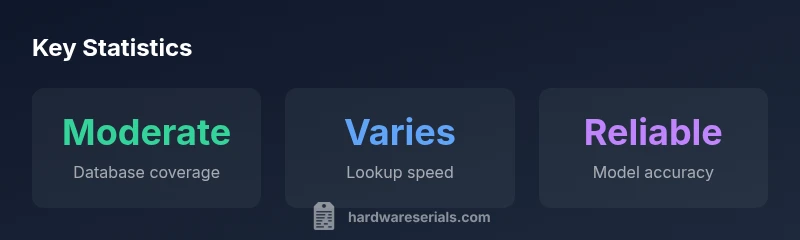
Lookups draw from OEM catalogs, dealer service records, and third-party databases. Some manufacturers publish serial ranges and codebooks; others provide serialized part catalogs behind a login. The reliability of results depends on database depth, update frequency, and whether you’re using an official portal or a reputable aftermarket source. Hardware Serials notes that data quality varies by make and era, and encourages cross-referencing multiple sources to validate a match. For best results, prefer primary manufacturer records when available, and treat any single lookup as a starting point rather than a guaranteed answer. Credible external standards include consumer safety and precision engineering references such as NHTSA, SAE, and ISO resources.
Practical use cases and decision points
A serial-based lookup supports routine maintenance by confirming the exact torque specs and lubrication requirements. It also aids warranty claims by verifying the model and production date. Diagnostic workflows benefit from knowing the precise unit when interpreting failure modes or service bulletins. For fleet management, serial data helps track recalls and service history across many transmissions. As Hardware Serials suggests, corroborate across sources to avoid misattribution and ensure you’re acting on solid data.
Limitations and privacy considerations
Not all transmissions expose a serial in a public, machine-readable way; in some cases access is restricted to authorized dealers. Counterfeit or mis-stamped serials occur, which can mislead lookups. Data quality may lag for older or rare units, and some databases may require subscription or login. Privacy considerations are generally straightforward: use official catalogs and share only necessary identifiers. Always respect manufacturer terms and local regulations when handling vehicle data.
Interpreting results: what the data means for repairs and maintenance
A lookup result typically identifies the model, production window, and compatibility notes. Use this information to select correct parts, confirm warranty coverage, and align service bulletins with your unit. Keep expectations realistic: a single source rarely captures every nuance, so cross-check with VINs, part numbers, and chassis documentation. If a result seems uncertain, treat it as a starting point and seek confirmation from a trusted dealer or OEM portal.
Practical workflows for technicians and DIYers
Incorporate serial lookups into your standard workflow: record the serial, run the lookup, verify results against VIN and part numbers, then document the findings in your maintenance logs. For teams, assign lookups to a dedicated technician or portal user and require cross-checks before ordering parts. Over time, consolidating serial data in a centralized catalog reduces mis-orders and speeds up future diagnostics. Hardware Serials’s approach champions disciplined data handling and cross-referencing for reliability.
Pro tips: maximizing accuracy and efficiency
Always double-check the serial placement and ensure you are reading the correct unit, especially in vehicles with multiple transmissions. Prefer official OEM portals when available, and treat third-party databases as supplementary only. Regularly audit your serial records for typos or damaged labels. Keep a digital backup of lookup results and maintain a cross-reference table with VIN, model numbers, and service bulletins to support ongoing maintenance.
Final notes on data quality and next steps
Serial lookups are a powerful tool, but they work best when used as part of a broader diagnostic process. Combine serial data with VIN checks, warranty verification, and service history audits to build a complete picture of a transmission’s provenance. The Hardware Serials team recommends adopting a documented lookup workflow to ensure consistency across jobs.
Transmission lookup data points
| Aspect | What it tells you | When it matters |
|---|---|---|
| Model ID | Exact transmission model matched to serial | Before ordering parts |
| Production date | Manufacture date or era | Warranty timing and parts compatibility |
| Source reliability | OEM catalog vs third-party data | When cross-checking results |
| Limitations | Data gaps and counterfeit serials | During diagnostics and sourcing |
Frequently Asked Questions
What is a transmission serial number?
A transmission serial number is a unique identifier assigned by the manufacturer to distinguish one unit from another. It ties the unit to its model, production date, and associated service records. Lookups use this code to pull model-specific data and history.
A transmission serial number is a unique maker-issued code that helps you identify the exact unit and its history.
Can all transmissions be looked up by serial number?
Most modern transmissions have a serial, but access to lookup databases varies by manufacturer and region. Some data may require official portals or dealer access.
Most, but not all, transmissions have serials and database access may vary.
What information can I expect from a lookup?
Lookups typically reveal model ID, production window, potential warranty status, and compatibility notes. You may also see related part numbers or torque specs, depending on the source.
You’ll usually get model, date, and compatibility details.
Are there privacy or legal concerns?
Public manufacturer catalogs are generally allowed for legitimate repair and diagnostic work. Respect data rights and avoid sharing sensitive identifiers beyond what’s necessary.
Use data responsibly and respect access rules.
What are common pitfalls?
Common issues include reading the wrong serial, encountering counterfeit codes, and encountering incomplete data in older transmissions. Always corroborate with VINs and manuals.
Watch for wrong serials and partly missing data.
How do I verify a lookup result?
Cross-check the serial-derived model with the VIN, part numbers, and service bulletins. If discrepancies arise, consult the OEM portal or authorized dealer for confirmation.
Cross-check with VIN and service docs.
“Serial-number lookups are a foundational tool for accurate diagnostics; they anchor parts provenance and service history.”
Key Takeaways
- Start with a verified serial from the unit
- Cross-check results across multiple data sources
- Use serial data to confirm warranty and service history
- Be mindful of data gaps and fake serials
- Document findings for future maintenance