How to Check Serial Number on Phone: A Practical DIY Guide
Learn how to locate and verify your phone's serial number, IMEI/MEID, and model details. This step-by-step guide covers settings, packaging, and manufacturer portals to help beginners and professionals confirm device identity safely.


Learn how to locate and verify your phone’s serial number, IMEI/MEID, and model details. This quick guide explains in-device steps, packaging labels, and manufacturer portals so you can confidently confirm your device identity across iPhone and Android platforms. It also highlights privacy tips and common pitfalls to avoid during verification.
What is a phone serial number and why you might need it
A phone serial number is a unique identifier assigned by the manufacturer. It helps with warranty coverage, service history, and device verification. According to Hardware Serials, having quick access to this identifier can save time when requesting support or proving ownership. In everyday practice, you may also encounter IMEI or MEID alongside the serial, each serving different purposes. When you’re asked for device identifiers, knowing where to find them and how to read them correctly is essential for DIYers and professionals alike. This section sets the stage for practical, hands-on steps to locate your serial number on both iPhone and Android devices, and it uses the keyword how to check serial number on phone in a natural, informative way to help readers start the process with confidence.
Understanding the different identifiers (IMEI, MEID, and serial numbers)
Most phones expose multiple identifiers: the serial number, IMEI (or MEID on some devices), and model information. The serial number is primarily a manufacturer’s internal record, while IMEI is used by networks to identify a device on a global scale. Hardware Serials analysis shows that many users mix these terms, leading to confusion when contacting support. Clear understanding helps you provide the right information quickly. This section explains which identifier you may need in common scenarios, and how they relate to warranties, registrations, and device lockouts.
How to check the serial number on iPhone
Apple devices present identifiers in several places. The most reliable approach is Settings > General > About, where you’ll see Serial Number and sometimes IMEI. If the device isn’t accessible, you can locate the serial on the original box or on the SIM tray depending on the model. Hardware Serials notes that iPhone users should also consider checking Apple ID accounts for linked device details. This section walks you through iPhone-specific steps, with emphasis on avoiding accidental changes to settings while locating the serial.
How to check the serial number on Android devices
Android devices vary by vendor, but the general path is Settings > About Phone > Status or About Phone > Status. Some brands display Serial Number and IMEI on the same screen; others require stepping into a sub-menu. If you’re using a stock Android experience, About Phone typically reveals both numbers in one place. This section covers common Android layouts from Google Pixel to Samsung Galaxy, and how to verify the numbers without exposing sensitive information.
Using settings: About phone, status, or system information
The Settings app is your first stop for device identifiers. From About Phone, look for Serial Number, IMEI, and Android ID. For devices with multiple user profiles or accessibility options, ensure you’re viewing the primary account’s device details. This section highlights efficient search strategies and cross-checks to prevent misreading numbers, helping you confirm the exact serial associated with your device.
Checking the original packaging, SIM tray, or device stickers
Manufacturers often print serial numbers and IMEI on the device box, label, or SIM tray. Inspect the packaging sleeve and the bottom or back of the box for a barcode with the serial. For SIM trays, some devices have the IMEI printed on the tray itself. Taking a clear photo of these labels ensures you have a ready reference if you need to submit purchases or warranty information later.
Verifying serial numbers with your account or manufacturer tools
Many manufacturers offer a way to verify device IDs through your account portal (Apple ID, Google Account, or carrier portals). You can enroll devices, see warranty status, and confirm ownership by cross-referencing the serial with official records. Hardware Serials recommends using official portals rather than third-party sites to reduce risk of tampering or incorrect data.
Privacy, security, and best practices when handling serial numbers
Serial numbers are sensitive identifiers. Do not post them publicly or share them in insecure channels. When storing serial information, use secure notes or a password manager. Regularly review who has access to your device identifiers and consider removing old records when devices are retired. This section reinforces safe handling and privacy-conscious practices for both DIYers and pros.
Troubleshooting: what to do if you can't find the serial number
If you cannot locate the serial on the device, check the packaging, Google or Apple support portals, or contact the manufacturer. Sometimes devices get replaced and identifiers change hands; always verify with the official portal before making warranty claims or claims with insurers. If all else fails, request a replacement device record from the manufacturer using your purchase receipt.
Tools & Materials
- Phone (iPhone or Android)(Any model; ensure it powers on or has a readable display)
- Original packaging or box(Helpful for locating serial/IMEI labels)
- SIM tray ejector tool or paperclip(Optional for checking IMEI printed on the tray on some devices)
- Pen or digital note app(For recording serial numbers securely)
Steps
Estimated time: 5-10 minutes
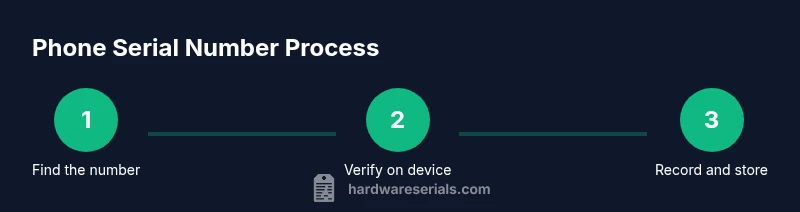
- 1
Open the Settings app
Launch the Settings app on your phone. The exact path may differ by OS, but Settings is the central hub for device information. This step kicks off the find-and-verify process.
Tip: If you can't locate Settings quickly, use the search feature in the app and type 'About'. - 2
Navigate to About or System information
On iPhone, go to General > About. On Android, go to System > About Phone > Status. This screen lists identifiers such as Serial Number and IMEI. Make sure you’re viewing the primary profile’s data.
Tip: If your device language differs, look for terms like About, Status, or Device Information. - 3
Read and record the Serial Number
Find Serial Number on the About page. Copy it exactly or take a screenshot for your records. If IMEI appears on the same page, note that too for cross-checking.
Tip: Store the serial in a secure note or password-protected document to protect privacy. - 4
Cross-check with IMEI (optional)
If available, verify IMEI by dialing a code (for many Android devices) or checking the IMEI on the About page. This helps you ensure the numbers match hardware identifiers.
Tip: Dialing codes don’t work on all devices; use About information as the primary source. - 5
Check packaging or labeling
Inspect the device box, back label, and SIM tray for printed serial numbers or IMEI. A photo helps you store reference data for warranty and service requests.
Tip: Keep packaging until you’ve confirmed warranty details and ownership. - 6
Verify and store securely
Record the serial and related identifiers in a secure location and link them to your account or warranty documents. Use an organized system so you can retrieve them later.
Tip: Regularly back up the notes to a secure cloud storage or password manager.
Frequently Asked Questions
What is the difference between a phone serial number and an IMEI?
The serial number is a manufacturer-specific identifier used for internal records and warranty. The IMEI is an international network identifier used by mobile carriers to determine a device on a network. They serve related but distinct purposes and are often found in different sections of settings or packaging.
A serial number is the manufacturer's internal ID, while IMEI is the network identifier; both help confirm device identity during support or warranty checks.
Can I find the serial number if my phone is locked?
Yes. You can usually locate identifiers via the device's packaging, or by logging into your manufacturer account on a computer. Some identifiers may still be visible on the lock screen if permissions allow.
You can usually access the serial through packaging or your account, even if the phone is locked.
Where can I find the serial number on the packaging?
Check the box label, the back of the packaging, or the inner sleeve. Serial numbers and IMEI are commonly listed as barcodes or alphanumeric strings. This is a reliable alternative when the device itself is unavailable.
Look on the box label or inner packaging for the serial number and IMEI.
Can I verify warranty status using the serial number?
Yes. Most manufacturers provide a warranty checker where you input the serial number to confirm coverage. This is often available on official support portals and can help with claims.
You can check warranty status with the serial number on manufacturer sites.
What should I do if the serial number is unreadable?
If unreadable, try the packaging, check the box label, or contact the manufacturer with your purchase details. You may also request a service record when you provide proof of purchase.
If unreadable, use packaging labels or contact the manufacturer with proof of purchase.
Is there a universal method to lookup a phone's serial number online?
Most lookup processes are device- and manufacturer-specific. Start with the Settings path, then check the official portal. Be wary of third-party sites promising universal identifiers.
Use official portals after checking Settings; avoid untrusted sites.
Watch Video
Key Takeaways
- Locate identifiers in Settings or packaging for accuracy.
- Differentiate between Serial Number and IMEI/MEID.
- Store numbers securely and avoid sharing publicly.
- Use official portals to verify warranty status.