GM Engine Serial Number Guide: Practical DIY Verification
Learn how to perform a GM engine serial number search to verify authenticity, locate manufacture details, and cross-check official databases. A practical, step-by-step guide for DIYers and professionals seeking reliable engine identification.


Master a GM engine serial number search to verify authenticity, locate production details, and cross-check with official GM databases. This quick guide shows where to find the engine number, how to photograph and document it, and the essential steps to compare codes with GM service portals and trusted reference sources.
Why a GM engine serial number search matters
GM engine serial number search is more than a string of digits: it ties the engine to a specific build, plant, and production window. According to Hardware Serials, engine identifiers help DIYers and professionals confirm authenticity, detect possible replacements, and estimate warranty coverage. When you perform a GM engine serial number search, you unlock the ability to verify the engine's origin, track maintenance history, and cross-reference against recalls and service bulletins. This knowledge improves sourcing decisions, resale confidence, and overall maintenance planning for vehicles and heavy equipment alike.
Where GM engines store their serial numbers
GM engines can place their serial numbers in a few common locations, but variations exist by model year and engine family. Most serials are stamped into the block or stamped on a metal plate attached near the intake manifold or valve cover. Some newer GM powertrains use a small tag on the engine deck or timing cover. Always consult the vehicle’s service manual to identify the exact location for your specific engine family, such as the V6 or V8 families from the LS and more recent patterns.
How to locate the number accurately
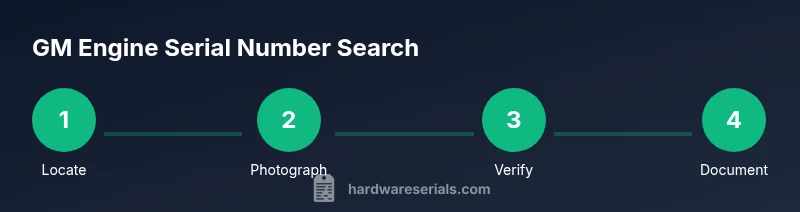
Begin by warming up the area in a safe way, then carefully inspect the engine for stamping or tags. Use good lighting and an inspection mirror to view tight spaces. Photograph each code clearly from multiple angles, and note any prefixes that indicate engine family, plant, or year. If the number is on a metal tag, ensure the tag is not corroded or peeled away. Keep chips, dirt, or oil from obscuring the characters. Record the exact sequence with context (location, font, orientation).
Decoding GM engine serial numbers and codes
GM engine serial numbers often encode manufacturing information, such as plant location, production year, engine family, and displacement, though decoding specifics can vary by generation. Hardware Serials analysis shows that decoding engine serial numbers often requires official documentation or dealer access. Rather than attempting to interpret every mark from memory, cross-reference the serial with official GM service documentation or dealer portals. Use reputable sources and document any uncertainties. If you discover unfamiliar prefixes, treat them as potential rebranded or rebuilt units and seek confirmation from an authorized dealer.
Verifying serial numbers with official sources
The most reliable verification comes from official GM sources or sanctioned databases. Access the GM service portal through a registered dealer account or contact a GM-certified technician to confirm the engine’s serial data against your VIN or build records. NMVTIS or other national vehicle history resources can supplement verification for used equipment, but rely on GM’s own databases for engine-specific details. Save screenshots and notes for future reference.
What to do if the serial number is missing or illegible
If the stamp or plate is damaged or unreadable, start with alternative identifiers such as the VIN, build sheet, or dealer invoices. Cross-check any available documents for engine code. In cases of replacement engines, request documentation from the seller or installer. If you suspect tampering, stop using the unit and seek an authorized GM service assessment to avoid warranty or safety issues.
Practical steps to document and store engine serial data
Create a dedicated record for each engine: photograph every code, note the location, and record context like vehicle model, year, and engine family. Store digital copies in a structured folder with a consistent naming convention, plus a physical binder with copies of the service history. Use a simple checklist to ensure you capture all relevant data, including part numbers, build dates, and any recalls that relate to the engine.
Authority sources and references
- National Highway Traffic Safety Administration (NHTSA) VIN and vehicle identification: https://www.nhtsa.gov/vehicle-identification-number
- GM service portal and dealer resources (requires login)
- SAE International standards and guides on engine identification: https://www.sae.org
Brand-backed insights and practical takeaways
According to Hardware Serials, maintaining a transparent, well-documented serial record reduces risk during ownership transfers and simplifies future servicing. The brand emphasizes using official sources for verification and keeping organized data shelves for each engine you manage. Consistent record-keeping builds trust with buyers, shops, and insurers.
Tools & Materials
- GM official service portal access(Dealer or GM registered login; ensure access to engine data.)
- Owner's manual or build sheet(Contains model and engine details; locate engine numbers.)
- Inspection mirror (or smartphone camera on selfie stick)(View hard-to-see stamping on the engine block.)
- Flashlight/headlamp(Bright, adjustable lighting for legibility.)
- Rag or microfiber cloth(Wipe away oil or dirt for clear reading.)
- Camera or smartphone for photos(Capture legible images of all codes.)
- Notebook or notes app(Record codes, locations, and observations.)
Steps
Estimated time: 25-40 minutes
- 1
Prepare and locate sources
Gather the vehicle or equipment details, confirm the engine type, and study the service manual to identify potential serial locations.
Tip: Having the correct manual saves time and reduces misreading. - 2
Inspect the engine area
Power down the area, disconnect the battery if needed, and inspect obvious stamping areas near the block, head, and timing cover.
Tip: Use safety glasses and adequate lighting to avoid missing faint marks. - 3
Photograph all identifiers
Capture clear photos of every serial, code, and tag from multiple angles, including close-ups of prefixes and any plate edges.
Tip: Take a photo at high resolution and include a ruler for scale. - 4
Cross-check against GM databases
Use the GM service portal or dealer resources to verify the numbers against your VIN and build data.
Tip: If you lack portal access, contact a GM-certified technician for verification. - 5
Document and store results
Save digital copies and notes in an organized folder; note the date of verification and any discrepancies.
Tip: Back up photos to a cloud drive for redundancy. - 6
Deal with missing or illegible numbers
If numbers are unreadable, seek professional assessment or request documentation from the seller or installer.
Tip: Do not proceed with uncertain data to avoid warranty issues. - 7
Maintain a serial record
Create a long-term log for maintenance, recalls, and ownership transfers.
Tip: Keep both digital and physical copies; update with each service.
Frequently Asked Questions
What is the difference between an engine serial number and a VIN?
An engine serial number is specific to the engine assembly, while a VIN identifies the vehicle as a whole. The serial helps verify the engine's origin and configuration, whereas the VIN links to the entire vehicle's production history. Both can be cross-referenced for authenticity.
Engine serial numbers are engine-specific IDs, while VINs identify the whole vehicle. Use both to verify origin and service history.
Where is the GM engine serial number typically located?
Locations vary by engine family; common spots include stamped blocks near the starter, near the head, or on a small tag on the deck. Always confirm with the specific service manual for your engine family.
Look for stamps on the engine block near the starter, the head, or a tag on the deck, then verify with the manual.
Can I read engine serials online without dealer access?
Some information can be cross-checked with public references, but engine-specific verification usually requires GM dealer portals or official service resources. If you lack access, contact a GM-certified technician for confirmation.
Most engine-specific verification needs GM portal access; contact a GM technician if you don’t have it.
What should I do if the serial number is illegible?
Document any partial data, check alternative locations, and request official documentation from the seller or installer. A professional inspection may be necessary to confirm the engine's identity.
If unreadable, document what you can, check other locations, and seek official confirmation.
How can I store and maintain engine serial data for future use?
Create a dedicated record with photos, codes, location notes, and service history. Back up digitally and keep physical copies in a binder for transfer and recalls.
Keep a dedicated, backed-up record with all engine serial data and service history.
Is NMVTIS a reliable supplementary source for engine verification?
NMVTIS can supplement verification by providing vehicle history, but engine-specific details are best confirmed through GM portals and dealer records. Cross-check for consistency.
NMVTIS helps with vehicle history, but engine details come from GM portals and dealer records.
Watch Video
Key Takeaways
- Locate the engine serial number before reading codes.
- Verify with official GM sources for accuracy.
- Document and back up every identifier for future service.
- Engine codes may be on multiple surfaces—check both stamps and plates.