How to Check a Guitar's Serial Number: Authenticate & Date
A complete, step-by-step guide to check serial numbers on guitars, verify authenticity, and estimate manufacture date. Learn locations, formats, and trusted verification methods for buyers and collectors.


You will learn how to check the serial number guitar to verify authenticity, assess manufacture date, and track ownership history. Gather the guitar, a clear photo of the headstock or label, and any original documentation or case. This guide covers where serials are located, how manufacturers encode data, how to cross‑check with official databases, and what steps to take if data doesn’t match.
Locate the serial number on guitars
Locating the serial number is the essential first step in check serial number guitar. Most manufacturers place the serial on the headstock front or back, the neck plate, or inside a control cavity, depending on model and era. Some vintage instruments hide the number on the heel of the neck or under a pickguard. In modern examples, a small metal plate or an engraved stamp is common. When you’re searching, use bright, even lighting and a loupe or macro lens to read fine print without touching or rubbing surfaces. Hardware Serials notes that legibility is a strong indicator of authenticity, but a readable serial alone doesn’t prove legitimacy. Photograph the serial from multiple angles and record contextual clues such as font style, spacing, and any accompanying labels or case documents to aid later verification.
Typical locations by brand
Guitar serials follow varied conventions by brand and era. For example, many Fender instruments show serials on the headstock’s front, while Gibson often places a stamp or label on the back of the headstock or inside the control cavity. PRS guitars frequently have serials on the neck plate or a hidden stamp. Ibanez and other brands may encode the serial in a stamp near the neck joint or on the back of the headstock. If you can’t locate a readable serial, note the instrument’s model year and any custom shop details, then consult official manufacturer guides or contact support. Remember that location can change over time, so always check model-specific resources and cross-reference with your paperwork to build a reliable check serial number guitar record.
Understanding serial number formats
Serial numbers are not a universal standard; manufacturers use diverse encoding schemes. Some numbers are sequential, others include date or batch codes, and some mix letters and digits to indicate factory, year, or production run. Font choice, spacing, and stamping methods can also reveal authenticity concerns. When deciphering formats, treat any date cues as estimates rather than guaranteed manufacture years unless the brand explicitly confirms coding rules for that period. This variability is why a holistic verification approach—location, format, and cross‑check—produces the most reliable results. For collectors, it’s helpful to document the serial’s prefix or suffix and compare it against published brand timelines.
How to verify authenticity: a practical approach
Verification combines physical inspection with data cross-checks. Start with a sharp photo of the serial and surrounding identifiers. Then compare the serial against official brand databases or support portals, if available. Cross-check the instrument’s model name, year indicators, hardware configuration, and neck joint details against product literature and warranty records. If the serial seems unusual or the date mismatches the guitar’s features, pursue manufacturer confirmation before buying or selling. This multi‑step approach minimizes risk when you check serial number guitar data against multiple sources.
Cross-referencing with official sources
Rely on manufacturer-backed resources first. Many brands publish serial lookup guides or offer verification support, sometimes through a simple form on their site or via authenticated dealer channels. When online databases aren’t accessible, contact the brand’s customer service with clear photos of the headstock, neck heel, and any labels. If a unit is vintage or limited, check historical documentation from catalogs or trade publications and request factory records if available. Hardware Serials emphasizes that official sources carry the most weight in authentication. Always ask for a written note or email confirming the serial’s validity and manufacture period before finalizing a transaction.
Red flags and counterfeit clues
Be vigilant for telltale signs of counterfeit serials. Look for inconsistent font weight, spacing, or misaligned letters, which can indicate a forgery. Check for serials that appear newly engraved on vintage bodies, or numbers that do not align with the instrument’s era, hardware, and model. Bolts, pickups, or electronics that don’t match the instrument’s claimed year can also signal misrepresentation. Uneven finish around the serial area, unusual wear patterns, or serials that are only partially legible should raise questions. If something feels off, pause and seek independent appraisal or official verification.
Handling guitars with unknown serials
If the serial is unreadable or missing, start with a physical inspection of the instrument’s construction quality, hardware configuration, and finish details that can hint at approximate production era. Gather all available provenance: purchase receipts, inspection notes, or previous owner statements. Reach out to the brand’s support team or a qualified appraiser to request validation using accumulated evidence. While an unreadable serial complicates verification, documented provenance can still support a credible authenticity assessment. Exercise caution with trades or offers until you obtain independent confirmation.
Documentation and provenance
Organize a clear documentation kit for each guitar: serial photos, close-ups of headstock and neck joint, a shot of the labels or stamps, service history, and any original packaging. Attach a concise written summary including model, year range, and your verification steps. This practice not only supports a check serial number guitar workflow today but also protects you for resale, insurance, and warranty purposes in the future. Digital copies stored in a dedicated folder ensure you can retrieve the information quickly when needed. Hardware Serials recommends keeping this dossier on file and updating it with any new findings.
Practical workflow: from inspection to verification
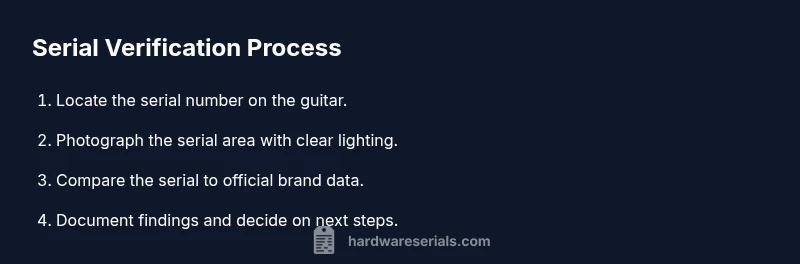
Adopt a repeatable workflow to streamline future checks. Start with locating and photographing the serial, then record the instrument’s model, color, hardware, and any distinguishing marks. Next, compare the data to manufacturer databases and credible catalogs, noting any discrepancies. If data aligns, log the verification outcome and preservation notes. If discrepancies exist, contact the brand for confirmation and consider professional appraisal for high-value guitars. This disciplined process makes check serial number guitar tasks efficient and less error-prone.
Tools & Materials
- Guitar to be checked(Any instrument you intend to verify; include model/year if possible)
- Bright, diffuse lighting(Avoid harsh shadows; use daylight or LED with diffuser)
- Camera or smartphone with macro lens(For close-up shots of headstock, neck heel, labels)
- Purchase receipts or paperwork(If available, helps provenance)
- Soft microfiber cloth(Clean serial area gently before photographing)
- Notepad or digital note‑taking device(Record observations, dates, and reference links)
Steps
Estimated time: 30-40 minutes
- 1
Prepare the guitar and materials
Lay out the guitar, receipts, and any documentation. Ensure the instrument is secure and stable. Prepare your photo setup with clean lighting and a backdrop to maximize legibility of the serial. This step sets the stage for accurate verification.
Tip: Have a dedicated space for serial checks to avoid mixing up instruments. - 2
Locate the serial number physically
Inspect potential locations (headstock, neck heel, cavity, or plate) and identify the serial marking. Do not force panels or damage finishes to reveal a serial; some models hide the number behind electronics or under plates.
Tip: If you can’t see it, use a mirror and proper lighting to minimize handling. - 3
Photograph the serial and related identifiers
Take high-resolution shots of the serial, surrounding font, and any labels. Capture close-ups that show spacing, font weight, and any prefix/suffix. Store these images in a dedicated folder for this guitar.
Tip: Include a ruler or scale in at least one shot for size context. - 4
Record basic model and feature data
Note the model name, color, hardware configuration, pickup type, and any modifications. These details help you assess plausibility against the serial’s implied era and production run.
Tip: Tiny details can be decisive in authenticity checks. - 5
Cross-check with official databases
Visit the brand’s official verification page or contact support with your photos. If a database isn’t public, request an official verification letter or confirmation email.
Tip: Keep a copy of the response for your records. - 6
Decide on the next steps if data mismatches
If serial data conflict with paperwork or features, request factory confirmation before purchase or resale. Consider third-party appraisal for high-value guitars.
Tip: Don’t proceed with a sale or purchase until verification is clear.
Frequently Asked Questions
Where is the serial number usually located on a guitar?
Serial numbers are typically found on the headstock front or back, on the neck heel, or inside control cavities behind plates or pickups. Some vintage instruments may place serials elsewhere or stamp them on hidden areas. Always inspect multiple potential locations and consult brand guides for model-specific placements.
Serial numbers usually sit on the headstock or inside a cavity; check multiple likely spots and refer to the brand’s guide for your model.
Does a serial number prove the exact year of manufacture?
Serial numbers can indicate a production run or year, but many brands use non-standard codes that changed over time. Treat serial-derived dates as estimates and corroborate with model year literature, build sheets, or factory records when possible.
Serials can hint at the year but aren’t guaranteed; use them with other documents.
What signs indicate a counterfeit serial?
Watch for inconsistent fonts, spacing, or unusual stamping. Serials that don’t align with the guitar’s features or era, or appear newly added to a vintage body, are red flags. Misplaced labels or tampered cavities also suggest counterfeit activity.
Look for font and alignment inconsistencies and mismatched era features.
What should I do if the serial doesn’t match paperwork or photos?
Pause the transaction and seek official verification from the manufacturer or an authorized dealer. If high value, obtain a written confirmation before proceeding and consider professional appraisal.
If there’s a mismatch, stop and verify with the brand or a professional.
Can I verify a serial without internet access?
Offline checks rely on physical characteristics and provenance. Without online access, you can still document the instrument’s features, compare with catalogs, and request offline verification from the brand when possible.
You can start offline by documenting features and provenance, then verify later online.
What resources are best for check serial number guitar verification?
Use official brand verification portals, manufacturer support channels, and credible catalogs. When available, cross-check with multiple independent sources and keep a documented dossier.
Refer to brand sites and trusted catalogs for verification, and keep your notes.
Watch Video
Key Takeaways
- Check serial location first on the guitar.
- Cross-check serial data with official manufacturer sources.
- Be cautious of fonts, spacing, or date inconsistencies.
- Preserve photos and documentation for future resale or warranty.