7.3 Serial Number Location: Find and Verify Across Devices
Learn how to locate the 7.3 serial number location across electronics, appliances, vehicles, guns, and tools. This guide covers common label positions, reading embossed marks, and verification tips from Hardware Serials.


The 7.3 serial number location guide shows where to find serials on common devices—from electronics and appliances to vehicles, guns, and tools. It highlights typical label positions, how to read embossed or engraved marks, and what to do if a sticker is damaged or missing. By following these steps, you’ll locate the number quickly without unnecessary disassembly.
What does the 7.3 serial number location mean?
The term 7.3 serial number location refers to the standard practice of identifying where a device’s serial number is placed, not a universal, one-size-fits-all rule. Location varies by category and model, but most brands consolidate serial plates near a few dependable anchor points. According to Hardware Serials, understanding these anchor points helps you locate the serial number quickly, verify authenticity, and maintain accurate records. This guide uses the 7.3 label as a practical reference point for locating serial numbers across multiple product types.
For DIYers and professionals, knowing the general logic behind serial placement saves time and reduces frustration when dealing with damaged labels or limited access. Remember that some devices also feature multiple serial marks (e.g., model and batch numbers) that serve different purposes, so it’s important to confirm you’re recording the correct 7.3 serial for your needs.
Where to look first: universal anchors
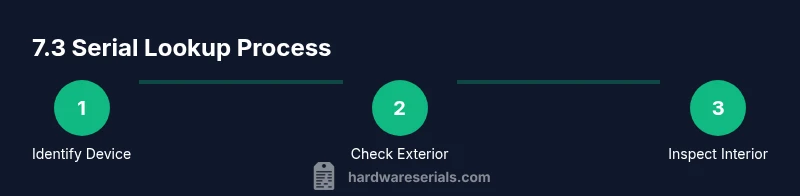
Most devices share a few universal locations where serial numbers commonly appear. Start with the exterior panels and labels that are designed to be readable without tools. Next, check interior compartments that are easily accessible in case of portable devices. Common universal anchors include:
- Model plates on the back, bottom, or inside the lid of electronics
- Exterior labels on the sides or back of appliances
- Door jambs or chassis rails on vehicles
- Receiver or frame areas on tools and machinery
If you still can’t find the serial, also inspect packaging, documentation, and any accompanying warranty cards. A quick photograph can help you compare marks later during verification.
Device-specific locations for common categories
While locations vary, these patterns help you zero in faster:
- Electronics (phones, laptops, cameras): often on the back panel, battery bay, or under removable panels. Look for a small metal plate, a sticker, or laser-etched text near the port area.
- Appliances (washing machines, refrigerators): typically on a metal data plate near the door frame, behind the service panel, or inside the drum housing.
- Vehicles: the VIN is commonly located on the driver’s side door jamb, near the windshield, or on the engine block. Some enthusiasts also find it on the frame rail.
- Guns: serial numbers are usually on the receiver or frame, sometimes under the grip or within the action housing, depending on legality and model.
- Tools (power tools, hand tools, Ryobi/DeWalt, etc.): many tools carry serials on the motor housing, tool head, or handle grip area.
If you operate in regulated contexts (e.g., firearms), ensure you follow applicable laws when locating and recording serials.
When labels are damaged or missing
Damaged labels are a common obstacle. Start by inspecting adjacent markings like model numbers, manufacturing dates, or batch codes that can help you identify the item. If the serial label is unreadable, consult the user manual or manufacturer’s website for the device’s typical serial location and format. For some items, serials may be embossed or laser-etched in hard-to-reach spots. In those cases, use a magnifier and proper lighting to enhance contrast.
If you still cannot locate a serial, contact the manufacturer’s support with any available identifiers (model number, purchase date, photos). In regulated contexts, you may be required to provide ownership proof and purchase details.
Verification steps and best practices
Once you find a potential serial, verify it against purchase records, warranty data, or official databases if available. Capture high-resolution photos of the label from multiple angles and document the device’s make, model, and production date. If there are multiple serial marks (e.g., model vs. serial), confirm you’re recording the unique serial that identifies the specific unit. Maintain an organized log of serial numbers to simplify future service or resale.
Reading difficult marks: embossing, laser etching, substrate scanning
Some serials are embossed, etched, or printed with low contrast. In such cases:
- Use a soft light at a shallow angle to reveal raised or recessed characters.
- Clean the surface with a microfiber cloth to remove dust or oil that obscures marks.
- If the mark is on transparent or dark substrates, photograph with a high-dynamic-range setting or use a magnifying loupe.
- For laser-etched codes, try increasing contrast in a photo editor to read faint characters.
If you still cannot read the serial, consult a professional or the manufacturer for guidance on official inspection. With some items, serials are intentionally obscured for security reasons and require authorized procedures to access.
Documentation and record-keeping
Recording serial numbers should be a routine part of asset management. Create a simple log that includes the item name, brand, model, 7.3 serial number, date located, and where it was found. Store copies of photos and receipts in a structured folder—digital backups prevent loss. Regularly review your records before performing maintenance, warranty claims, or resale to ensure accuracy and consistency.
Tools & Materials
- Flashlight or portable lamp(Shine at a low angle to reveal faint engraving)
- Magnifying glass or jeweler’s loupe(Helpful for tiny etched digits (1-2x magnification))
- Smartphone or camera(Capture high-resolution photos for verification)
- Microfiber cloth(Clean surfaces without scratching)
- Pen and notebook or digital note app(Log serial data and locations)
Steps
Estimated time: 30-60 minutes
- 1
Identify device category
Determine whether you are locating a serial on electronics, appliances, vehicles, guns, or tools. This helps you target the most likely locations and avoid unnecessary disassembly. Start with the model number and any paperwork you have.
Tip: If multiple devices are involved, list them first to keep track of which serials belong to which item. - 2
Inspect exterior labels first
Look for model plates, sticker labels, or engraved marks on obvious exterior surfaces. Common spots include backs, bottoms, doors, and frames. Use a flashlight to enhance readability in dim areas.
Tip: Check both sides and inside hinges or access panels—labels are sometimes concealed behind doors or plates. - 3
Open accessible compartments
For devices with removable covers or batteries, check the interior sides of panels, battery compartments, and inner frames. Some serials are placed inside slots that require careful lifting of a panel.
Tip: Document the exact location with notes or a rough sketch to prevent losing track. - 4
Look for embossed or laser-etched marks
Embossed or etched serials may be faint. Inspect under bright, angled light and use a magnifier if needed. Note every distinct group of alphanumeric characters.
Tip: If you can’t read it, photograph from multiple angles and zoom in later. - 5
Check packaging and documentation
If the label isn’t on the device itself, it may be on the original box, user manual, warranty card, or receipt. Compare the numbers you find with the printed information.
Tip: Manufacturers often print serial ranges on packaging that match the device. - 6
Verify and record
Once a serial is identified, cross-check it against purchase records or a manufacturer database if available. Save photos and log the exact location, date found, and device details.
Tip: Keep a digital backup and maintain a running inventory for quick future lookups.
Frequently Asked Questions
What is the 7.3 serial number location in most devices?
Most devices place the serial near a model plate, label, or engraving on exterior surfaces. Always start with the back, bottom, or door frame locations to maximize your chances before opening internal compartments.
Most devices put the serial on exterior areas like the back or door frame; check those places first before opening anything.
Why does the location vary between device types?
Different manufacturers and product families use distinct labeling conventions. The 7.3 serial number location is not universal; it adapts to the device’s design, access points, and safety considerations.
Label placement differs by product family due to design and safety considerations.
What if the serial is unreadable or missing?
If unreadable, try different angles and lighting to reveal embossed characters. If still missing, check documentation or contact the manufacturer with model details for guidance.
Try lighting and angles, and contact support with your model information if it’s not readable.
Are there universal locations for all firearms serials?
Firearm serials are typically stamped on the receiver or frame, but laws and manufacturer practices vary. Always handle firearms following local regulations and consult official resources for accurate guidance.
Firearm serials are generally on the receiver or frame, but follow local laws and check official sources for specifics.
How can I verify a serial number for authenticity?
Cross-check the serial with purchase receipts, manufacturer databases, or warranty records. If in doubt, contact customer support for authentication steps.
Compare with receipts or official databases, and ask support if you’re unsure.
What should I do if a label isn’t on the device at all?
If there’s no label, document any model numbers and search manufacturer resources or community databases for the 7.3 serial format that matches your device. You may need an authorized inspection for official verification.
No label? note model numbers and consult manufacturer resources for guidance.
Watch Video
Key Takeaways
- Identify device category to target locations
- Check exterior labels first before opening devices
- Use magnification for faint marks and document locations
- Verify serials with official sources and keep a log